
ERBIL, Kurdistan Region of Iraq – Turkey’s foreign ministry on Friday rejected recent European Parliament resolutions that emphasized abuses against Kurds in Rojava (northeast Syria) and criticized a crackdown on foreign journalists and Christians in Turkey, describing the claims as “baseless” and “misguided and ill-intentioned.”
On Thursday, the European Union's legislative body issued two seperate resolutions, the first of which asserting that recent abuses in Rojava may amount to war crimes and urging Turkey to avoid undermining the ceasefire by taking military action or supporting armed factions.
While MEPs offered support for the January 29 integration agreement between the Kurdish-led Syrian Democratic Forces (SDF) and the Damascus government, they cited the prevalence of "credible reports" of atrocities directed "particularly against the Kurdish population," including desecration of corpses, vandalized burial grounds, and the use of unguided munitions in civilian areas."
Turkey rejected the contents of the resolution, saying it "disregards Turkey’s role in Syria’s recovery and stabilization," according to a foreign ministry statement.
Ankara "advises the European Parliament to exert greater effort to understand the realities on the ground and the aspirations of Syria and the Syrian people, rather than adopting misguided and ill-intentioned resolutions," it followed.
Turkey has been a salient backer of the current Syrian government dating back to the deposing of former President Bashar al-Assad in December 2024, when Hay'at Tahrir al-Sham (HTS), under the leadership of current interim President Ahmed al-Sharaa, spearheaded a dramatic offensive and seized power.
Ankara also lent vocal support to the nascent Syrian state during the January offensive in Rojava, having long considered the SDF to be inextricably linked to its domestic foe, the Kurdistan Workers' Party (PKK).
Despite the PKK announcing in 2025 that it would dissolve and pursue its aims via wholly political means following a historic call from the group's imprisoned leader Abdullah Ocalan, Turkey has maintained pressure on Kurdish armed factions they deem to be ideological fellow travelers in Rojava.
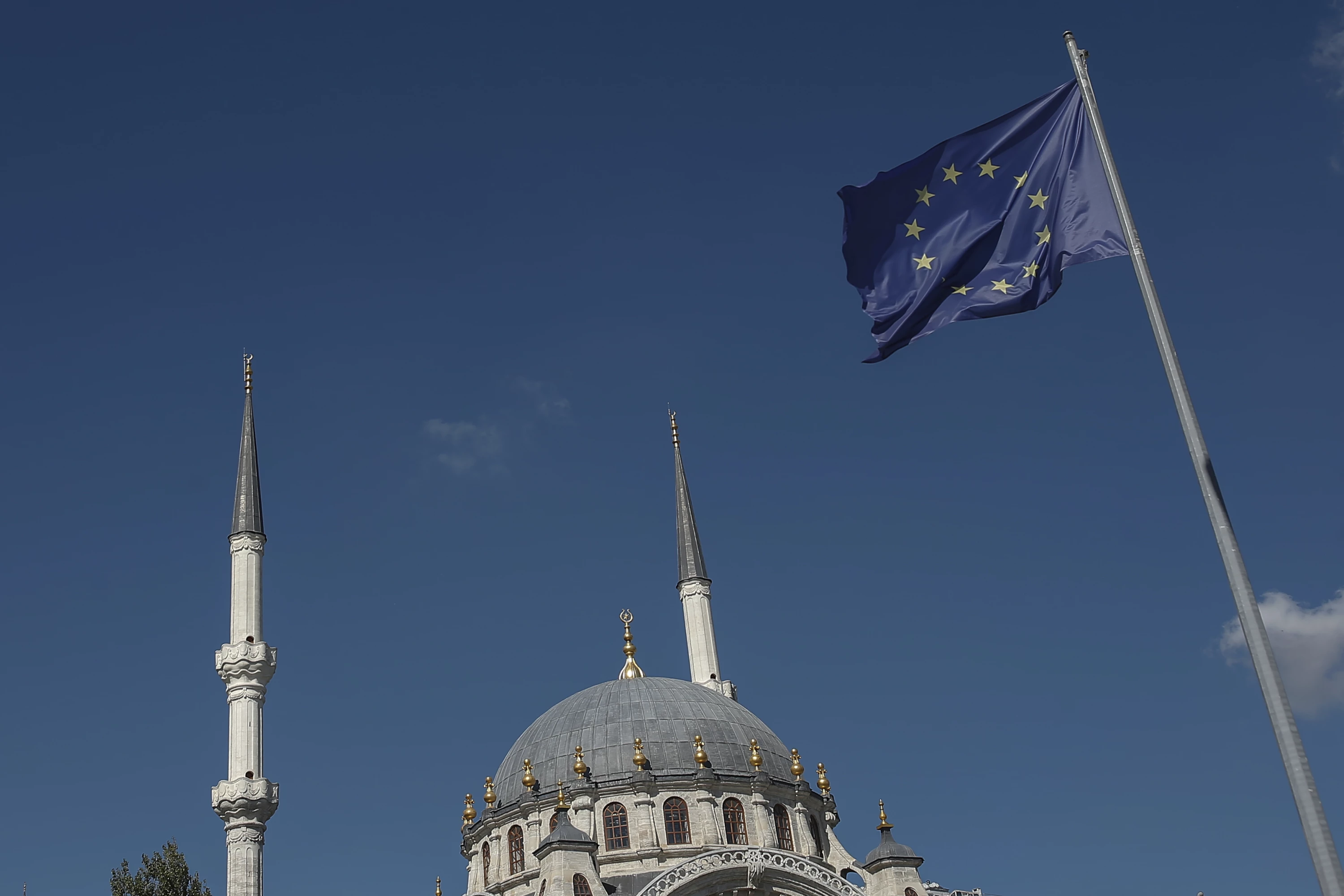
In a separate resolution, the European Parliament also condemned Ankara, denouncing what it described as Turkey’s targeted expulsion of foreign journalists and Christians under “unsubstantiated national-security pretexts” and “without due process.”
Regarding the allegations, the ministry emphasized that Turkey’s “freedom of expression and religion” practices “contradict” the claims, adding that “no foreign institution, including the European Parliament, can interfere in judicial proceedings conducted in our country.”
“These resolutions also do not bode well for the spirit of efforts to enhance Turkey-EU relations. We call upon the European Parliament to take constructive steps for Turkey-EU relations, rather than being instrumentalized for efforts against our country and attempting to interfere in our internal affairs,” it added.
The resolution regarding Rojava was adopted by 363 votes in favor and 71 against, with 81 abstentions, while that pertaining to Turkey's crackdown on foreign journalists and Christians, which also included condemnation of alleged human rights abuses in Iran and Uganda, passed with 502 votes in favor, 2 votes against, and 59 abstentions.
 Facebook
 LinkedIn
 Telegram
 X
X