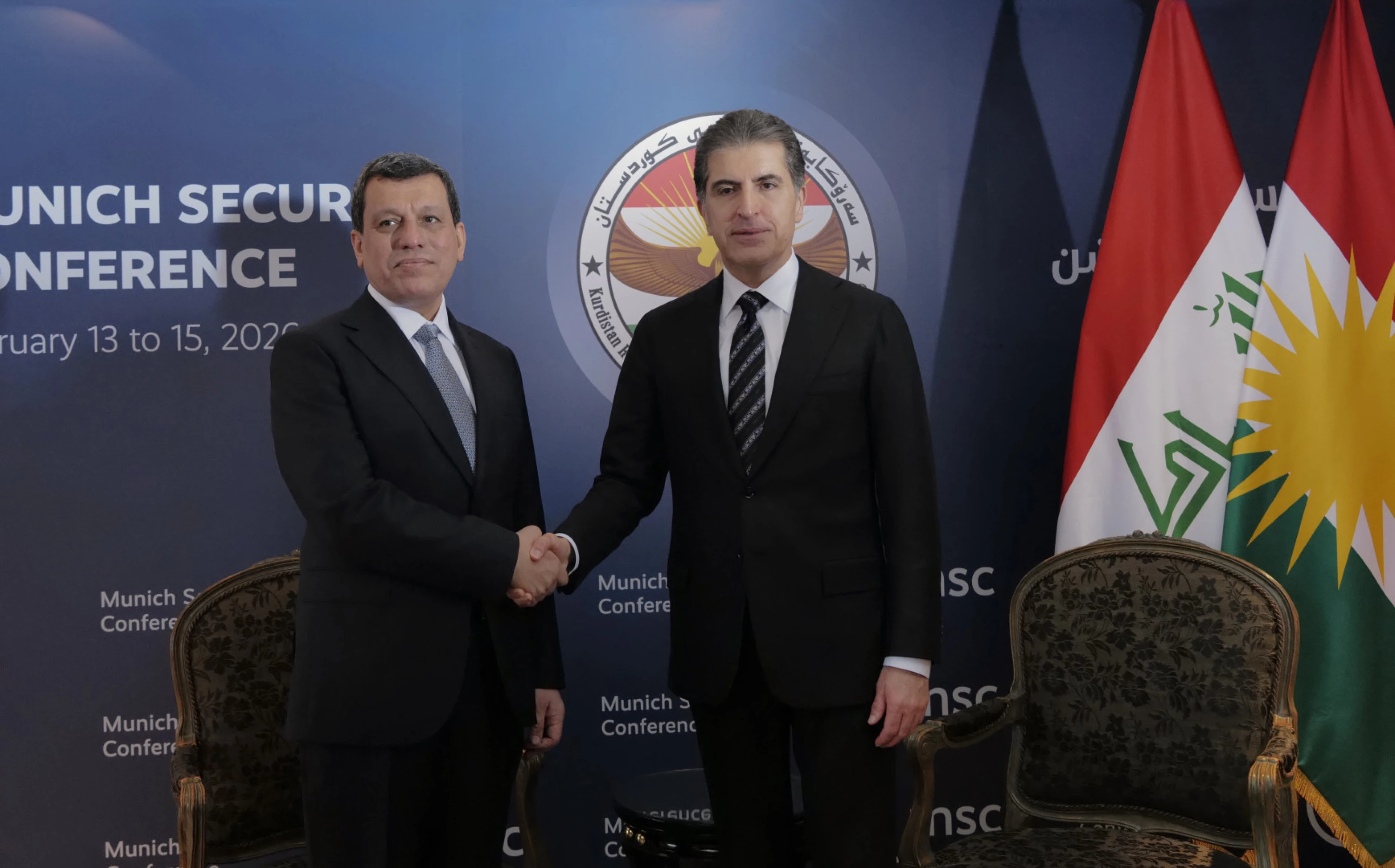
ERBIL, Kurdistan Region of Iraq - Kurdistan Region President Nechirvan Barzani on Sunday met with Syrian Democratic Forces (SDF) chief Mazloum Abdi on the sidelines of the Munich Security Conference where they stressed the need for continued dialogue in Syria, after the Kurdish-led force and Damascus reached an integration agreement.
In late January, the Kurdish-led Rojava administration and the Syrian government reached an agreement aimed at halting hostilities and enabling a phased integration process of the Kurdish-led forces into Syrian state institutions.
Barzani “emphasized the importance of continuing dialogue and understanding for the political resolution of problems in Syria, in a manner that ensures the rights of Kurds and all components are protected within the framework of a united Syria and in the country's future constitution,” according to a statement from the presidency.
The two Kurdish leaders have held several high-profile meetings on the sidelines of the Munich Security Conference over the last three days, with the recent agreement being one of the focal talking points.
Abdi and Syrian Foreign Minister Asaad al-Shaibanai on Friday held a meeting with US Secretary of State Marco Rubio, discussing the integration process and Syria’s Kurds. The SDF chief described the meeting as “positive”.
The SDF-Damascus agreement followed weeks of clashes between the Syrian Arab Army and its affiliated factions and Kurdish-led forces, which saw Syrian government forces advance on Kurdish-held positions in Rojava (northeast Syria).
Despite the ceasefire, the symbolic Kurdish city of Kobane in Rojava remains besieged and lacking basic necessities. Last week, a Rojava official told The New Region that the agreement with Damascus “has not brought about any practical change to Kobane.”
During the assault, Syrian forces violated ceasefires, committed human rights violations, and possible war crimes.
The clashes also led to grave security concerns at facilities holding Islamic State (ISIS) members and their affiliates as the SDF was forced to withdraw and Damascus-affiliated forces took over.
ISIS has tried to take advantage of the security vacuum in Syria to regroup its ranks.
“The dangers of ISIS resurgence and terrorism threats were another topic of the meeting,” between Barzani and Abdi, also attended by Rojava’s co-chair of foreign relations Elham Ahmad, the presidency statement noted.
Throughout the war against terror, the SDF was the US-led global anti-ISIS coalition’s main partner on the ground, fighting the lion’s share of the battle against the extremist group.
 Facebook
 LinkedIn
 Telegram
 X
X