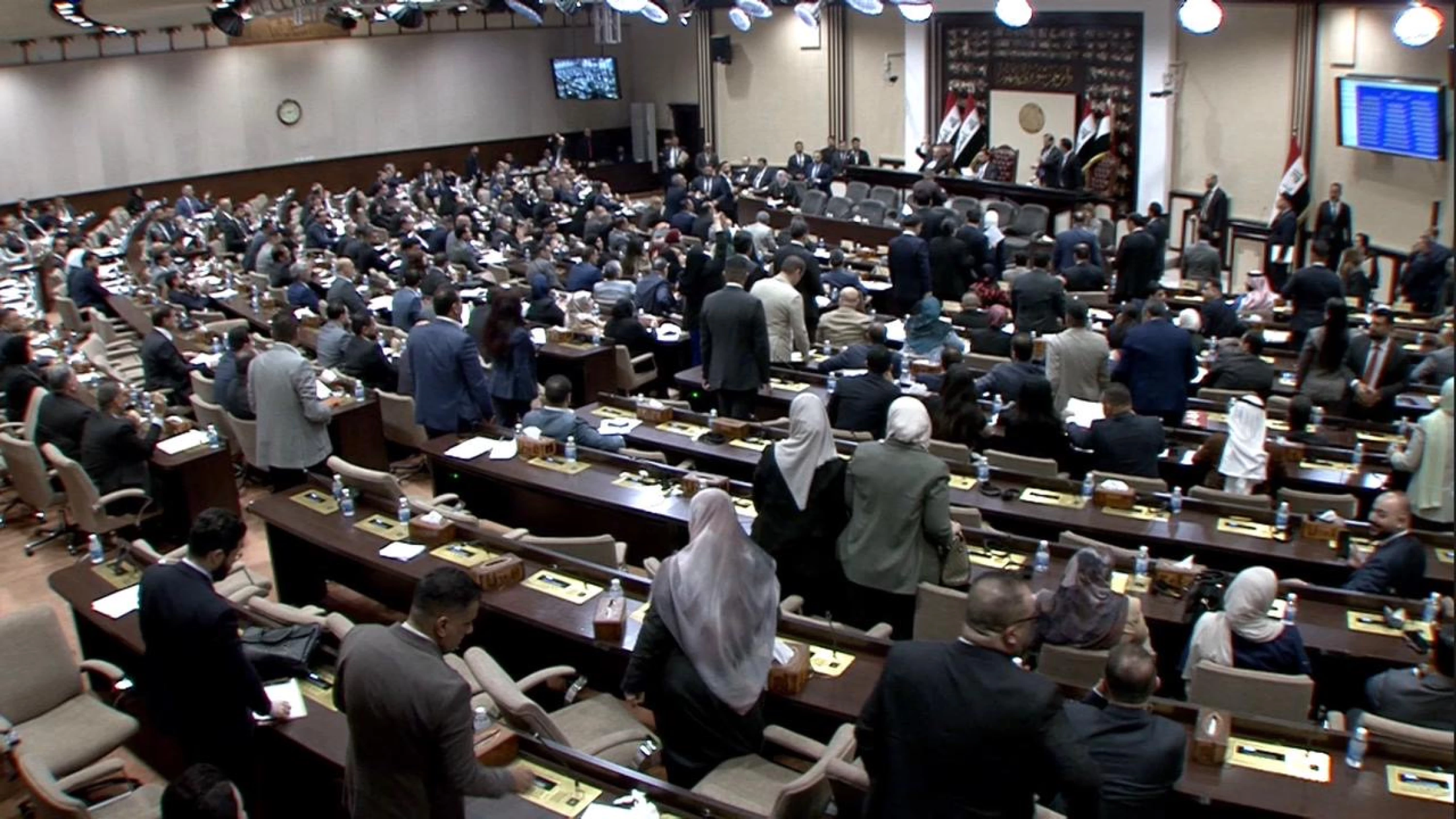
ERBIL, Kurdistan Region of Iraq – A vote to re-appoint a Shiite Arab as the Iraqi army’s chief of staff, a position traditionally reserved for Kurds, saw a verbal spat break out on Tuesday between Iraqi Parliament Speaker Haibat al-Halbousi and his second deputy Farhad Atrushi, a Kurd.
The Iraqi army’s chief of staff position, according to the country's informal power-sharing system, falls under the share of its Kurdish component. The guideline however was broken after Othman al-Ghanmi replaced former Chief of Staff Babakr Zebari in 2015, after the former resigned.
The post has been held by Arabs since, with Abdul Amir Yarallah inheriting the position from Ghanmi in 2020, and maintaining his post in the new legislature's term as well.
The circulating video shows Atrushi interrupt the session, saying that "this is against the internal regulations," and that "I will not accept this." He threatens to take legal action against the move.
In a statement after the parliamentary session, Atrushi said that "rushing the vote on sensitive state positions, including the position of chief of staff of the army, raises serious doubts for us, other political groups, and partners in the political process."
He lamented that the parliament speaker's move "further complicates the political landscape and raises many questions, through the suspicious haste in voting on certain special appointments," claiming that it was against Article 9 of the Iraqi Constitution and the parliament's internal regulations.
The session also saw the appointment of the Mayor of Baghdad.
Iraq's Sunni Azm Alliance disapproved the results of the session in regards to the two senior posts, dubbing it a "continuation of procedures that affect the political balance at the national level and do not respect the principle of genuine partnership in the management of state institutions."
"The Alliance holds the speaker of parliament responsible for waiving these entitlements and failing to take into account the requirements of national balance, stressing that all options will be studied by the Alliance with the aim of safeguarding the rights of the components and maintaining political partnership," Azm wrote in a statement.
Iraq, in addition to democratic elections, operates on an informal power-sharing mechanism between its major components, namely Shiite, Sunnis, and Kurds.
The mechanism, when properly implemented, ensures the participation of Iraqi components in the government, and expedites the process of forming the country’s governments.
 Facebook
 LinkedIn
 Telegram
 X
X