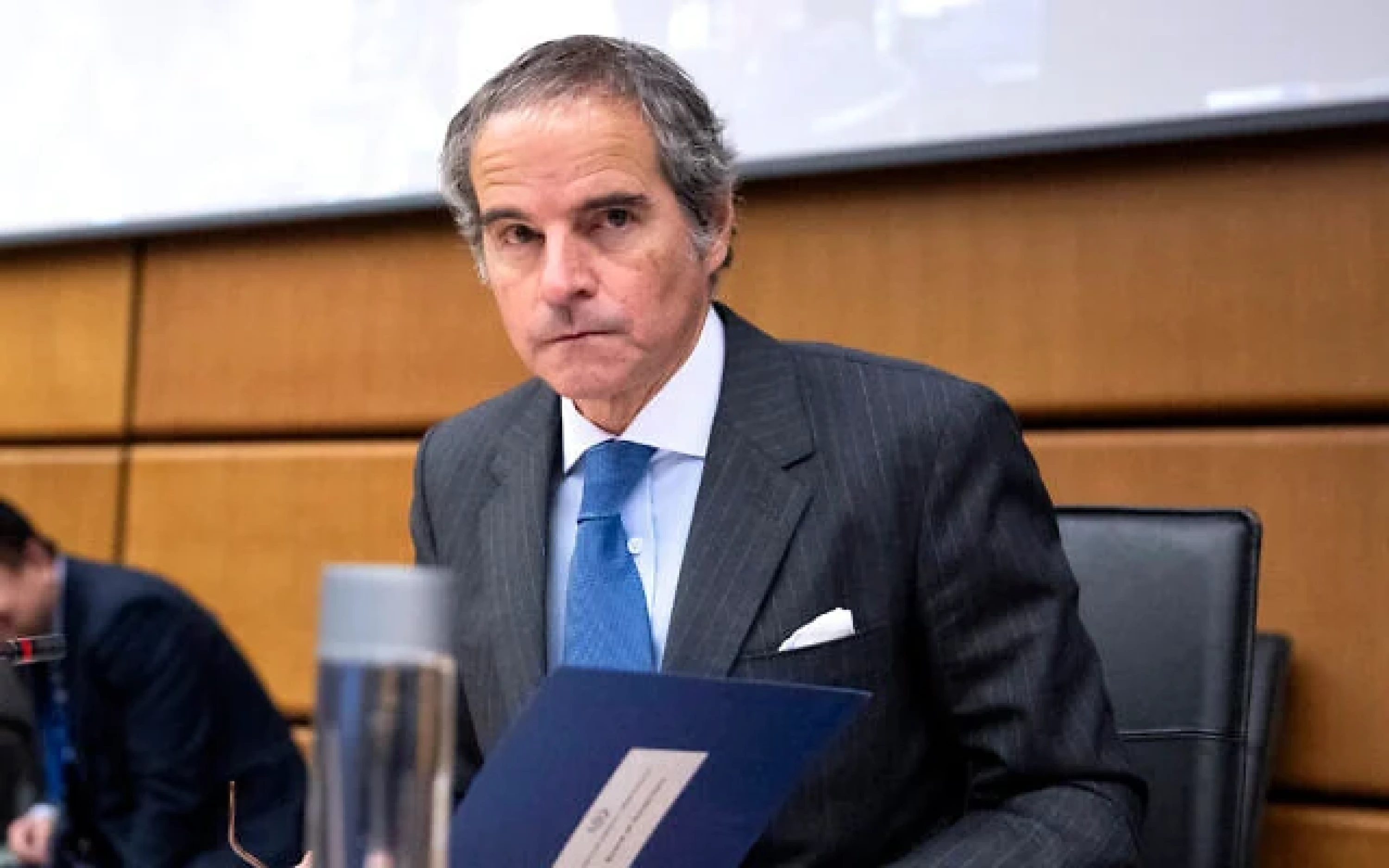
ERBIL, Kurdistan Region of Iraq – The head of the United Nations’ nuclear watchdog on Wednesday said that while progress has been made in the US-Iran talks on the nuclear issue, there is still work to be done and “we do not have much time.”
High-level American and Iranian delegations met in Geneva on Tuesday to hold a new round of negotiations regarding Iran’s nuclear program, with both sides noting that progress has been made, while more needs to be discussed.
Rafael Grossi, head of the International Atomic Energy Agency (IAEA), referred to the talks as a “step forward,” noting, “There is still work to be done and the problem is that we do not have much time,” in an interview with French TV channel LCI.
“There is a possibility of a dialogue that has really started for the first time. We have started to talk about concrete things, about what we need to do,” he added.
Grossi expressed a desire for both sides to reach an agreement, but stressed that the process to reach an understanding “is very complicated.”
Iranian Foreign Minister Abbas Araghchi held a phone call on Wednesday with Grossi, saying Tehran is focused on "developing an initial and coherent framework to advance future talks" on its nuclear program with Washington.
In turn, Grossi said that the international body stands ready "to provide support and cooperation in the formation of a negotiating framework.”
A US official on Wednesday told The New Region that “the Iranians told our negotiating delegation that within the next two weeks they will return to the table with a detailed proposal aimed at addressing the gaps that exist in the positions of both sides.”
US President Donald Trump has mulled military action should negotiations with Tehran fail to bear fruit.
Reports of the US sending the USS Gerald R. Ford, the largest aircraft carrier in the world, to the Middle East were recently confirmed by the American president, seeking to back up the USS Abraham Lincoln already in the Gulf.
American authorities have routinely warned against Iran reaching nuclear proliferation, citing its risks on the region and US interests, while Iran has routinely denied intent to possess a nuclear weapon, asserting that its uranium enrichment program is used for “peaceful purposes.”
Tehran and Washington restarted indirect nuclear talks in Oman earlier this month. While the threat of military action lingers, both sides described the first round of negotiations as positive.
 Facebook
 LinkedIn
 Telegram
 X
X