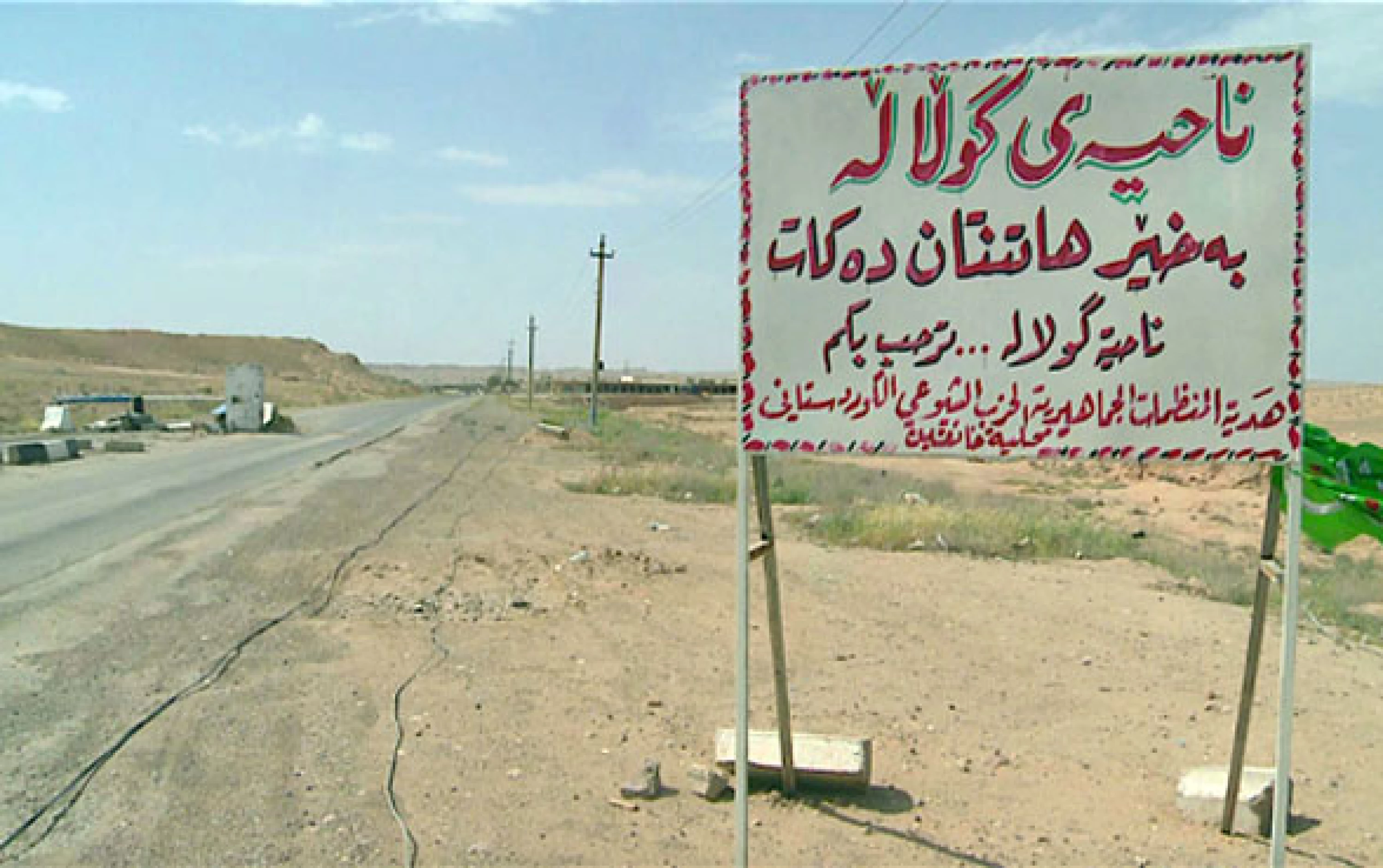
ERBIL, Kurdistan Region of Iraq - The Kurdistan Region’s body for overseeing the implementation of Article 140 of the constitution on Friday criticized the Iraqi government’s unilateral decision to upgrade the administrative title of disputed Jalawla (Gulala in Kurdish) from subdistrict to district, calling it “another attempt at demographic change.”
Omar al-Karawi, chair of the Diyala Provincial Council, on Thursday announced that the Iraqi planning ministry had approved Jalawla’s elevation, officially incorporating it into the administrative structure of the province.
Fahmi Burhan, head of the General Board for Kurdistani Areas Outside the Region, said that the decision was made without the joint consultation of the Kurdistan Regional Government (KRG) and the Iraqi government, stating that the move “contradicts the general principles of Article 140 of the permanent Iraqi constitution,” and “is another attempt to change the demographics of another part of the Kurdistani areas.”
“This unilateral step in these areas is a clear indication that they [Baghdad] have no serious intention to abide by the constitution and common understanding,” said Burhan, urging Kurdish lawmakers in the Iraqi parliament to prevent such measures which could lead to “worse decisions and more danger.”
Jalawla has a diverse ethnic composition, being home to Kurds, Arabs, and Turkmens. The town had a Kurdish-majority population before the 1960’s, but was subjected to intense Arabization by Saddam Hussein’s Baathist regime.
During the Arabization process, tens of thousands of Kurds in Jalawla were denaturalized and consequently deported, with thousands of Arab settlers flocking to the town as part of the Baathist regime’s broader campaign to forcefully alter the demographic composition of Kurdish-majority areas.
The majority of Jalawla’s native Kurds have opted not to return home, citing continued security concerns.
Article 140 of the Iraqi constitution requires the reversal of the Baathist regime’s Arabization policies and mandates a process to outline a clear and definitive boundary in areas disputed between Erbil and Baghdad by introducing a referendum to determine the will of the residents living on the lands.
Although the Article specifies that this process must be completed by no later than December 31, 2007, successive Iraqi governments have failed to implement the constitutional article for over two decades.
Kurdish authorities have for years criticized Baghdad and accused the federal government of lacking the political will to implement the article.
The Islamic State (ISIS) seized control of most of Jalawla from August 2014, driving out its Kurdish population, with the support of anti-Kurdish Sunni local tribes, mainly the Karawi tribe.
The town was recaptured by Kurdish Peshmerga forces and Iran-backed groups of the Popular Mobilization Forces (PMF) in November 2014, who would go on to jointly administer Jalawla’s affairs until the withdrawal of the Peshmerga in October 2017.
In that three-year span, the Peshmerga stressed that no members of the Karawi tribe will be allowed to return to Jalawla, citing their support of ISIS.
Omar al-Karawi, Diyala’s Provincial Council chief who announced the controversial step, hails from the ISIS-affiliated tribe.
In August 2024, he was reappointed as the council’s chairman, following months of deadlock after the December 2023 Iraqi provincial elections.
The council has since voted on at least three separate occasions to oust Karawi from the position, with the decision repeatedly overruled by the Iraqi judiciary.
 Facebook
 LinkedIn
 Telegram
 X
X