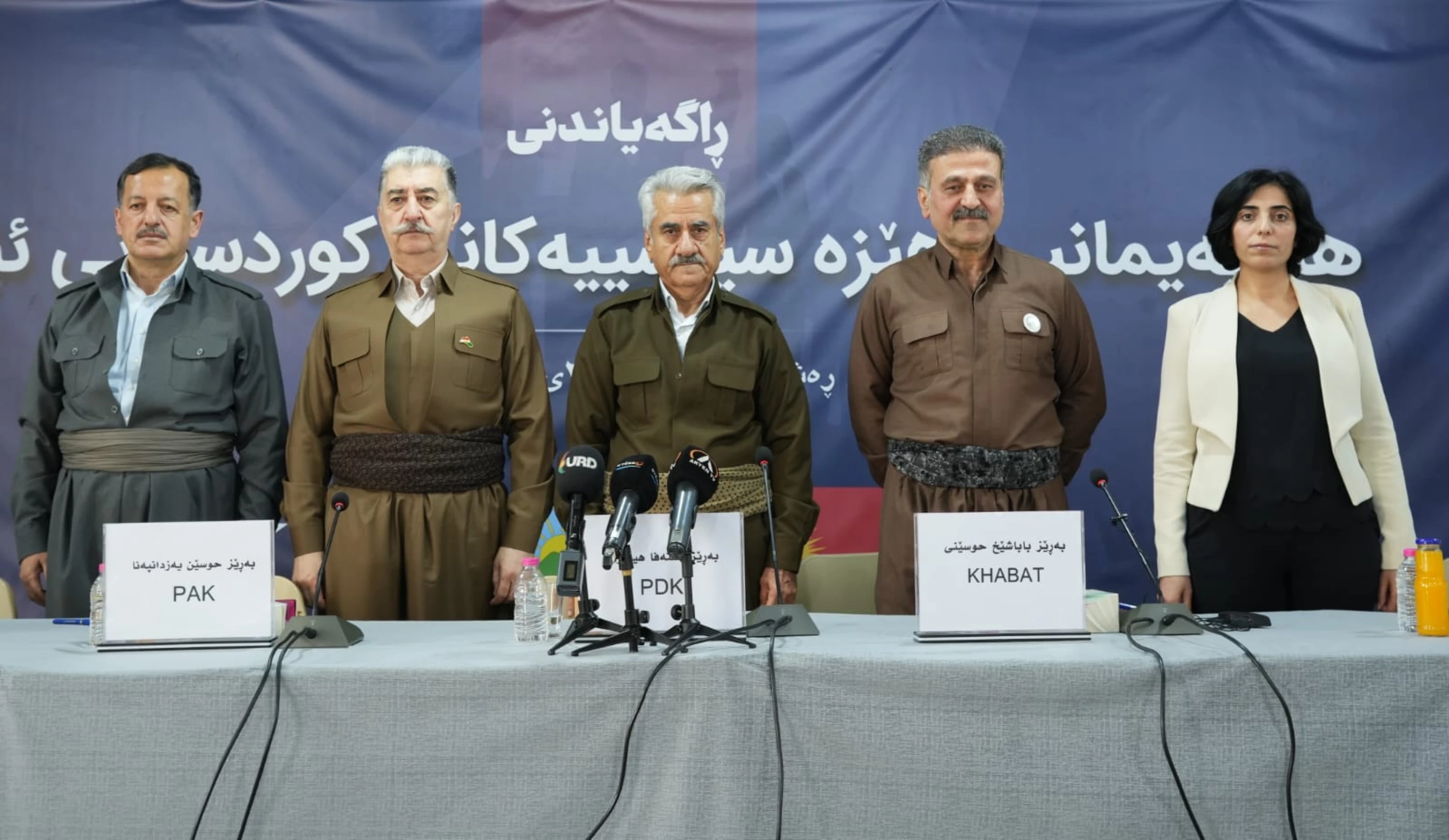
ERBIL, Kurdistan Region of Iraq – Five Kurdish opposition parties from western Iran (Rojhelat) on Sunday announced the formation of a joint coalition called the “Alliance of Political Forces of Iranian Kurdistan,” marking a significant step towards a unified Kurdish opposition in Iran.
“We, the political parties that have signed the ‘Alliance of Political Forces of Iranian Kurdistan,’ … have united our energies and ranks of struggle in Kurdistan and announced a political alliance,” the newly formed coalition announced in a statement.
The parties involved include the Democratic Party of Iranian Kurdistan (PDKI), Kurdistan Freedom Party (PAK), Kurdistan Free Life Party (PJAK), Organization of Iranian Kurdistan Struggle (Khabat), and the Komala of the Toilers of Kurdistan.
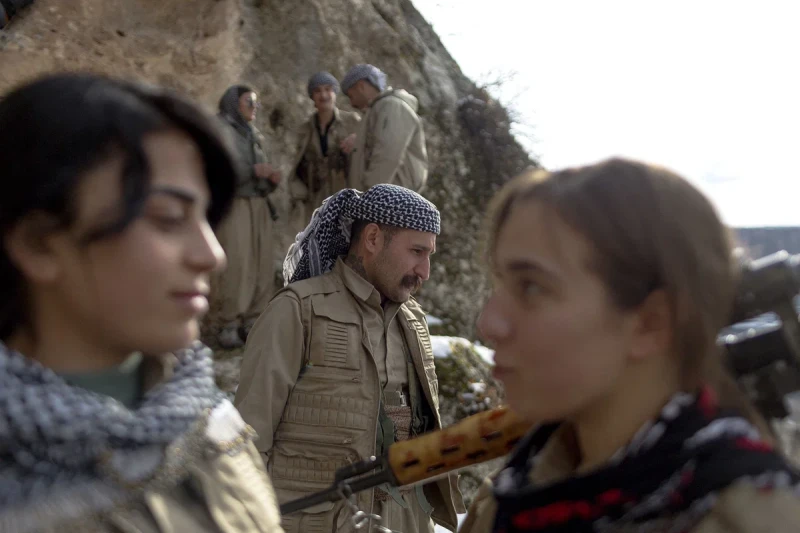
The dissident parties, many of whom are based in the Kurdistan Region, have long been military targets for Iran, with a suspected Iranian drone strike on officials from Komala of the Toilers of Kurdistan in Sulaimani in February killing one, according to the group. The Kurdistan Region Security Agency (Asayish), however, denied the claim, insisted that the incident stemmed from a mere vehicle rollover.
In 2023, Iraq and Iran signed a security agreement under which Baghdad pledged to disarm and relocate these Iranian Kurdish opposition groups from border areas, following repeated warnings from Tehran.
The primary objectives of the alliance are “the struggle to bring down the Islamic Republic of Iran, the realization of the Kurdish people's right to self-determination, and the establishment of a national and democratic institution based on the political will of the Kurdish nation in Eastern Kurdistan.”
The coalition will serve to develop “greater unity and joint struggle to further develop the Kurdish political movement in Iran,” the statement asserted.
PDKI Secretary General Mustafa Hijri noted in a speech that the alliance was the product of several months of negotiations, asserting that the announcement marks the beginning of “a new phase in the joint struggle and effort of these political forces.”
The proposal to form the coalition platform was introduced days prior during a meeting of the Dialogue Center, established in 2022 in response to the Jina Amini protests, with the aim of increasing collaboration between the groups. The center involves seven Iranian Kurdish opposition parties and holds monthly meetings.
At the meeting, two Kurdish parties, the Komala Revolutionary Party and the Komala Kurdistan Organization of the Communist Party of Iran (CPI), did not approve the proposal, leading to a postponement of the decision for several days to allow further discussions.
The move indicates that the five parties that approved the proposal have decided to proceed with the coalition without the two groups.
The decision comes amid heightened tensions in Iran following widespread anti-government protests in January that resulted in a brutal crackdown.
In Rojhelat, at least 257 Kurds, including 20 minors and 19 women, have been killed during the authorities' efforts to crush dissidence.
 Facebook
 LinkedIn
 Telegram
 X
X