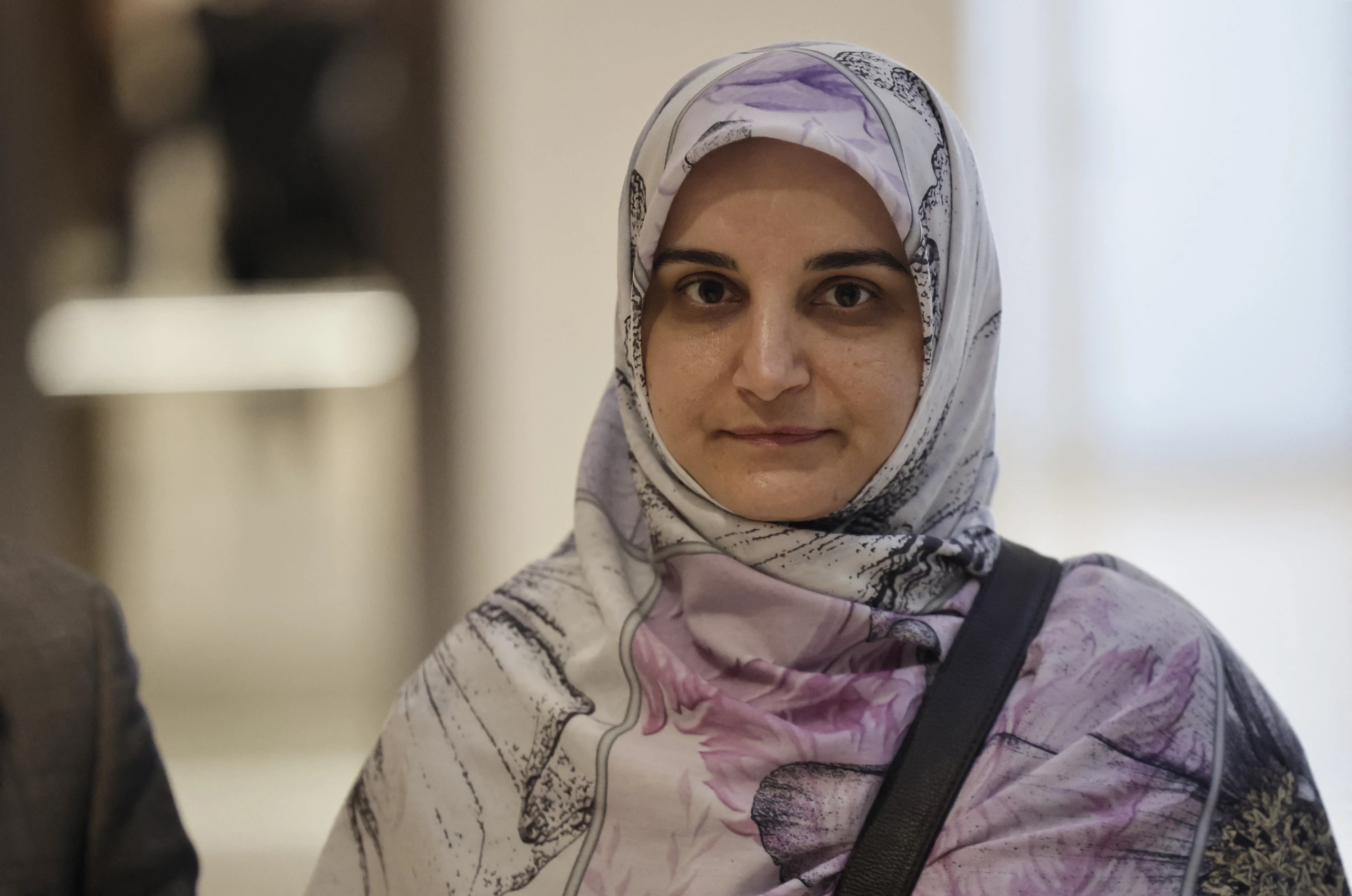
ERBIL, Kurdistan Region of Iraq - Mahdieh Esfandiari, an Iranian national residing in France, was sentenced Thursday to one year in prison for “glorification of terrorism” and permanently barred from the country at the conclusion of a trial that opened in January, giving rise to rife speculation of future prisoner exchanges between Paris and Tehran.
The court also ordered Esfandiari to be placed on the list of individuals convicted of terrorism, along with four other men convicted in the case. Her lawyer, Nabil Boudi, told AFP, "If the court has handed down such a severe sentence on the basis of diplomatic considerations, the court has committed an error. We will appeal."
At a hearing in January, prosecutors asked for a four-year prison sentence, with three years suspended, and a lifetime ban from France.
The Paris Prosecutor’s Office charged the 39-year-old Iranian academic with “apologie du terrorisme” (glorification of terrorism), based on Telegram posts, which they claimed were supportive of the Hamas-led Operation Al-Aqsa Flood against the Israeli regime in October 2023.
Esfandiari is accused of posting content for a channel called “Axis of Resistance” between 2023 and 2024 across platforms such as Telegram, X, Twitch, and YouTube, and faces additional charges including “online provocation of terrorism, insults based on origin or religion, and refusal to provide access codes to her social media accounts” (X and Telegram).
She was placed in provisional detention from March to October 2025, after an investigation launched by the National Anti-Terrorism Prosecutor’s Office (PNLH) in November 2024.
The specific content of Esfandiari’s Telegram posts remains undisclosed in public reports, making it difficult to assess the legitimacy of the charges against her.
Will there be a prisoner exchange?
The Iranian academic could serve as a key lever in future negotiations with Tehran, particularly as Iranian authorities have signaled their intent to swap Esfandiari for French citizens Cecile Kohler and Jacques Paris once her legal proceedings in France conclude.
“There has been talk from the outset of this so-called ‘exchange’ which must take place between our compatriots and Mme Esfandiari,” said her lawyer Boudi on Thursday.
Kohler and Paris, two French academics, were held in Iranian custody after being detained in 2022 during a trip to the country on charges of spying for Israel, at a time when Iran was witnessing one of its largest nationwide uprisings following the death of Zhina Amini in police custody, known as the “Woman, Life, Freedom” (Jin, Jiyan, Azadi) movement.
Both of their families have strongly rejected any charges of espionage.
Last November, French President Emmanuel Macron announced that the two nationals, who had been held for over three years in Iran’s notorious Evin Prison, were released and taken to the French embassy in Tehran, where they remain to this day.
“They are well. They are safe,” French foreign ministry spokesman Pascal Confavreux told AFP on Wednesday.
“We take note of this court decision and the appeal, but I have no comment to make on the consequences of the judgment,” Confavreux told reporters on Thursday.
The sentence was handed down just as US-Iran nuclear talks were getting underway in Geneva.
Iranian authorities have repeatedly detained foreign and dual nationals in the country on charges of espionage, a tactic described as “hostage diplomacy” aimed at gaining political leverage abroad.
Since the 12-Day War with Israel in June, Iran has also hanged several convicts on charges of conspiring with Israeli intelligence.
Who is Mahdieh Esfandiari?
Mahdieh Esfandiari is an Iranian linguist and French language graduate who has lived in France since 2018. She was residing in the city of Lyon when she was arrested on 28 February 2025 on charges of promoting and inciting “terrorism” on social media over comments she is said to have made, including on October 7, according to French authorities.
Esfandiari graduated from Lumiere University, where she worked as a professor, translator, and interpreter. She is also a prominent pro-Palestinian activist with a significant online presence.
Esfandiari’s past activism includes participation in women’s rights and human rights campaigns, active engagement on social media with a focus on West Asian issues, and attendance at pro-Palestinian protest rallies in France.
As she entered the courtroom in January for the trial — with several anti-Semitism advocacy groups joined as plaintiffs — she said, “I’m here today to finally speak about the facts, as there have been a lot of wrong stories about me in the media, and a lot of lies.”
Fellow activists familiar with her work say she published a series of posts condemning the Israeli genocide in Gaza, portraying her as a victim of France’s clampdown on pro-Palestinian advocacy.
About October 7th, she said: “It’s not an act of terrorism, it’s an act of resistance.”
 Facebook
 LinkedIn
 Telegram
 X
X