ERBIL, Kurdistan Region of Iraq - Saraya Awliya al-Dam, a pro-Iran militia group, claimed responsibility for a Sunday drone attack on the US military presence in Erbil International Airport, calling it "a fulfillment of our religious duty."
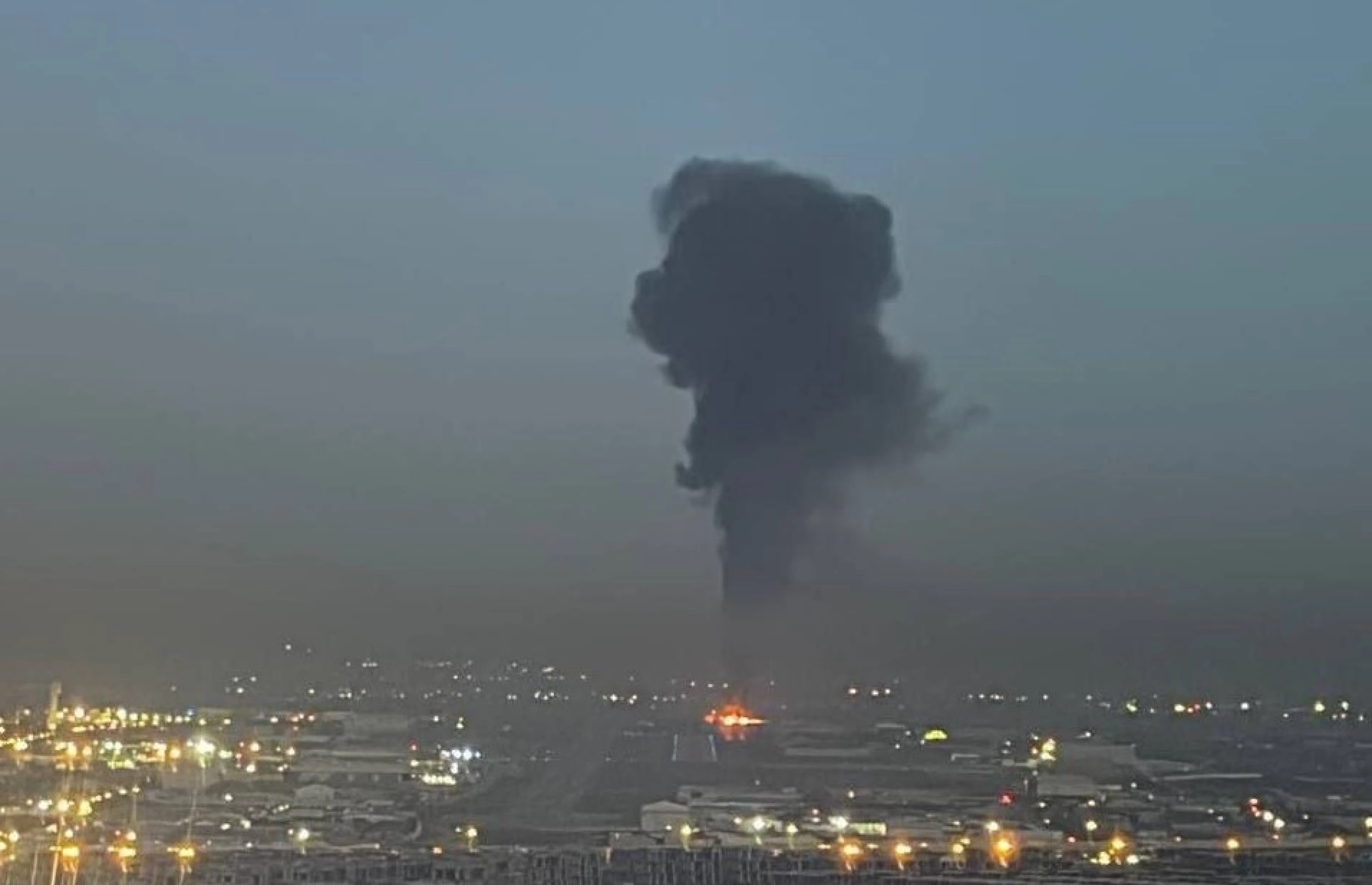
The strikes took place on early Sunday morning, resulting in a massive smoke plume rising above the blast site and over the Kurdistan Region capital.
"In support of the Islamic Republic of Iran against the Zionist-American aggression, and in affirmation of our defense of Iraq's sovereignty, our valiant mujahedin carried out a qualitative operation today ... with a squadron of drones targeting American bases in Erbil," the Shiite militia said in a statement.
It is unclear as of yet if there were any casualties arising from the strikes.
Following the launch of preemptive US and Israeli strikes against Iran, several Iraqi militia groups with ideological affiliations toward the Islamic Republic have asserted their willingness to strike against regional US military bases.
Kataib Hezbollah, a salient pro-Iran actor in Iraq, said Saturday that they will "soon begin targeting American bases in response to their aggression," with one of the group's installations being targeted by an unknown airstrike on the same day, killing two.
The announcement of the death of Iranian Supreme Leader Ayatollah Ali Khamenei is likely to have an incendiary effect on Iran-affiliated Shiite militias.
Erbil's main airport has long housed a substantial US military presence that has served as a critical node of cooperation in the fight against the Islamic State (ISIS).
Saraya Awliya al-Dam has targeted US forces on the site in the past, having claimed responsibility for a series of rocket strikes in 2021 that came as part of a vengeance campaign for the US assassination of Iran's Islamic Revolutionary Guard Corps (IRGC) Quds Force commander Qassem Soleimani and Popular Mobilization Forces (PMF) chief Abu Mahdi al-Muhandis the year prior.
The US has long singled out PMF components as a source of Iranian influence in Iraq, with the two powers having often used the Iraqi domain as a means of grappling for regional power.
 Facebook
 LinkedIn
 Telegram
 X
X