
ERBIL, Kurdistan Region of Iraq – Residents of Erbil spent Sunday night in fear and uncertainty as the city, home to the world’s largest US consulate building and American troops, was caught in the crossfire of Iran’s war with the US and Israel.
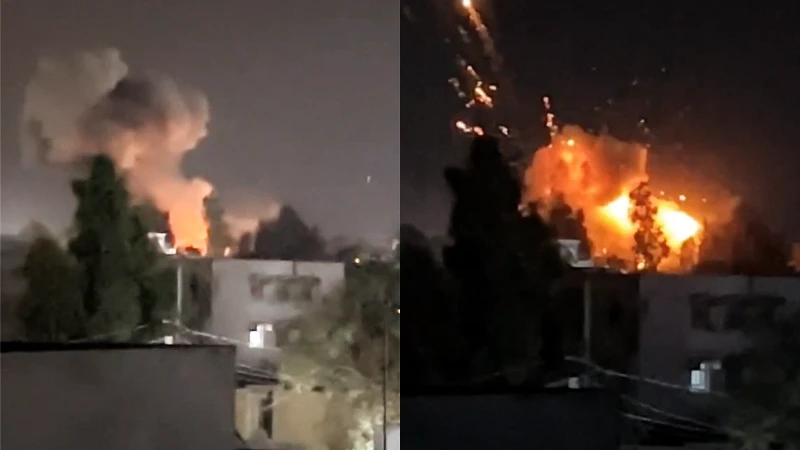
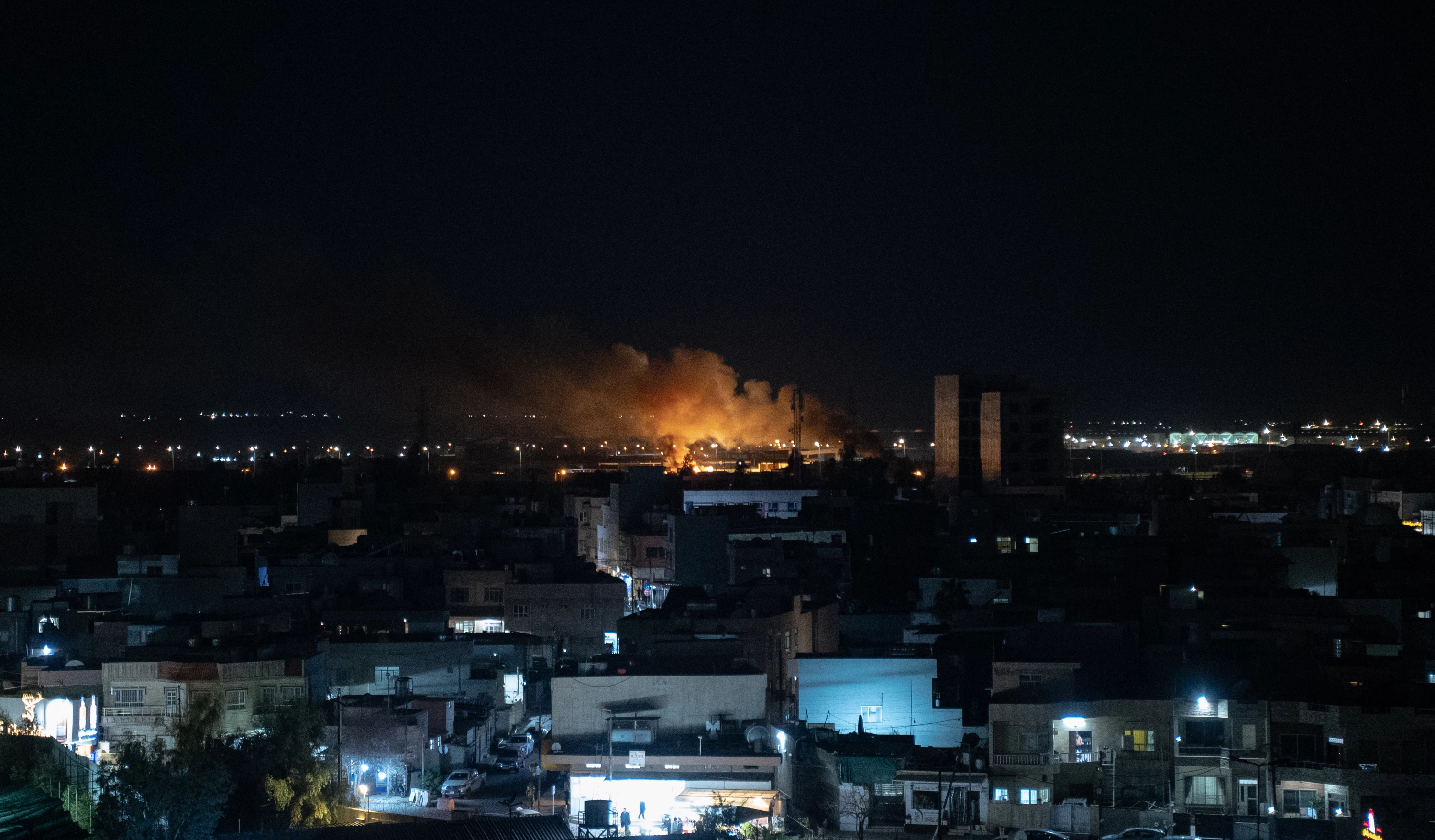
On Sunday evening, one loud boom after another was heard in Erbil, as the city’s airport went under attack and air defense systems scrambled to thwart the drones and missiles.
Uncertainty spread through the city’s residents, creating panic and confusion. However, within half an hour, it became clear that the smoke was rising from Erbil International Airport, home to US-led coalition forces.
The airport is one of only two places in the city where aerial defense systems are located, with the other being the C-RAM interceptors at the US Consulate General building.
When the dust settled, fragments had dropped on Erbil’s 120-meter road, one of the city’s busiest streets, a ringroad that connects the entire city and is used by thousands on a daily basis. Circulating footage purported to show a major dent on the main road close to the airport, posing a risk to drivers as they traverse the high-speed lane.
As the US and Israel continue trading blows with Iran, the Kurdistan Region and its capital Erbil are caught in the crossfire, with Iranian missiles and drones flying overhead as air defense systems scramble to intercept the projectiles pic.twitter.com/oAu8RYwSOs
— The New Region (@thenewregion) March 2, 2026
Sunday's attack was not in isolation. The same site was targeted several times a day prior, when the conflict first began, as Iran and its proxies rushed to return fire at US interests and installations across the region.
The current conflict between Iran and the US, precipitated by the assassination of Iranian Supreme Leader Ayatollah Ali Khamenei, has no clear direction. It has thrown not only the Kurdistan Region and Iraq, but the entire Gulf and the Middle East into a security crisis.
Myriad states have been affected and caught in the middle of the fire, including Saudi Arabia, Qatar, the UAE, Kuwait, and Bahrain.
The Islamic Republic has yet to claim responsibility for any attacks on the Kurdistan Region. However, an Iran-backed Iraqi militia by the name of Saraya Awliya al-Dam has on two occasions claimed responsibility for the attacks on the Kurdistan Region.
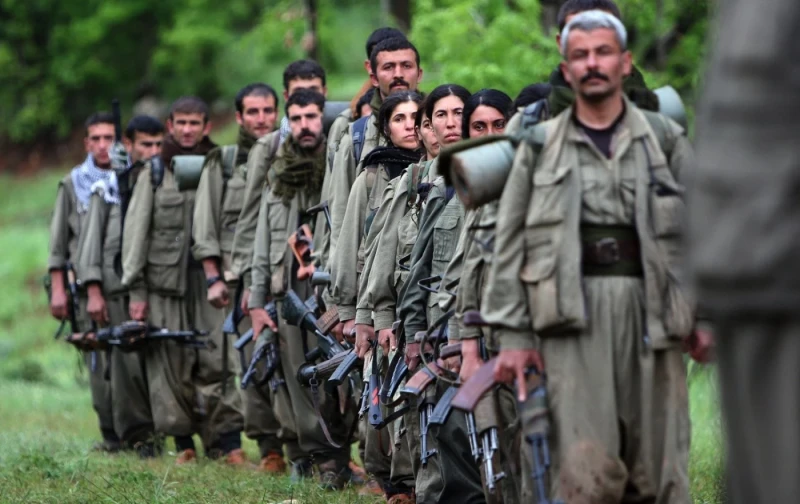
In addition to housing foreign troops who have long been threatened by Iran’s proxies, the Region also houses several Iranian Kurdish opposition groups, at least three of which claimed to have been targeted by drones on Sunday night and early Monday morning.
The Iraqi government, which is led by an alliance of Shiite parties under the Coordination Framework, many of whom serve Iran’s interests, has repeatedly asked the US-led coalition's forces to leave Iraq, unlike the Kurdish officials in the north, who have maintained strong relations with the US and allied forces and have time and again insisted that their stay in Iraq was needed to combat an active terror threat.
The Kurdistan Region's leaders have repeatedly asked allies and partners to equip them with air defense systems, but their requests have fallen on deaf ears. Instead, Erbil, one of the closest targets to Iran in times of conflict, lies exposed and at the mercy of the US-led coalition's defense systems to aerial assaults, often from several Iran-backed regional actors.
The Region's grievances transcend the current regional turmoil; several oil fields across the entire Region were targeted late last year in a series of attacks on the Kurdistan Region's energy infrastructure.
The December 2025 aggression proved consequential, as production halted in many oil and gas fields and electricity production was severely undermined, leading to frequent blackouts. The Region's bare and exposed air space proved detrimental.
Erbil is now once again a target, caught in the exchange of fire between long-standing adversaries, the US and Israel, and Iran. With its airspace still exposed and at the mercy of foreign military missions to protect its civilians, the Kurdistan Regional Government (KRG) still pursues a diplomatic balance, seeking to keep friendly relations with its neighbors and allies overseas.
 Facebook
 LinkedIn
 Telegram
 X
X