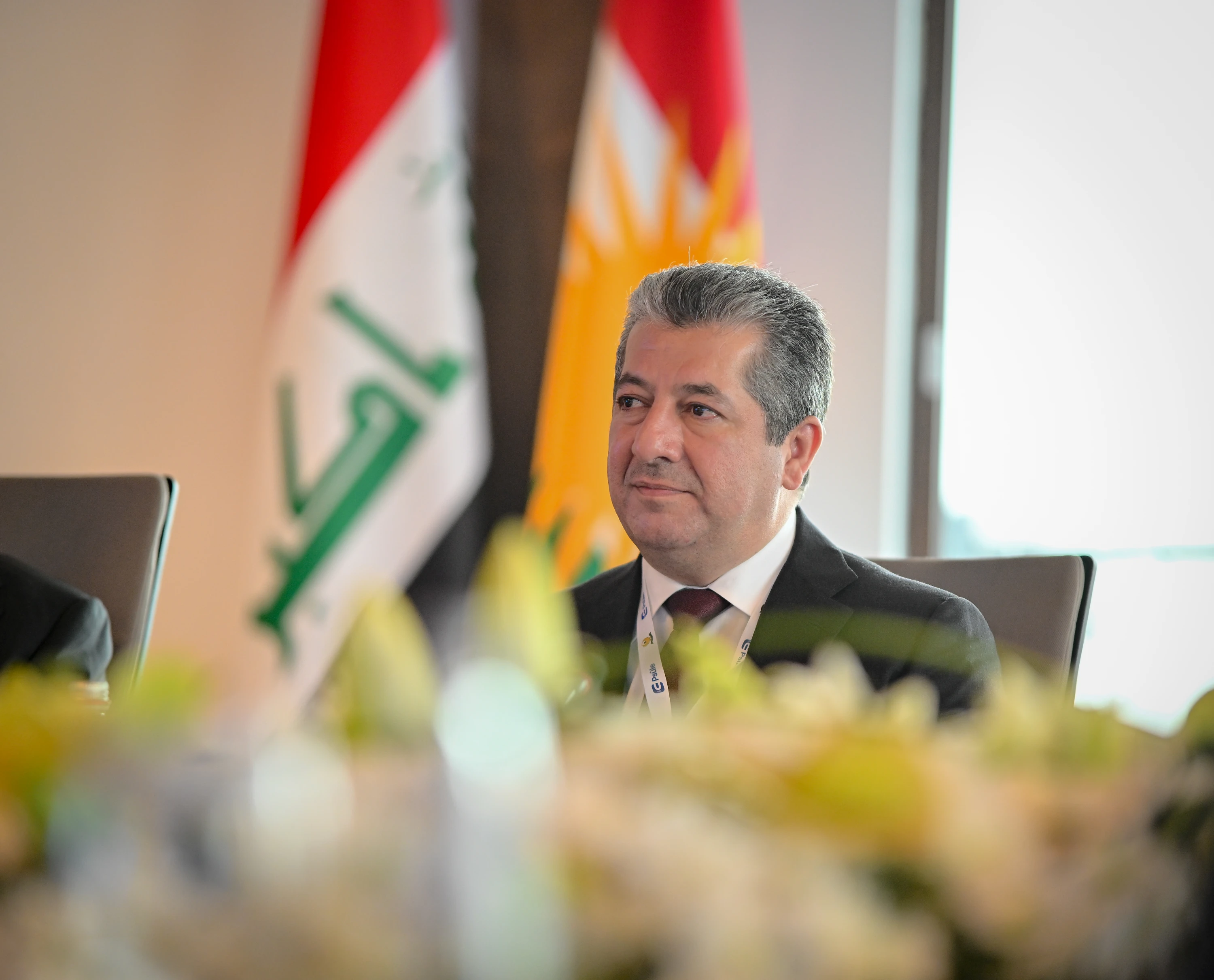
ERBIL, Kurdistan Region of Iraq - Kurdistan Region Prime Minister Masrour Barzani is set to visit Baghdad next week for government-to-government discussions with the new Iraqi cabinet, led by Prime Minister Ali al-Zaidi.
Barzani “will lead a significant delegation to Baghdad for G2G talks next week. We will offer the KRG’s [Kurdistan Regional Government’s] unique experience with the 24-hour Runaki program to the new federal government, including technical assistance and access to our technology to accelerate Prime Minister al-Zaidi’s ambitions for electricity sector reform,” Aziz Ahmad, deputy chief-of-staff to the Kurdish premier said on X.
Runaki, a landmark round-the-clock electricity project, was announced by Barzani in October 2024, in a major step toward eliminating the electricity issues that the Region had struggled with for decades.
Earlier in the day, Iraqi Prime Minister Zaidi chaired a meeting at the federal electricity ministry where he emphasized that the electricity sector “is a fundamental axis in the government's plans.”
The Runaki Project provides uninterrupted power for nearly 5.5 million people, over 85 percent of the Kurdistan Region’s population, according to electricity ministry data obtained by The New Region last month.
The initiative is also expected to produce significant environmental benefits through the phasing out of private, diesel-powered generators that are highly polluting. “The KRG plans to phase out over 7,000 generators by the end of 2026,” a prior KRG statement asserted.
Barzani “will also follow up on security assurances to allow oil and gas companies in the Kurdistan Region to resume production and exports, potentially doubling Iraq’s export capacity to over 500K bpd,” Ahmed added, stressing: “Companies cannot be expected to resume operations amid the threat of drones in the skies.”
Since the outbreak of the Iran war in late February, the Kurdistan Region has been struck with hundreds of drones and missiles, resulting in tens of casualties and significant material damage, despite Kurdish authorities repeatedly stressing that the Region is not party to this conflict.
The continued attacks have led several foreign oil and gas producers in the Kurdistan Region to halt production to protect their staff.
Most of the attacks have been claimed by factions within the Islamic Resistance in Iraq, an umbrella group of pro-Iran Iraqi militias, many of which have been institutionalized and formally incorporated into the Iraqi state security apparatus as part of the Popular Mobilization Forces (PMF).
 Facebook
 LinkedIn
 Telegram
 X
X