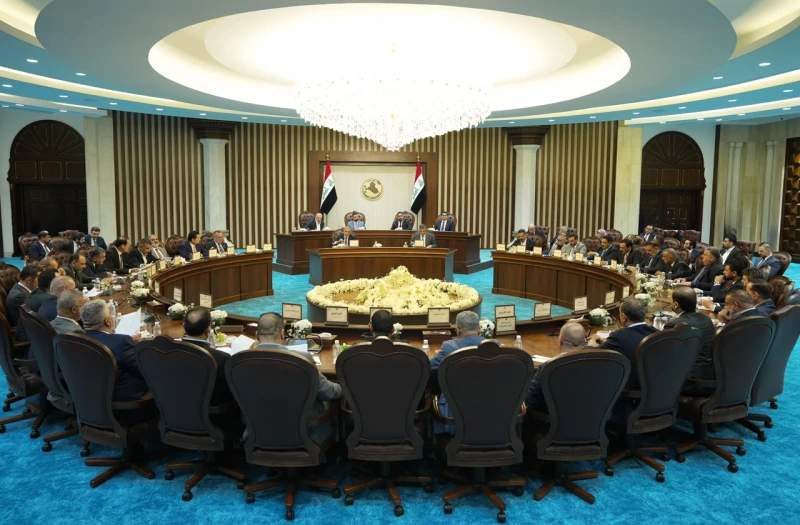

ERBIL, Kurdistan Region of Iraq – The Kurdistan Regional Government’s Council of Ministers on Wednesday proposed the formation of a high-level committee between Erbil and Baghdad to conclude long-standing outstanding issues between the two sides, with the ASYCUDA border crossing system being especially salient.
Earlier on Wednesday, Kurdistan Regional Government (KRG) spokesperson Peshawa Hawramani said a permanent high-level joint committee is set to be formed between the KRG and the Iraqi government to improve coordination between the two governments on Erbil-Baghdad affairs.
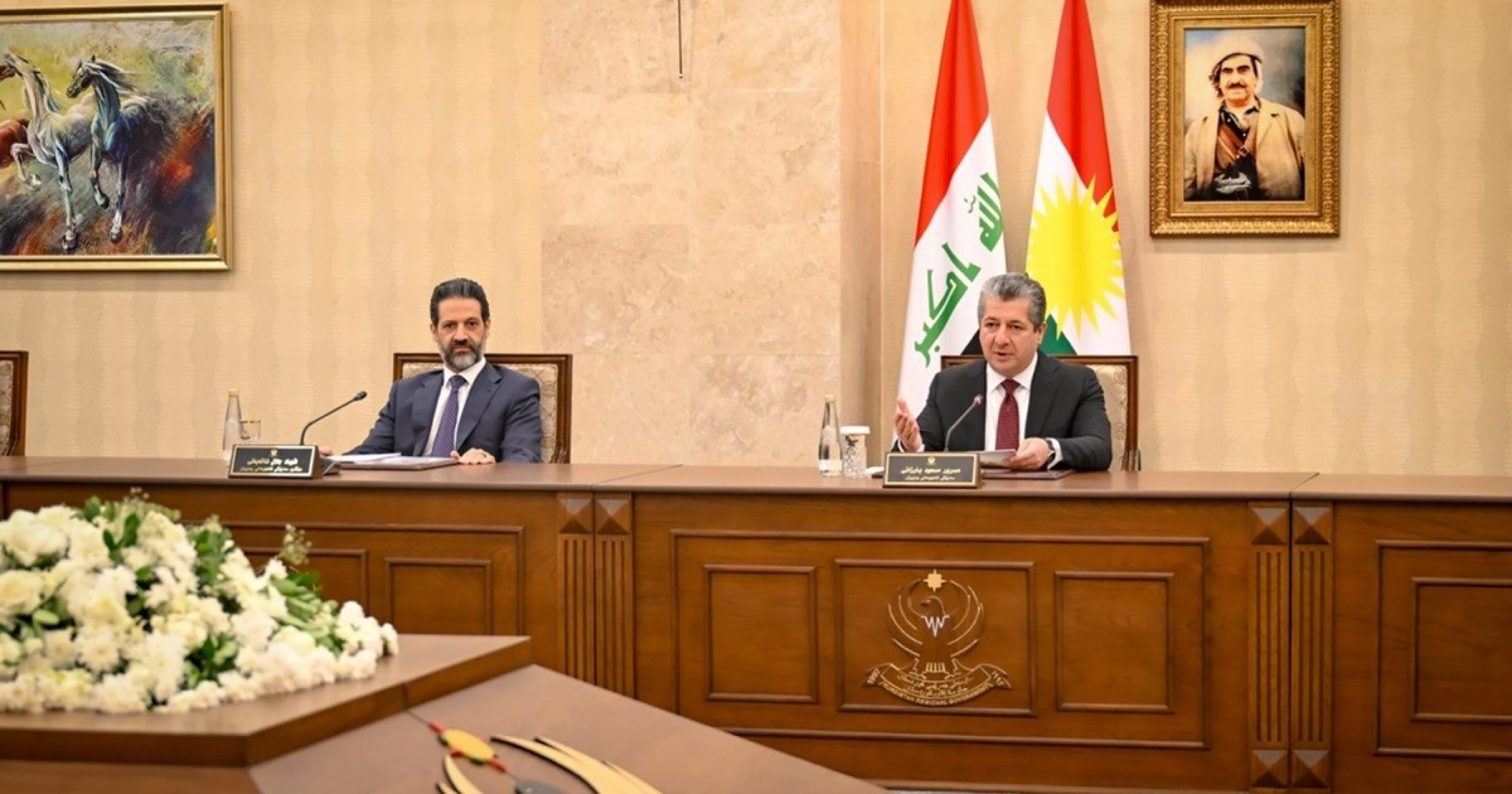
The Kurdistan Region Council of Ministers convened on Wednesday under the chairmanship of Prime Minister Masrour Barzani and Deputy Prime Minister Qubad Talabani, read a statement from the KRG.
The premier emphasized “the importance of developing a roadmap for continuing negotiations on the pending files between the Kurdistan Region and the Federal Government,” recalling to his latest visit to Baghdad.
Barzani “proposed the establishment of a high-level permanent ministerial coordination body, with membership comprising ministers and relevant officials from both the Federal Government and the Kurdistan Regional Government,” the statement said.
Talabani also described the decision as representing “a step toward institutionalizing the approach to resolving issues” between Erbil and Baghdad.
Speaking to the reporters later on Wednesday, Barzani said that the high-level committee to be formed between the KRG and Iraqi government "is not only for solving problems" but also for presenting new ideas between the two sides.
The premier stressed that if the committee operates "on a continuous basis," Erbil will be able to resolve most issues in a timely manner, put forward new ideas, and "improve" relations with Baghdad.
Erbil and Baghdad have been at loggerheads over the implementation of the ASYCUDA international customs system. The Iraqi government has implemented the system and is forcing the KRG to do the same in an effort to centralize customs revenues and expenditures, with Kurdish authorities having requested additional time before the system comes into effect.
Since the start of the year, the Iraqi government has placed a dollar embargo on the Kurdistan Region’s businessmen, withholding US dollar access from Kurdish traders at the official exchange rate set by the Central Bank of Iraq (CBI), citing what they regard as Erbil’s non-compliance with ASYCUDA.
“Regarding the implementation of ASYCUDA at the Kurdistan Region's border crossings, the Council of Ministers emphasized that at the earliest opportunity, the Federal Ministerial Council for Economic Affairs must, in a session, ratify the mutual understanding reached in April of this year between both parties,” the KRG statement added.
In March, Barzani proposed a version of the system tailored for the Kurdistan Region, supervised by the KRG, which would see Erbil retain the customs revenues and forward 50 percent of it to Baghdad within the framework of the Erbil-Baghdad budget agreement.
 Facebook
 LinkedIn
 Telegram
 X
X