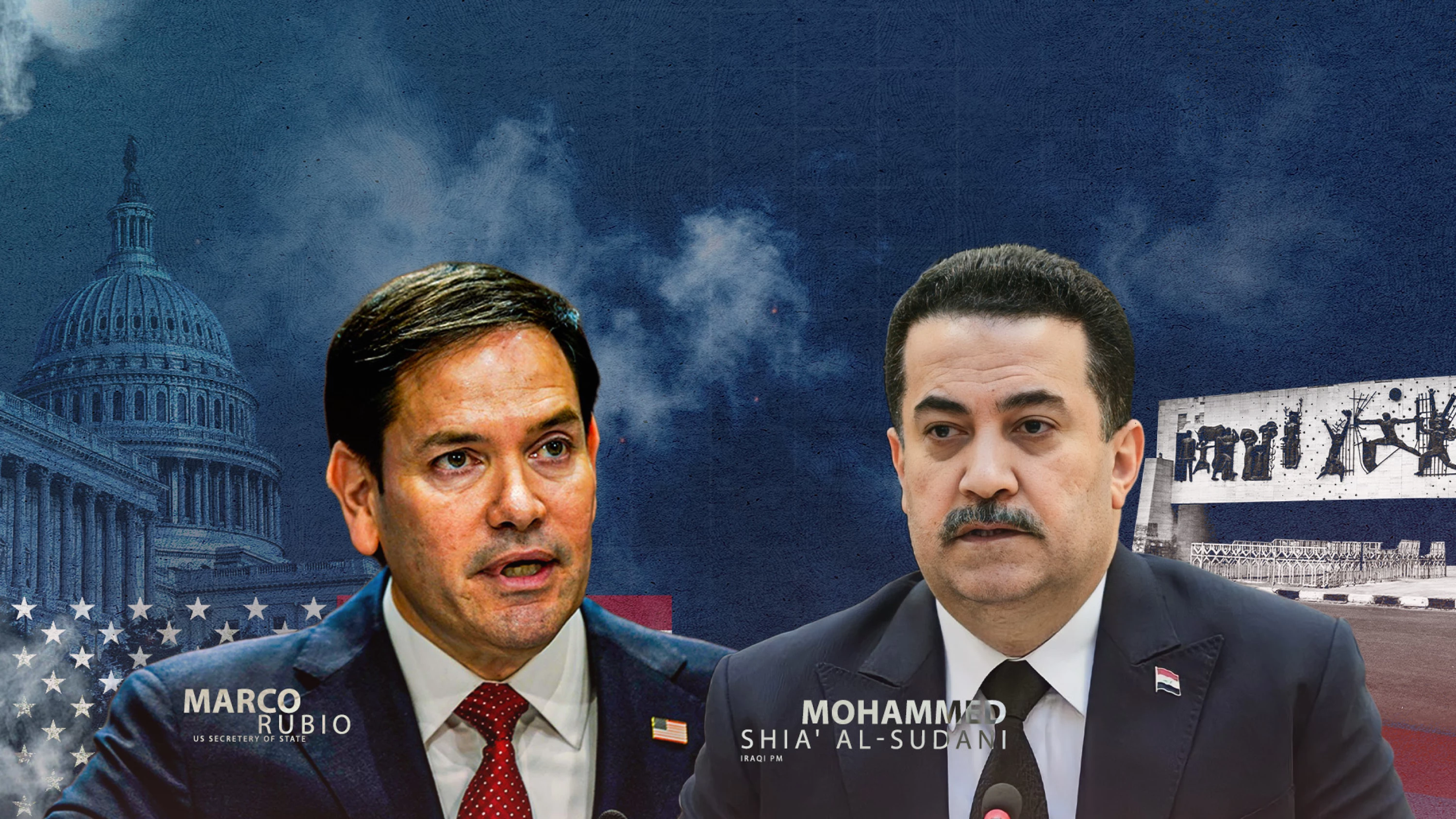
ERBIL, Kurdistan Region of Iraq – US Secretary of State Marco Rubio on Monday held a phone call with Iraqi Prime Minister Mohammed Shia’ al-Sudani, condemning the “terrorist” attacks on Iraq and the Kurdistan Region, which he blamed on Iran and its affiliated armed groups.
Rubio “strongly condemned terrorist attacks by Iran and Iran-aligned terrorist militia groups in Iraq, including in the Iraq Kurdistan Region,” according to a State Department statement.
The US top diplomat emphasized the importance of the Iraqi government “taking all possible measures to safeguard US diplomatic personnel and facilities.”
US diplomatic missions and military bases in Iraq and the Kurdistan Region have been repeatedly struck since February 28, after Iran launched a retaliatory campaign targeting US interests across the region in the wake of the large-scale American-Israeli strikes and the killing of Iran’s leader Ali Khamenei.
During the phone call, Sudani stressed Iraq’s commitment “to its principled position of not engaging in military actions,” while rejecting “any attempt to drag the country into ongoing conflicts,” according to a statement released by Sudani’s office.
Iraq’s airspace had been used by both sides to launch strikes, prompting a widespread condemnation from Iraqi authorities over violations of its airspace and concerns about being dragged into the conflict.
Sudani “highlighted the importance of ensuring that Iraqi airspace, territory, and waters are not used for any military action targeting neighboring countries or the region.”
Iran-backed Iraqi militias have launched drones and missile attacks, mainly targeting the US Consulate General in Erbil, US-led global coalition presence in Erbil, and bases of exiled Kurdish opposition groups from Rojhelat (western Iran). Civilian and economic infrastructure have also been targeted in the attacks, including hotels and telecommunication towers.
At least three people have so far been killed in the attacks on the Kurdistan Region: Two fighters of Iranian-Kurdish opposition groups, and an airport security personnel in Erbil.
The US Embassy compound in Baghdad has also been subject to the attacks.
Concerning the attacks, the premier “affirmed Iraq’s commitment to protecting diplomatic missions, embassies, and consulates represented on its territory, noting that this is among the core duties and responsibilities of the Iraqi armed forces across all branches.”
The US has responded to the attacks by targeting the Iran-aligned groups, which includes many factions that are incorporated into the Iraqi state security apparatus as part of the Popular Mobilization Forces (PMF).
Iraq’s Joint Operations Command has announced at least seven people killed in the attacks, while the PMF has reported at least 10 killed since the start of the conflict.
During the 12-Day-War in June, Iraq’s airspace was continuously used by Israel to launch an extensive aerial bombardment against Iran, leading Baghdad to submit an official complaint to the UN Security Council, accusing Israel of violating its airspace.
 Facebook
 LinkedIn
 Telegram
 X
X