ERBIL, Kurdistan Region of Iraq – The Iraqi parliament has set April 11 as the date for a parliamentary session to elect the country’s next president, with the legislature’s leadership calling on the heads of the parliamentary blocs to complete the government formation process.
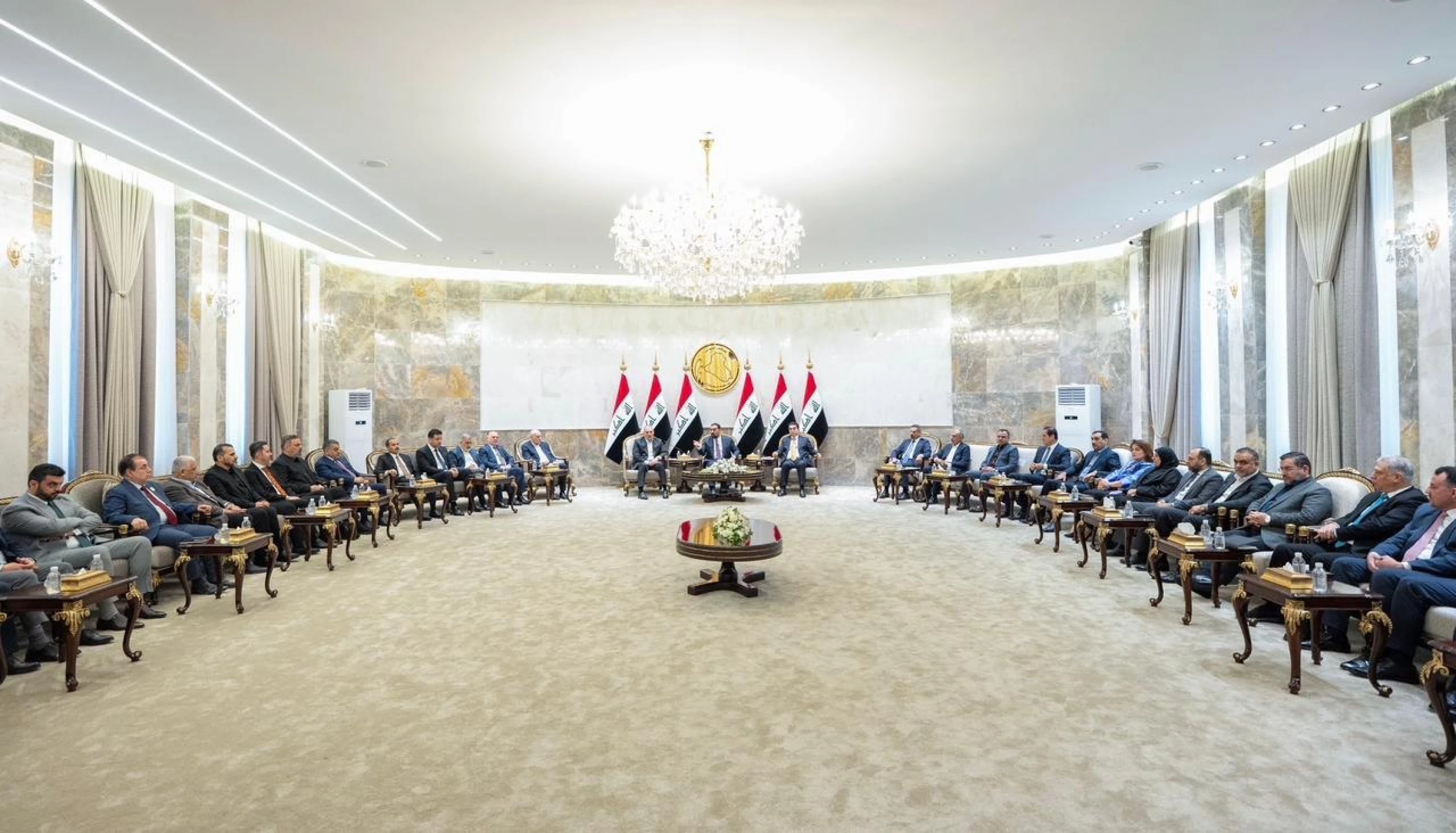
Parliament speaker Haibat al-Halbousi and his deputies held a meeting with the heads of the parliamentary blocs on Sunday where they discussed an array of topics, including the presidential election process, and the need to end “the political deadlock in light of the security and economic conditions the country is facing,” according to a statement from the parliament’s office.
“The parliament leadership decided to set Saturday, April 11, as the date for the session to elect the President of the Republic,” read the statement, urging leaders of the political blocs to “assume their responsibilities in completing the constitutional requirements and forming a government.”
The announcement comes after Iraq's ruling Shiite Coordination Framework stressed the need to expedite the election of the president, and urged political parties to resolve their differences over the matter to “put an end to the state of paralysis.”
President Masoud Barzani on Saturday warned that rushing to elect Iraq’s next president will lead to “counterproductive” results and “deeper divisions,” stressing the need for further consultation and taking into account the entitlement of all political components.
“We believe that the current call for a parliamentary session to elect the President of the Republic and subsequently appoint the prime minister requires further consultation,” Barzani said in a letter to the leaders of Iraq’s ruling Shiite Coordination Framework.
The Iraqi parliament is constitutionally required to hold a session to elect the president within 30 days of the first session of the new term. The new cycle of the Iraqi legislative body began on December 29.
The Kurdistan Region’s ruling Kurdistan Democratic Party (KDP) and the Patriotic Union of Kurdistan (PUK) have yet to agree on a unanimous candidate for the Iraqi presidency, a post traditionally reserved for Kurds, over three months after the first session.
The KDP has fielded Iraq’s current Foreign Minister Fuad Hussein, while the PUK has nominated Nizar Amedi, former environment minister and the head of the party’s Baghdad office.
KDP officials have repeatedly stressed that the presidency, which has been held by the PUK since 2005, does not belong to a single party.
While expressing understanding of the Kurdish component’s failure to reach a decision, Barzani noted that “attempts to push through or impose a solution will lead to counterproductive results and deeper divisions, which the country does not need at this delicate and sensitive stage.”
 Facebook
 LinkedIn
 Telegram
 X
X