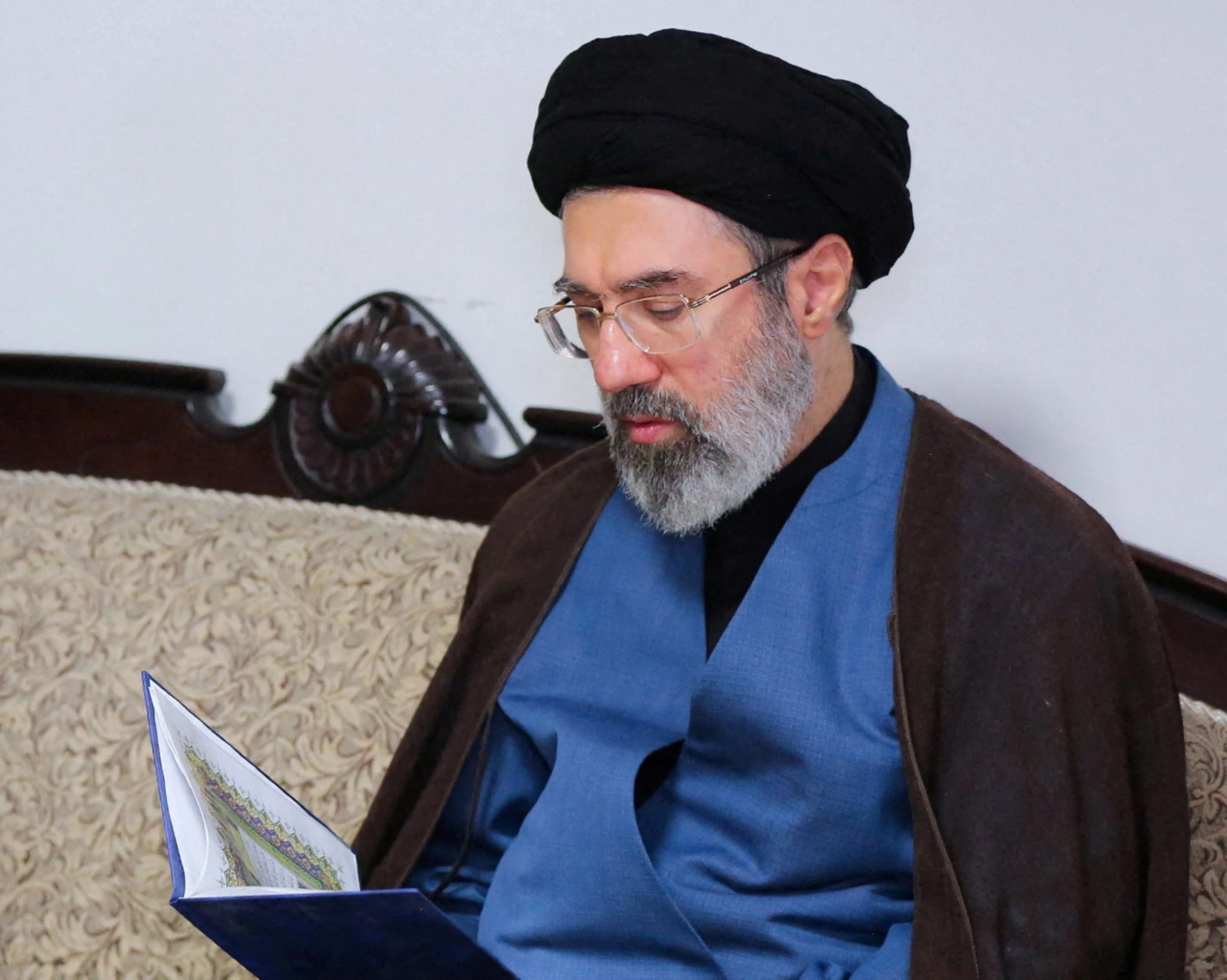
ERBIL, Kurdistan Region of Iraq - Iran’s Supreme Leader Mojtaba Khamenei said Thursday that Tehran will bring the management of the Strait of Hormuz into a “new and serious phase” in his first public statement since the US-Iran truce.
His message comes after mourning ceremonies were held on the 40-day anniversary of his father and former Supreme Leader Ayatollah Ali Khamenei, who was killed in a US-Israeli strike at the start of the war, which has reached a tentative halt amid a two-week ceasefire obtained earlier this week.
Khamenei said Iran would not “let go of the criminal aggressors who attacked our country,” vowing to demand compensation for damages, including what he described as the “blood price” of those killed and wounded during the conflict.
Reopening the Strait of Hormuz, through which a significant proportion of the world's oil flows, has proved a key US objective after Iran restricted the key waterway during the conflict.
US President Donald Trump has floated the prospect of a joint tolling system, which has been rejected by European leaders, coming as Iran has begun to allow vessels to pass through the strait amid skyrocketing fuel prices worldwide.
In his message, Khamenei declared that “the Iranian nation have been the true victors of the battlefield,” adding that the Islamic Republic has emerged as a major power while its adversaries have shown “weakness.”
The prospect of negotiations, which are to be held in Pakistan's Islamabad on Friday, have been negatively affected by Israel's continuation of strikes against Hezbollah, with Washington insisting that Lebanon is not a party to the agreement despire widespread international and Iranian protest.
"We hope that... we will decisively defeat the enemy, both in the arena of negotiations and on the battlefield," said the Iranian leader, who has not made a public appearance since the strike that killed his father, leading to speculation that he himself was seriously injured in the blast.
Khamenei also called on Gulf states to reject alignment with the United States and Israel, urging regional governments to reconsider their positions amid the ongoing tensions, coming after Iran extensively targeted its Gulf neighbors during the conflict.
The Iranian leader said public mobilization must continue as it has over the past 40 days, referring to the period following the assassination of the late Khamenei.
He added that Iran does not seek war but will not give up its rights, accusing global powers of exposing their “true face” through actions that he said targeted Iranian civilians.
 Facebook
 LinkedIn
 Telegram
 X
X