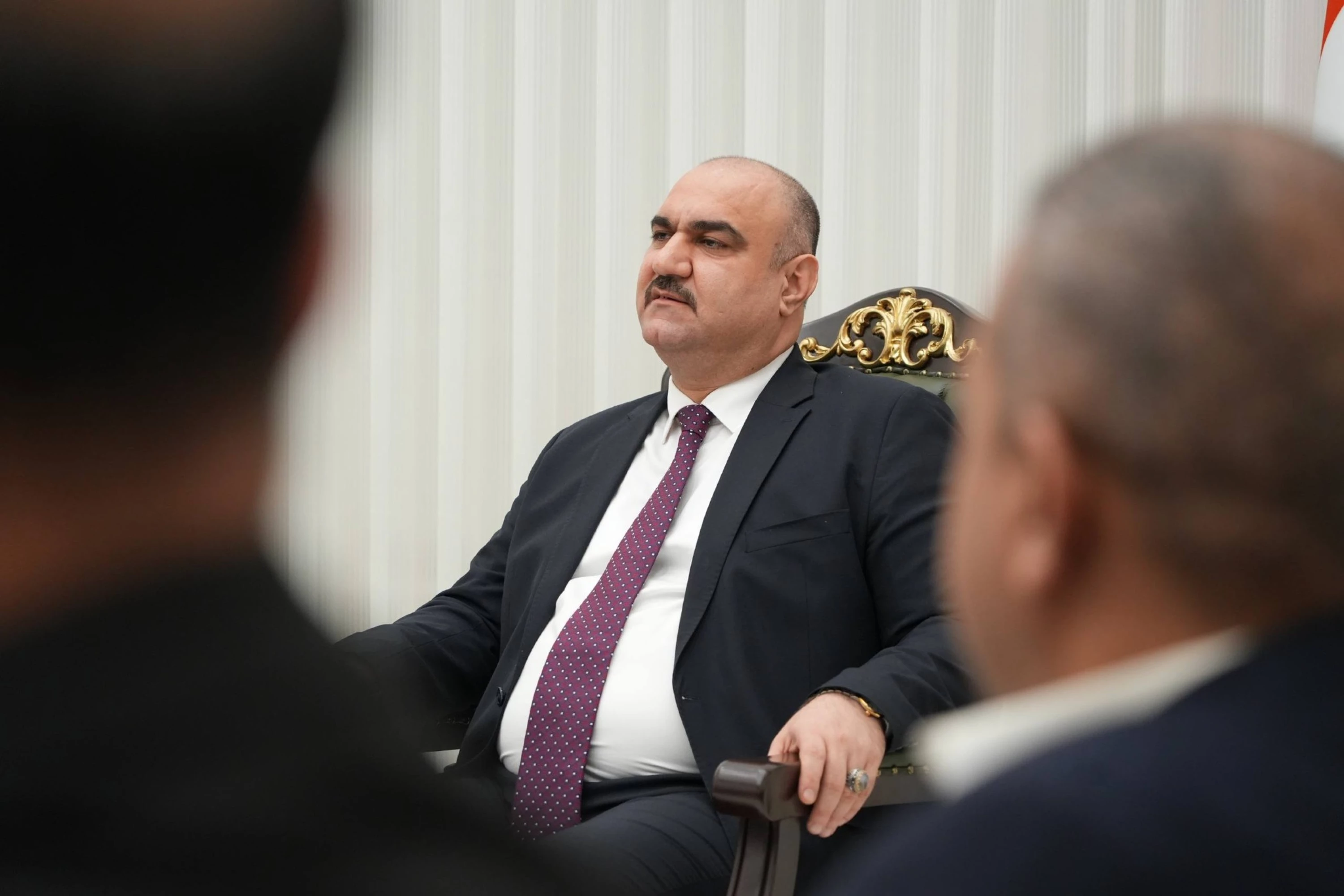
ERBIL, Kurdistan Region of Iraq – Kirkuk’s newly elected governor and leader of the Iraqi Turkmen Front, Mehmet Seman, said Friday that rule by a single party over others would end under his leadership, detailing how the Front came to be included in the 2024 power-sharing agreement following an initial boycott.
On Thursday, Seman was elected Kirkuk’s new governor after Rebwar Taha, of the Patriotic Union of Kurdistan (PUK), stepped down from his position under 2024’s power-sharing deal made with Arab parties.
“In Kirkuk, unfortunately, in the past years, one side ruled over the other. We don't want to see such a thing, such a picture anymore,” Seman said during an interview with a Turkish state-owned TRT published early Friday.
“The time had come for a Turkmen governor to lead this city,” Seman said, describing the Turkmen as “the third noble element in Iraq and the main element in Kirkuk.”
In August 2024, several Kirkuk political figures held a closed-door meeting at Baghdad’s al-Rashid Hotel to establish a power-sharing agreement within the provincial council.
The PUK reached a power-sharing agreement with Mohammed al-Halbousi of the Taqadum Party, under which the PUK and Halbousi-aligned representatives agreed to two-year governorship terms, with the latter ceding one year to the Turkmen Front.
During the meeting, PUK candidate Taha was elected governor, while Arab Bloc member Mohammed Hafiz was elected council president, with the other political parties from the province criticizing their exclusion from the meeting.
“The original agreement was between Arabs and Kurds in the Rashid Hotel. Two years for the Arabs, two years for the Kurds,” he said, stressing that his party was “not informed” initially.
The alliance later offered that if the Turkmen Front joined, it would be granted one year of the governorship, but the lack of a “document and signed paper” led them to boycott the process at the time, Seman said.
Following the Rashid Hotel meeting in 2024, the Turkmen Front filed a lawsuit claiming that the election of the local cabinet was illegal due to its absence from the session.
“You enter the alliance. We will hand over this governorship for one year,” Seman said, citing the alliance’s reassurance.
“Of course, we agreed to that, and today we returned to the alliance, breaking our boycott.”
The Turkmen Front’s goal “in this alliance is to give all the ethnic groups of Kirkuk a chance,” he added.
Regarding the Kurdistan Democratic Party’s (KDP) boycott of the council meeting, Seman said: “We would like to see our brothers from the KDP join the alliance in the coming period,” saying that continued “strategic work” with KDP is their goal.
The KDP on Wednesday said it would boycott Kirkuk Provincial Council meeting on the transfer of the Kurdish governor’s position, saying the role of legitimate representatives in the process was “marginalized.”
The Kurdistan Region's largest party was also absent from the 2024 closed-door meeting and has voiced concerns over the circumstances in which Kirkuk’s governor and local cabinet were elected, describing the process as contrary to the law.
Kirkuk falls under Article 140 of the Iraqi constitution, which mandates a process to outline a clear and definitive boundary in the disputed areas by introducing a referendum to determine the will of the residents living on the lands. The implementation of the article has been continuously delayed by the successive Iraqi federal governments.
On October 16, 2017, the Kurds lost control over Kirkuk and other disputed territories after a military offensive by the Iraqi government was conducted in the province, bringing it under the rule of Baghdad. The Kurdish authorities have continuously pledged the eventual return of the lost territory.
 Facebook
 LinkedIn
 Telegram
 X
X