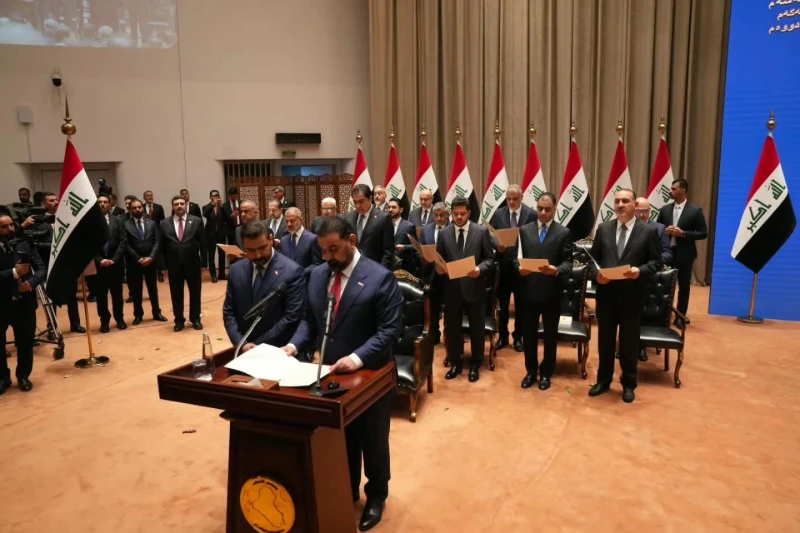
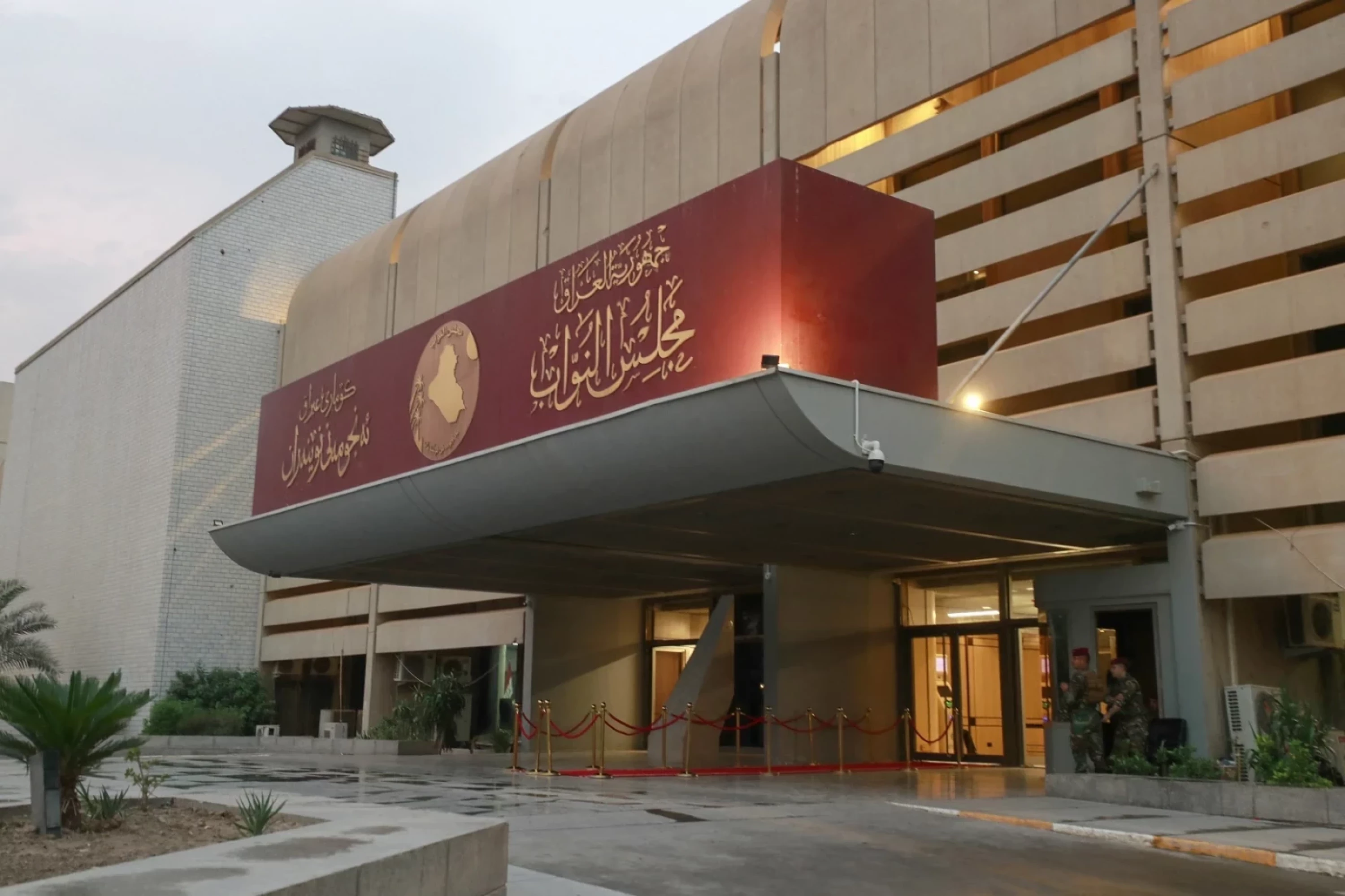
ERBIL, Kurdistan Region of Iraq – The Iraqi parliament is set to form a committee to bring the Kurdistan Democratic Party’s (KDP) bloc back to the legislature and hold talks with the party in an attempt to break its boycott, a lawmaker said on Thursday.
The KDP on Saturday announced that it will boycott all future sessions of the Iraqi parliament indefinitely, in light of the legislature’s decision to proceed with the Iraqi presidential election despite the absence of a national consensus.
Abdulhamza al-Khafaji, a lawmaker in the Iraqi parliament, told The New Region that he submitted a proposal to parliament speaker Haibat al-Halbousi to “form a delegation of faction leaders to bring the KDP bloc back to parliamentary sessions.”
“The parliament speaker approved the request, and the committee is set to be formed on Thursday,” Khafaji said, stressing that the KDP faction “is one of the most influential blocs and holds the position of parliament deputy speaker.”
A source from the KDP confirmed to The New Region that efforts are underway in Baghdad to send a delegation to the Kurdistan Region in an effort to convince the party to return to parliament sessions.
Earlier in April, the KDP, the State of Law Coalition and the Hoquq Movement boycotted the session where Iraq’s new President was elected, citing continued disputes and the absence of a unified position on who should assume the key role.
During the session, Nizar Amedi of the rivaling Patriotic Union of Kurdistan (PUK) was elected for the top post.
The KDP at the time rejected the mechanism by which Amedi was elected for the presidency, a post traditionally reserved for Kurds, saying his nomination had been pushed forward by a single Kurdish party and other Iraqi components and was not a unanimous Kurdish pick.
Iraq held parliamentary elections on November 11. The results displayed a significant victory for the KDP, which secured 27 seats and became the first Iraqi and Kurdish political party in history to surpass over one million votes. The PUK ranked as the second Kurdish party at 18 seats.
Since 2005, the Iraqi presidency has always been held by a member of the PUK, despite the KDP consistently outperforming its rival in both the Iraqi and Kurdistan elections.
Since the November elections, the KDP has repeatedly stressed that the presidency is not reserved for any single party and should be decided based on electoral entitlements.
The two Kurdish ruling parties failed to reach a unanimous candidate for the presidency after months of negotiations following the elections.
 Facebook
 LinkedIn
 Telegram
 X
X