ERBIL, Kurdistan Region of Iraq – The Kurdistan Region heading into snap elections will be the optimal solution to resolve the impasse if the top parties are unable to strike a government formation deal, a senior Kurdistan Democratic Party (KDP) member said Thursday, over 18 months since elections were held.
The Kurdistan Region held its parliamentary elections in October 2024, with the KDP emerging victorious with 39 seats, followed by the Patriotic Union of Kurdistan (PUK) with 23. The two main parties have yet to reach an agreement on forming the next cabinet.
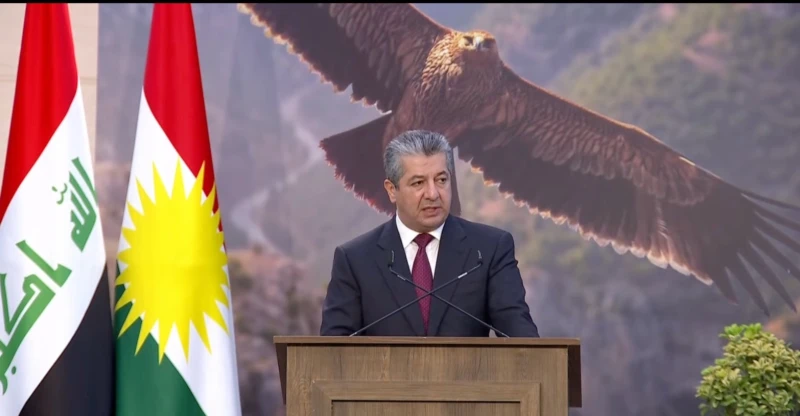
“If we don’t reach a conclusion, then of course, election becomes a serious [option],” Ahmad Kani, a member of the KDP’s Central Committee, told reporters.
When asked whether snap elections were a solution to the political deadlock, Kani responded that “it would be a solution.”
The official asserted that KDP has put forward several initiatives to the other parties regarding the government formation process, but due to their “excessive demands,” the talks have failed to bear fruit so far.
In addition, he stated that the political situation in Baghdad is “far from the constitution, civility, and institutionalism,” noting that the KDP has always “pursued solutions to problems in the public interest.”
Tensions between the KDP and PUK have again risen in recent weeks, particularly in matters pertaining to federal Iraq.
The KDP has accused the PUK of violating an intra-Kurdish deal on power sharing in Baghdad by partaking in a parliament session to elect the country’s president - a post traditionally reserved for Kurds under a power-sharing mechanism in Iraq.
During the session, Nizar Amedi of the PUK was elected as Iraq’s president. But the KDP boycotted and did not attend, blaming the PUK for resolving the impasse over the president with non-Kurdish Iraqi actors rather than reaching an intra-Kurdish consensus.
In the Kurdistan Region, the KDP and PUK have held numerous rounds of talks since October 2024 in an attempt to form the government, but the parties have been unable to strike a deal.
A key sticking point has been top positions and sovereign ministries in the Kurdistan Region, particularly the interior ministry - a post the PUK is vying for.
The two parties have also traded jabs over the governorship in the disputed province of Kirkuk, with the KDP accusing the PUK of betrayal after the PUK’s Rebwar Taha was replaced by Mehmet Seman, leader of the Iraqi Turkmen Front and a figure notorious for anti-Kurdish remarks.
 Facebook
 LinkedIn
 Telegram
 X
X