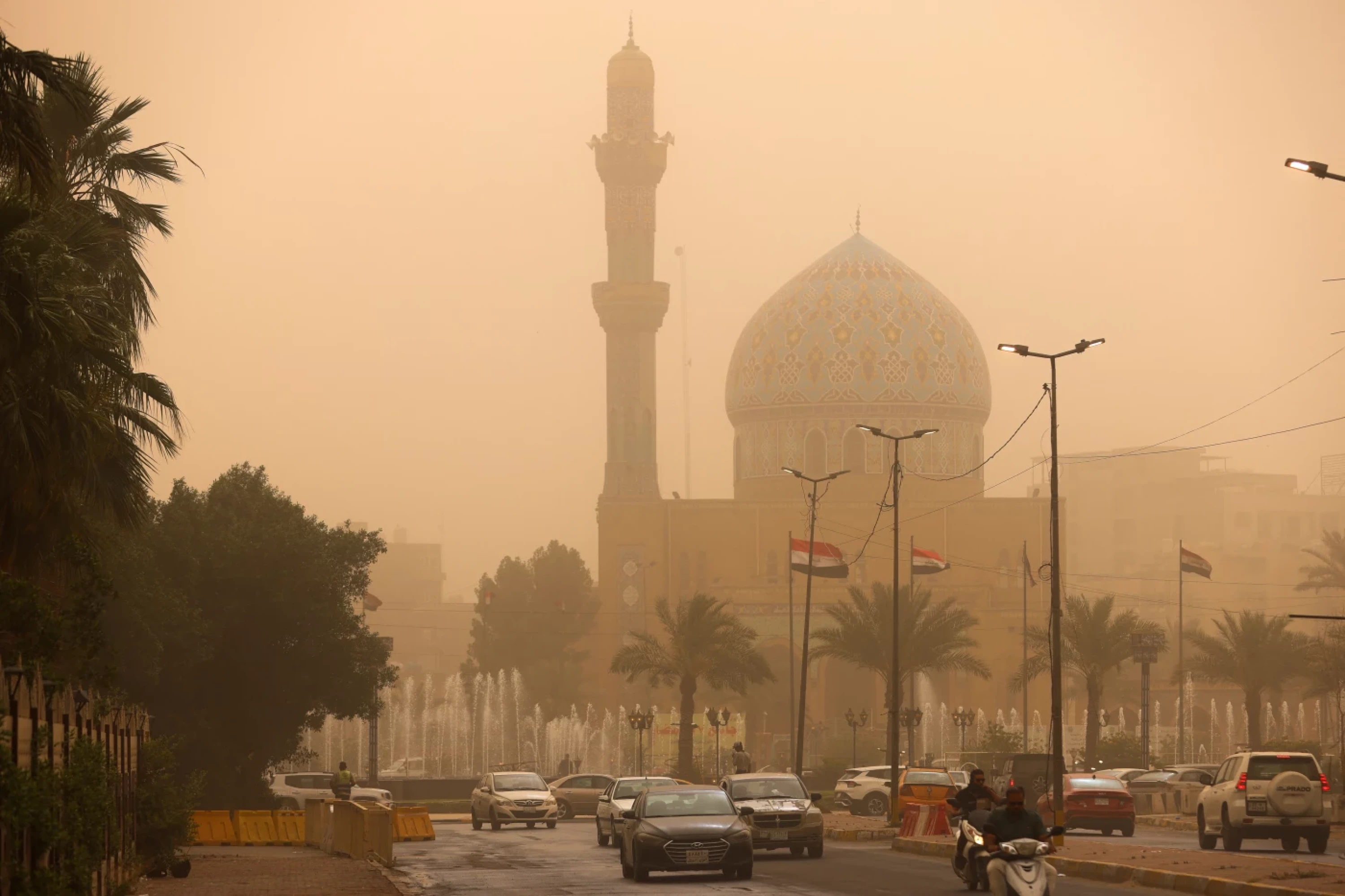
ERBIL, Kurdistan Region of Iraq - Iraq could experience more than 100 days of dust and sand storms during the current season, the Iraq Green Observatory said on Monday, warning that rainfall this year was “not sufficient and not regular.”
The monitor said rainfall across Iraq, along with floods in some provinces, helped “moisten the soil, reduce flying dust, support plant growth and stabilize the land.”
But it added that Iraq still suffers from drought and severe desertification, noting that “more than 60 percent of the country’s land is affected,” creating conditions that allow storms to continue even after rainfall.
“The rain was not enough to fundamentally change the situation,” the observatory said, adding that some areas that are major sources of dust “remained dry and did not benefit.”
It also said some storms come from outside Iraq, with sources in Syria, Saudi Arabia, and the Syrian desert.
“Even if the environmental situation improves inside the country, there will remain continuous effects from outside,” it said.
The observatory advised tree planting as one of the most important measures, saying roots help stabilize soil, reduce wind speed near the ground, and prevent sand movement.
Other recommendations included using drip irrigation instead of flood irrigation, restoring marshlands, reducing water waste, limiting overgrazing, expanding green spaces in cities and strengthening regional cooperation, all which require years, funding, and continuous management to implement.
Iraq, with its vast deserts and diminishing rainfall has grown prone to sandstorms, especially in recent times, owing to rising temperatures and climatic change. Thousands are hospitalized across the country on a yearly basis due to breathing difficulties caused by the dust storms.
The country experiences over 200 dusty days per year, according to government data, with the number projected to reach 300 by 2050 unless drastic steps to combat climate change are taken.
 Facebook
 LinkedIn
 Telegram
 X
X