DUBAI, UAE - Naim Qassem, Secretary-General of Lebanon's Hezbollah, said on Monday that there “would not have been a ceasefire” without Iran and thanked Tehran for its role, while rejecting any direct negotiations with Israel and vowing the group would keep its weapons.
“There would not have been a ceasefire were it not for the Islamic Republic of Iran,” Qassem said in a statement, adding: “Thank you to Iran.”
He said the ceasefire followed “the legendary steadfastness” of Hezbollah fighters and supporters in Lebanon.
On April 14, Israel and Lebanon agreed to hold a new round of direct talks at a “mutually agreed” time and venue, according to a joint statement from the two sides and the US following a meeting between ambassadors of both sides in Washington mediated by US Secretary of State Marco Rubio.
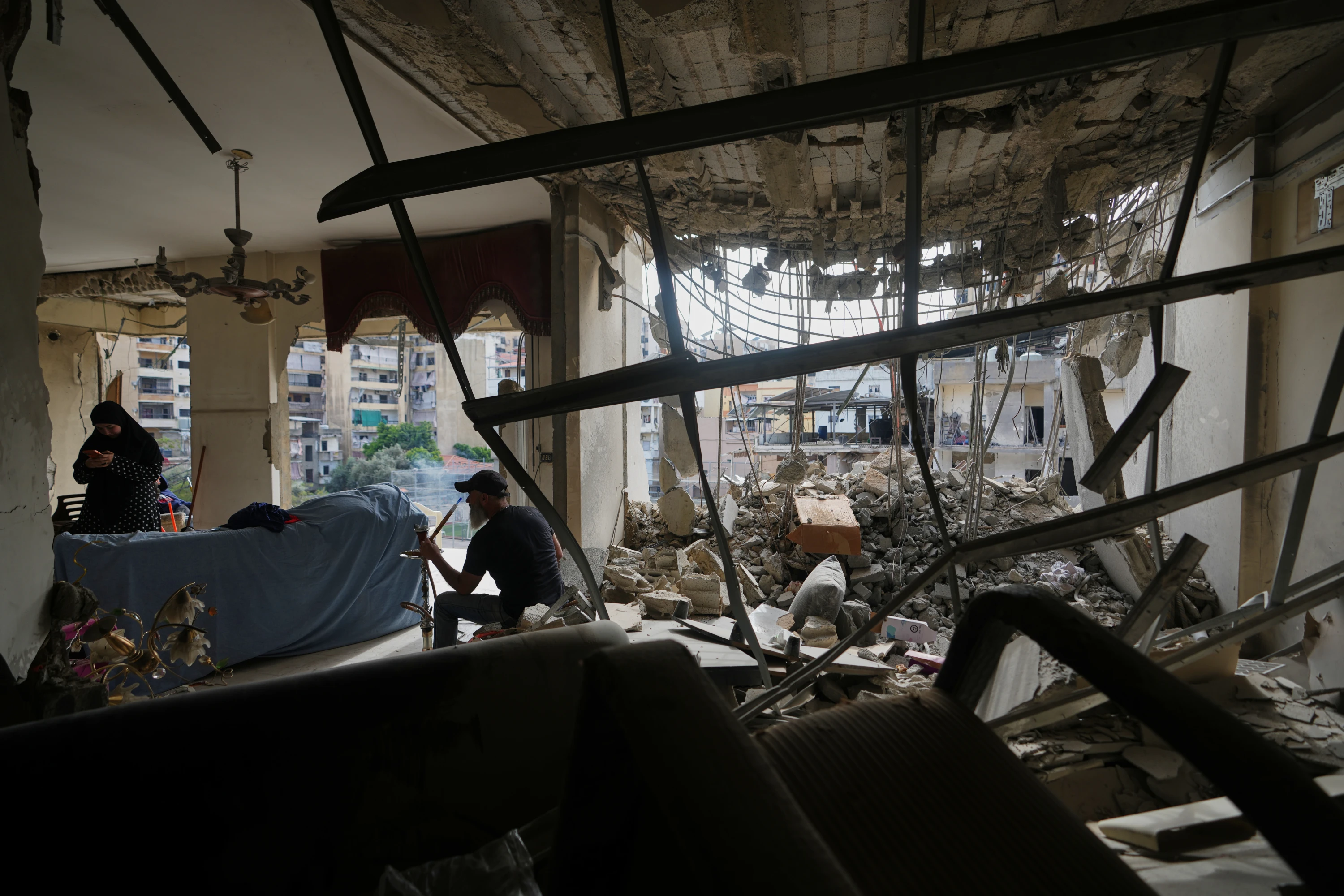
The meeting came less than a week after Israel carried out its largest wave of airstrikes during the current conflict, striking over 100 targets in Lebanon in the span of 10 minutes. At least 303 people were killed and 1,150 injured in the April 8 attacks, according to the Lebanese health ministry.
Qassem sharply criticized the Lebanese government, saying it entered direct talks with Israel despite heavy Israeli strikes on Lebanon.
He said the following day was “a day of shame” in Washington, where Lebanese officials held direct talks with Israel, accusing the authorities of agreeing to terms without national consensus.
“We categorically reject direct negotiations,” Qassem said, calling on Lebanese officials to return to indirect contact instead.
He said any solution must begin with five conditions: ending Israeli military action by land, sea, and air, Israeli withdrawal from occupied Lebanese territory, the release of prisoners, the return of displaced residents to their towns and villages, and reconstruction.
Qassem said Hezbollah would not disarm, describing its weapons as defensive and necessary because of what he called continued Israeli occupation and threats against Lebanon.
“We will not abandon our weapons and our defense,” he said. “We are continuing our defensive resistance for Lebanon and its people.”
In early January, the Lebanese Army announced it had completed the first phase of a plan to disarm Hezbollah and confine weapons to state control south of the Litani River.
Qassem also said Hezbollah would respond to Israeli attacks and would not return to the situation that existed before March 2, a date he repeatedly referenced as a turning point in the conflict.
On March 2, the Lebanese government decided to ban all security or military activities by Hezbollah and limit the group’s role to political work only.
Qassem added that no one would negotiate Lebanon’s terms except Lebanon itself, saying foreign pressure and Israeli demands would not determine the country’s future.
Lebanese President Joseph Aoun on Monday defended the government’s negotiations effort, saying “what we are doing is not betrayal,” and that betrayal is committed by those who drag Lebanon into war for outside interests.
He said Beirut told Washington from the outset that “a ceasefire is a necessary first step for any later negotiations,” adding that his goal is to “end the state of war with Israel,” but that “I will not accept reaching a humiliating agreement.”
Aoun also pushed back at critics who said the government entered talks without national consensus, asking whether those who took Lebanon to war had first secured broad national approval.
He said residents of southern Lebanon should no longer bear the cost of “others’ wars” fought on Lebanese soil.
Earlier this month, US Special Envoy for Syria Tom Barrack said a newly announced ceasefire between Israel and Lebanon was fragile, warning that trust was lacking among all sides.
Speaking at the Antalya Diplomacy Forum, Barrack said two key actors, Hezbollah and Iran, were absent from the negotiations, making a lasting settlement harder to achieve.
“There are two people missing from that table,” he said, adding that any future path with Hezbollah “has to be not killing Hezbollah.”
Barrack described the ceasefire as an initial step to halt violence rather than a full political agreement.
 Facebook
 LinkedIn
 Telegram
 X
X