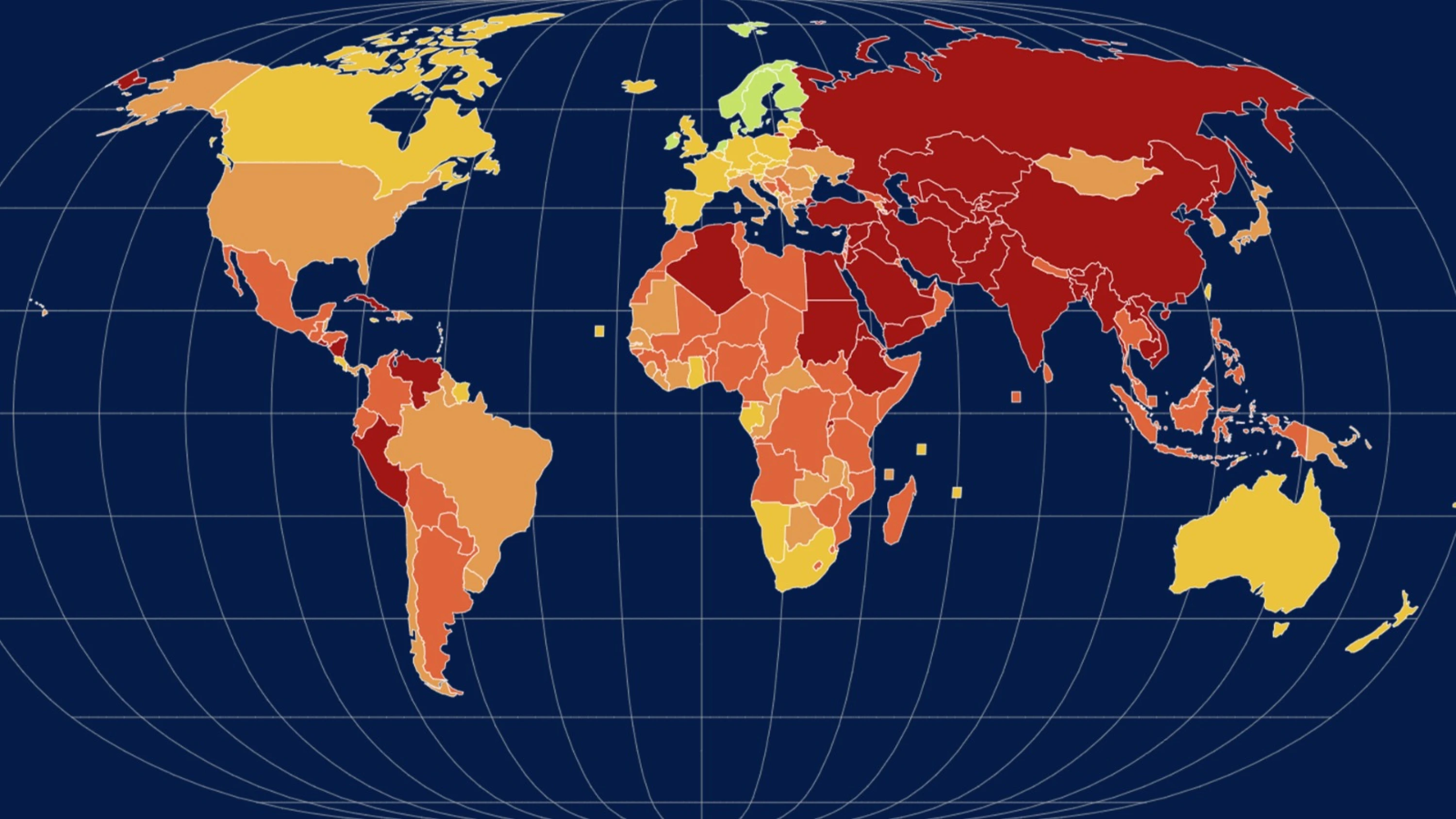
ERBIL, Kurdistan Region of Iraq - Reporters Without Borders (RSF) published their 2026 press freedom index on Thursday, with Iraq falling by seven places from last year's ranking to come 162nd out of 180 countries analyzed as the NGO termed "recurring armed conflict" as the primary reason for the country's decline.
The Paris-based watchdog said that press freedom worldwide has reached its lowest level in 25 years, with more than half of all countries now classified as having a “difficult” or “very serious” situation.
Iraq’s overall score, in a ranking system in which a higher number corresponds to a greater degree of journalistic freedom, declined to 28.85 in 2026, down from 30.69 in 2025, reflecting setbacks across political, legal, economic, and security indicators.
"In some countries, such as Iraq (162nd), Sudan (161st), and Yemen (164th), recurring armed conflict is the primary reason for this decline in press freedom," RSF said.
“Journalism is increasingly criminalized worldwide,” the organization said, noting that restrictive laws, particularly those tied to national security, continue to erode the right to information even in democratic systems.
RSF Editorial Director Anne Bocandé warned that attacks on press freedom are becoming more visible and systematic.
“How much longer will we tolerate the suffocation of journalism, the systematic obstruction of reporters and the continued erosion of press freedom?” she asked, adding that “inaction is a form of endorsement.”
"Iraq’s media outlets are closely linked to its political parties, which control their editorial policies," the report said. "Extreme polarization due to political influence on the press makes balanced, independent reporting almost impossible to come by."
Journalists have faced sustained threats since anti-corruption protests in 2019, with some media offices attacked over their coverage.
RSF said that the media environment in the Kurdistan Region is "highly organized" but noted occasions in which critical journalists were accused of espionage and detained.
Although Iraq’s constitution guarantees press freedom, RSF said existing laws contradict those protections.
Public officials frequently file defamation lawsuits against journalists, while a proposed cybercrime law could impose harsh prison sentences, including life imprisonment, for online content deemed harmful to state interests.
RSF also highlighted the dangerous environment for journalists, noting that many have been killed, detained, or kidnapped by armed groups in recent years.
US journalist Shelly Kittleson was kidnapped by Kataib Hezbollah, a pro-Iran Iraqi militia, in Baghdad in late March. Similarly, Israeli-Russian researcher Elizabeth Tsurkov was released in September over two years after she was kidnapped by the same group, with her release being publicly welcomed by US President Donald Trump.
“Between political instability and financial pressure, journalists face threats from all sides,” the report said, adding that the state is failing in its duty to protect them.
Globally, RSF pointed to authoritarian governments, political actors, and weak regulation of online platforms as key drivers behind the decline in press freedom, urging stronger protections and accountability measures to reverse the trend.
 Facebook
 LinkedIn
 Telegram
 X
X