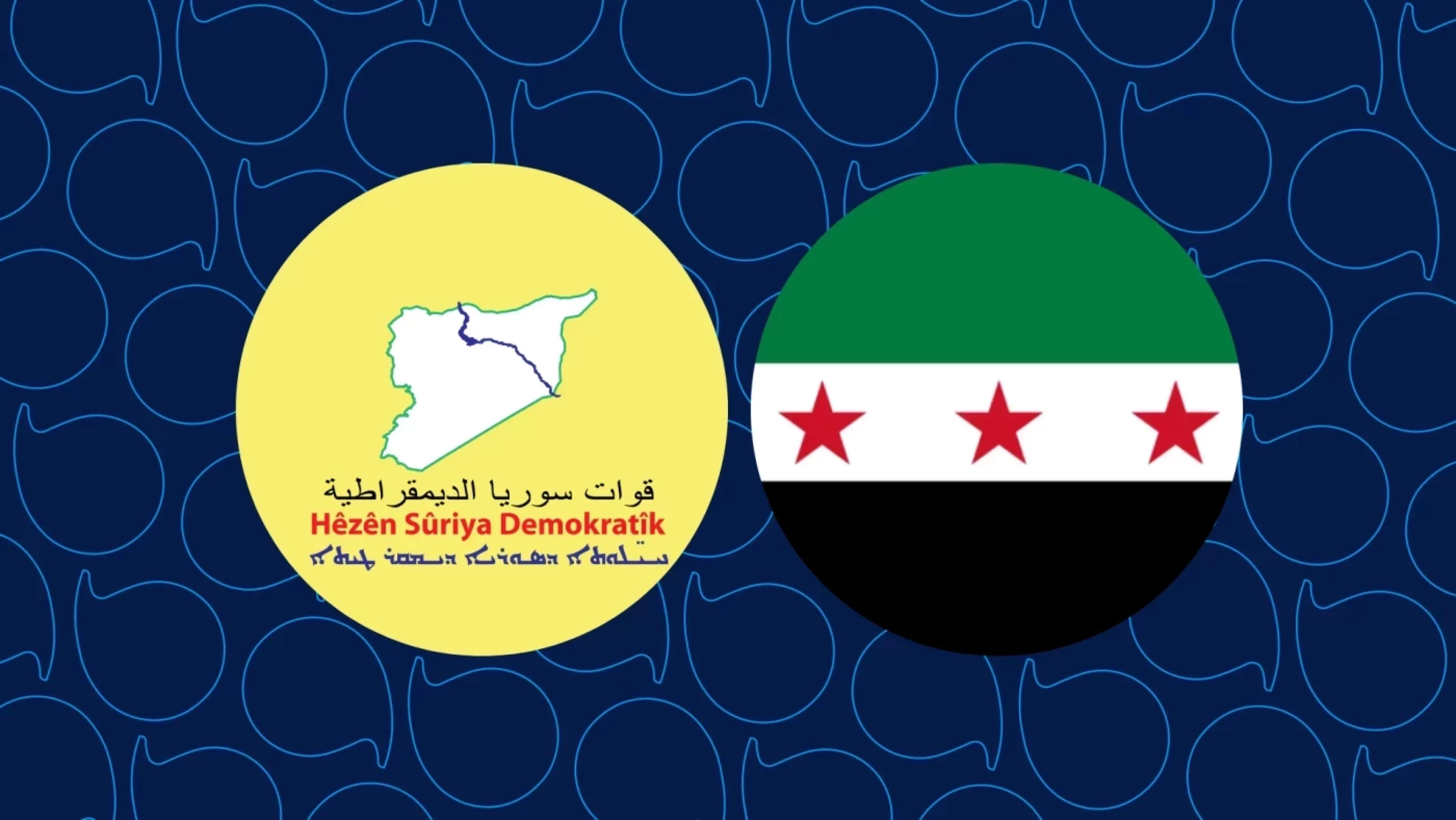
ERBIL, Kurdistan Region of Iraq - On January 29, the Syrian Democratic Forces (SDF) made a deal with Damascus for a phased integration process of the Kurdish-led forces into the Syrian state after weeks-long clashes. However, until today the agreement has not been finalized.
At the same time, international attention has shifted away from Syria after a war erupted between the United States, Israel, and Iran on February 28.
As part of the integration, on February 13, Syrian Interim President Ahmed al-Sharaa appointed Nureddin Issa as Governor of Hasaka. On March 10, Damascus appointed SDF commander Sipan Hemo as the Assistant Defense Minister for the Eastern Region.
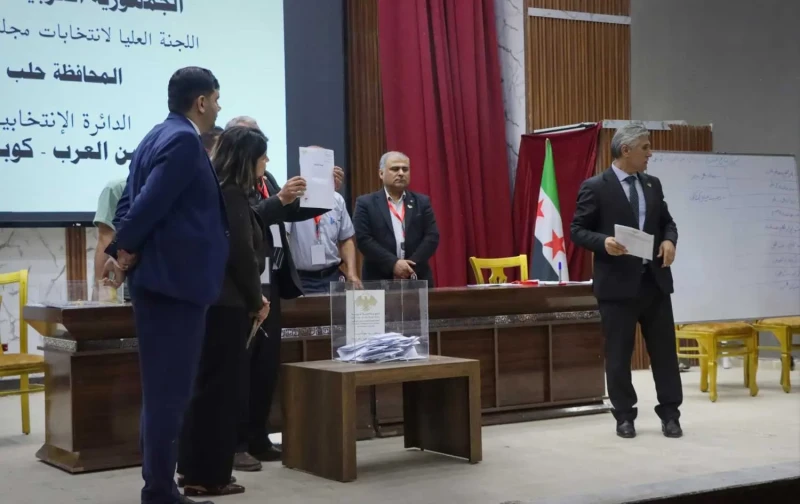
The Syrian Ministry of Interior took control of both Hasaka Central Prison (Ghuwayran) and Qamishli Prison (Alaya) on April 19, while Damascus is planning to hold parliamentary elections in Hasaka province and Kobane in May. These areas had previously been excluded from the October 5, 2025 parliamentary elections because they were outside state control.
Tensions continue
Despite these steps, tensions have continued, especially in areas with mixed populations.
“In some of the major Arab areas in the countryside of Kobane district such as Sarrin subdistrict as well as in al-Yaroubiya in southeast of Hasaka, the local population refuse re-deployment of the Kurdish Asayish as part of the new Syrian internal security forces there,” Idriss Nassan, former deputy head of Kobane’s foreign relations committee, told The New Region.
One point of the January 29 agreement is the return of internally displaced persons (IDP), including Kurdish civilians that were displaced by Turkish offensives in 2018 in Afrin and in 2019 in Sari Kani (Ras al-Ain) and Gire Spi (Tal Abyad).
Alexander McKeever, a Damascus-based researcher covering northern Syria, told The New Region that recently, after a government official visited Sari Kani to discuss next steps, there were a lot of angry comments online. “One in particular was a person at the Ministry of Defense saying that he rejects Nureddin Issa, as the governor, and Sipan Hemo as Assistant Defense Minister of the Eastern Region.”
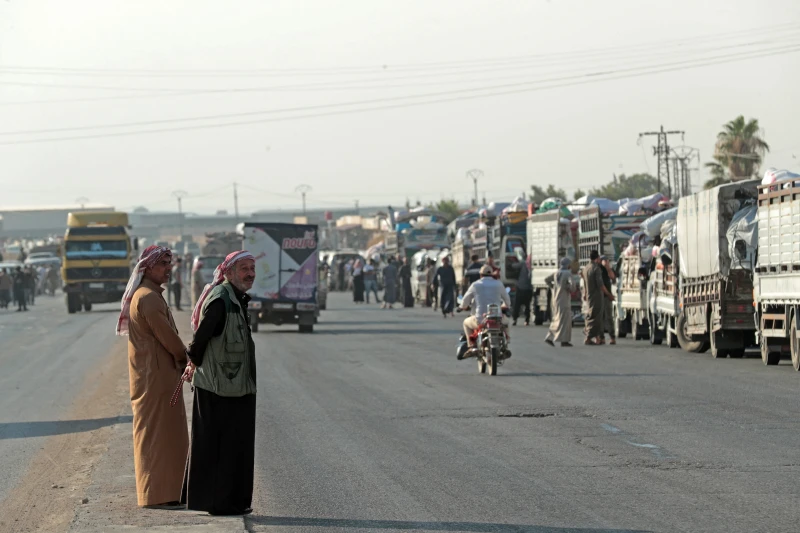
Thousands of Arab IDPs from other areas in Syria settled in the Kurdish-majority region of Afrin after the Turkish takeover in 2018. But after the fall of the Assad regime in December 2024, many returned to their original areas.
Despite this, there are still thousands of non-Kurdish IDPs that refuse to leave Afrin, occupying houses of native Kurds from Afrin.
Widespread tensions also erupted in northern Aleppo, including in Afrin, after a person in Kobane lowered the Syrian flag during the Newroz, Kurdish New Year, celebrations on March 21. He was arrested afterwards.
According to a Syrians for Truth and Justice report, following this incident, Kurdish civilians were attacked by mostly masked men, and were forced to drive over Kurdish flags.
US Special Envoy for Syria Tom Barrack on March 21 praised a statement of Hemo, who condemned the attacks on the Syrian flag and Kurdish symbols on X.
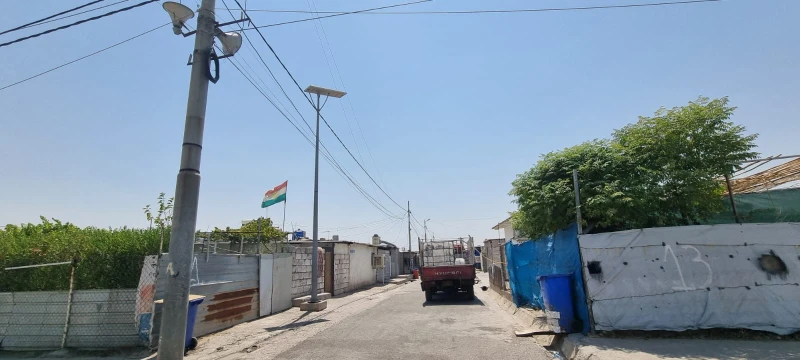
A similar incident took place in Qamishli, on April 18, when a Syrian tribal leader fired bullets at the Rojava flag in Qamishli, leading to protests by Kurdish fighters and civilians. A day later he was arrested.
On May 2, the Syrian Observatory for Human Rights (SOHR) reported a Kurdish civilian from Kobane died after his arrest in Raqqa.
According to Ghassan Bazo, a Syria-based researcher for the Rojava Information Centre (RIC), such incidents create more distrust.
“Damascus has also failed to prevent further attacks against Kurdish communities since January, reinforcing fears that any agreement may not be honored in practice. Integration on this scale requires a solid foundation of trust, and so far, the government has struggled to provide that reassurance,” he told The New Region.
“The biggest obstacles today are the same obstacles that frustrated earlier negotiations: extreme mistrust, exacerbated by the January war, and vast political and ideological differences,” Meghan Bodette, Director of Research at the Kurdish Peace Institute, added.
On Saturday, Hemo told Hawar News Agency (ANHA) that, so far, four brigades from the SDF have been incorporated into the Syrian Arab Army. However, he said the forces have not achieved full integration yet.
Moreover, he criticized the fact that not all prisoners from northeast Syria held by Damascus were released yet, despite promises by Damascus that this would happen at the end of Ramadan in March.
According to some non-official estimates, between 600 and 900 prisoners — including both military personnel and civilian detainees captured during the January fighting between Damascus and the SDF — have not yet been released.
“Still the family members of the captives are demanding SDF leaders and STG [Syrian Transitional Government] to set them free and to transfer back the corpses of the killed ones,” Nassan said. “There are hundreds still in captivity by STG and a lot of corpses in morgues.”
Until today there are still daily protests in Kobane and the Hasaka asking for their release.
Women integration
Another issue is the strong emphasis on gender equality and women’s participation by SDF-linked institutions.
Ferman*, an SDF member, told The New Region there are also many problems within the integration process. “But the most important part is integrating the Women’s Protection Units (YPJ) and including the rights in the constitution,” he said.
McKeever added that the Syrian government “seems pretty adamant that women won't be given any combat role within the military.”
“They've said that if they're able, they will integrate them into positions where there's already women present within the Ministry of Interior, which is tourist police, and some other things, which I think, you know, would obviously be a fairly demeaning place to put the YPJ, but would be consistent with how the government views gender and security. “
“While the YPJ were not mentioned specifically in the agreement, they are a core component of the Syrian Democratic Forces and are expected by the administration in northeast Syria to be treated as such,” said Bazo.
On April 1, a YPJ delegation also visited Damascus to discuss this issue with Syrian Defense Minister Murhaf Abu Qasra.
On April 23, Kurdish outlet ANHA accused Damascus of excluding female candidates nominated by the Autonomous Administration from appointments to directorate positions in Hasaka.
Court dispute
There have also been disputes over the handover of the Qamishli court.
Syrian official Ahmad al-Hilali, who is part of the Presidential Team tasked with implementing the January 29 agreement, told Syrian state media that judges inside the main Qamishli court prevented judges from entering and resuming their duties.
Kurdish media reported that a delegation will soon visit Damascus to solve this file and accused Damascus of trying to appoint judges from the former Baath regime.
“The court issue seems to also be about employees, about actual people on the registry. The government says that it wants a list of names that will go through and select and give positions within its new judicial system. But on the SDF side, I think they're saying that it should be a consensual process in terms of selecting who's being employed from each side,” McKeever added.
Bazo also noted that Damascus does not recognize qualifications of many officials, judges, administrators, and professionals who were trained through local Kurdish academies, practical experience, and political education rather than through state-recognized university degrees.
“Many local institutions in North and East Syria were built during years of war and isolation, when access to universities and formal higher education was extremely limited,” he said. “This creates tension because, from the perspective of the Autonomous Administration, these institutions functioned for years under extremely difficult wartime conditions and cannot simply be dismissed as illegitimate.”
Hilali confirmed to local media on Sunday that the handover of the Qamishli courthouse disrupted the entire integration process and negatively affected related files, including the release of detainees.
However, he said that meetings are scheduled for this week to find final solutions regarding the justice ministry’s takeover of the courthouses and the integration of SDF-affiliated judges into the ministry.
Time-consuming process
Therefore, it is expected that the agreement will take more time to be implemented.
“It's a realistic agreement although it's not perfect. Dialogue between the parties to the agreement is progressing with difficulty, although important steps have been taken,” Sihanouk Dibo, a leader in the Democratic Autonomous Administration of Northern and Eastern Syria (DAANES), told The New Region.
“In every area of agreement, whether military, educational, economic or various administrative matters, it cannot be said that it is completely stopped, but it is progressing slowly.”
He also underlined that these steps should also lead to a democratic decentralized Syria, not a strong centralized Syrian state.
“There is no room for reproducing a highly centralized system. If the steps do not pave the way towards an actual transition and write a new constitution for Syria that establishes a real partnership without discrimination on the basis of people, sex, and religion, they will be steps in the air,” he concluded.
“Both sides operate from very different political principles and governing philosophies. The administration in North and East Syria is built around decentralization, local governance, and pluralistic representation, while Damascus continues to favor strong central control and a traditional centralized state structure,” said Bazo.
“After years of conflict and mutual hostility, these are not just institutional differences but deeply rooted differences in mentality and political vision. This makes genuine integration far more difficult, because the issue is not only military arrangements, but two fundamentally different systems trying to coexist under one state,” he concluded.
 Facebook
 LinkedIn
 Telegram
 X
X