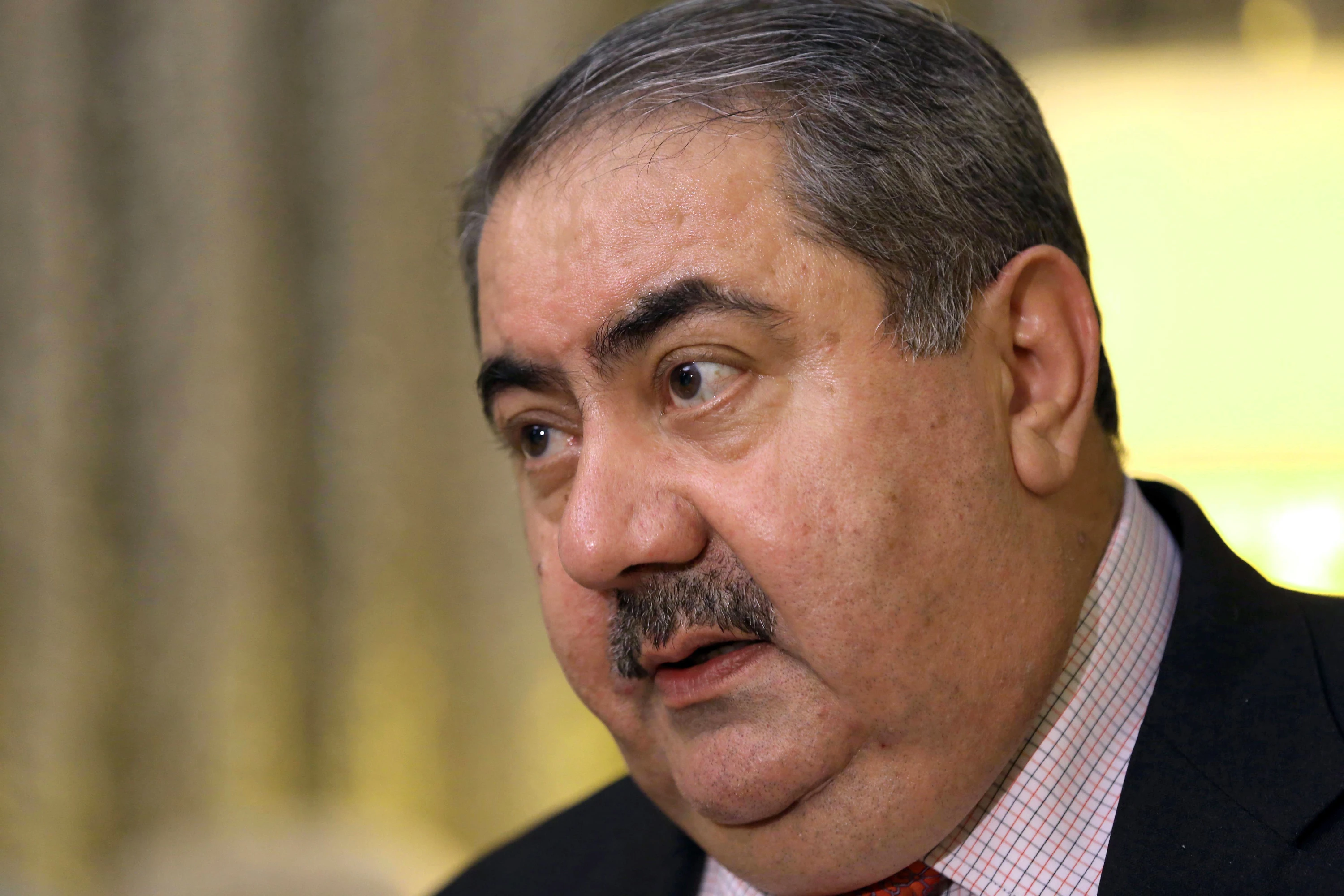
ERBIL, Kurdistan Region of Iraq – Veteran Kurdish politician Hoshyar Zebari said Wednesday that the Kurdistan Region was a primary target of Iran during the recent war as Tehran views Kurdistan as “a small, little Israel,” while also pointing to Iran’s deep influence in Iraq and stressing the need to improve domestic security.
“The KRG [Kurdistan Regional Government] has received the largest number of missiles, rockets, and drone hits,” Hoshyar Zebari, Kurdistan Democratic Party (KDP) politburo member and Iraq’s former foreign minister, said during a forum of the Atlantic Council’s Wednesday 2026 Iraq Dialogue in Washington under the title 'Iraq in a new Middle East.'
Zebari added that, after the UAE, the Kurdistan Region was among the primary targets of the attacks because “the Iranians view Kurdistan as a small, little Israel.”
"We are not your adversary," he stressed, adding that "our key message to them was respect your neighbors," he said.
He further noted that among the KRG’s messages for Tehran was “to deal with us as a new Iraqi government or regime that has been elected and that is legitimate, and you should deal with us directly through the doors, not the windows.”
On Thursday, Iran’s Ali Khezrian from parliament’s National Security Commission said that the Kurdistan Region has been labeled as a site of “hostile bases” under Tehran’s security doctrine, while also warning that the UAE has been placed under the same designation.
Since the start of the US-Israel war with Iran, the Kurdistan Region, despite maintaining a neutral stance, has been targeted by hundreds of drone and missile attacks, which have continued amid a shaky ceasefire between the warring parties.
In late April, the KRG said the region had been targeted in 809 attacks since the start of the war, under what it described as “unfounded pretexts.”
Most of the attacks during the pre-ceasefire period were claimed by pro-Iran militias in Iraq targeting the Kurdistan Region, while more recent attacks have largely been carried out directly by Iran.
The veteran KDP politician, discussing Iraq-Iran relations, said that “the relation has intensified a great deal,” stressing that it has not only “stayed at the political level” but has also extended “to the religious environment in Iraq,” Zebari said.
Zebari added that Tehran is “exerting more and more influence over many layers of the state,” citing its influence over the judiciary, parliament, and government formation.
“They have a say in each and every part of the country, over the economy, and in the oil sector, in the energy, you name it,” he added.
Kurdish authorities have repeatedly accused Baghdad of failing to take practical steps to stop the attacks.
“The democracy we are going through is not perfect,” Zebari said regarding the overall functioning of Iraq’s federal system, criticizing Shiite and Sunni political perspectives on governing Iraq as a “centralized entity” and saying “they don't have much faith in federalism.”
"That is what Iraqi Kurdistan has suffered a great deal from successive Iraqi governments," he said.
He stressed building an independent sovereign Iraq, saying, “You have to add a layer of Popular Mobilization Forces [PMF] that was established after ISIS.”
Regarding the KDP’s recent talks with Prime Minister-designate Ali al-Zaidi, Zebari said Zaidi had stressed that “we have to bring these armed militias under some control,” while noting that efforts and programs are being developed with an emphasis on Iraq’s stability and security.
Zebari stressed that the key issue for investment in Iraq “is security,” noting that when Western oil companies are targeted and threatened, “they wouldn't have any incentive to invest.”
“Without security, there wouldn't be much investment and faith in Iraq for bigger investments.”
Zaidi’s designation as prime minister was welcomed by a wide spectrum of domestic and foreign powers, including the US, with President Donald Trump personally welcoming the designation. His selection for the top post came after the US vetoed a previous pick in Nouri al-Maliki by the Coordination Framework.
On Thursday, Zaidi released his program for the next government. A copy of the program seen by The New Region shows that the “first pillar” of the state sovereignty section includes “restricting arms to the hands of the state” as Baghdad continues efforts to tighten gun ownership.
 Facebook
 LinkedIn
 Telegram
 X
X