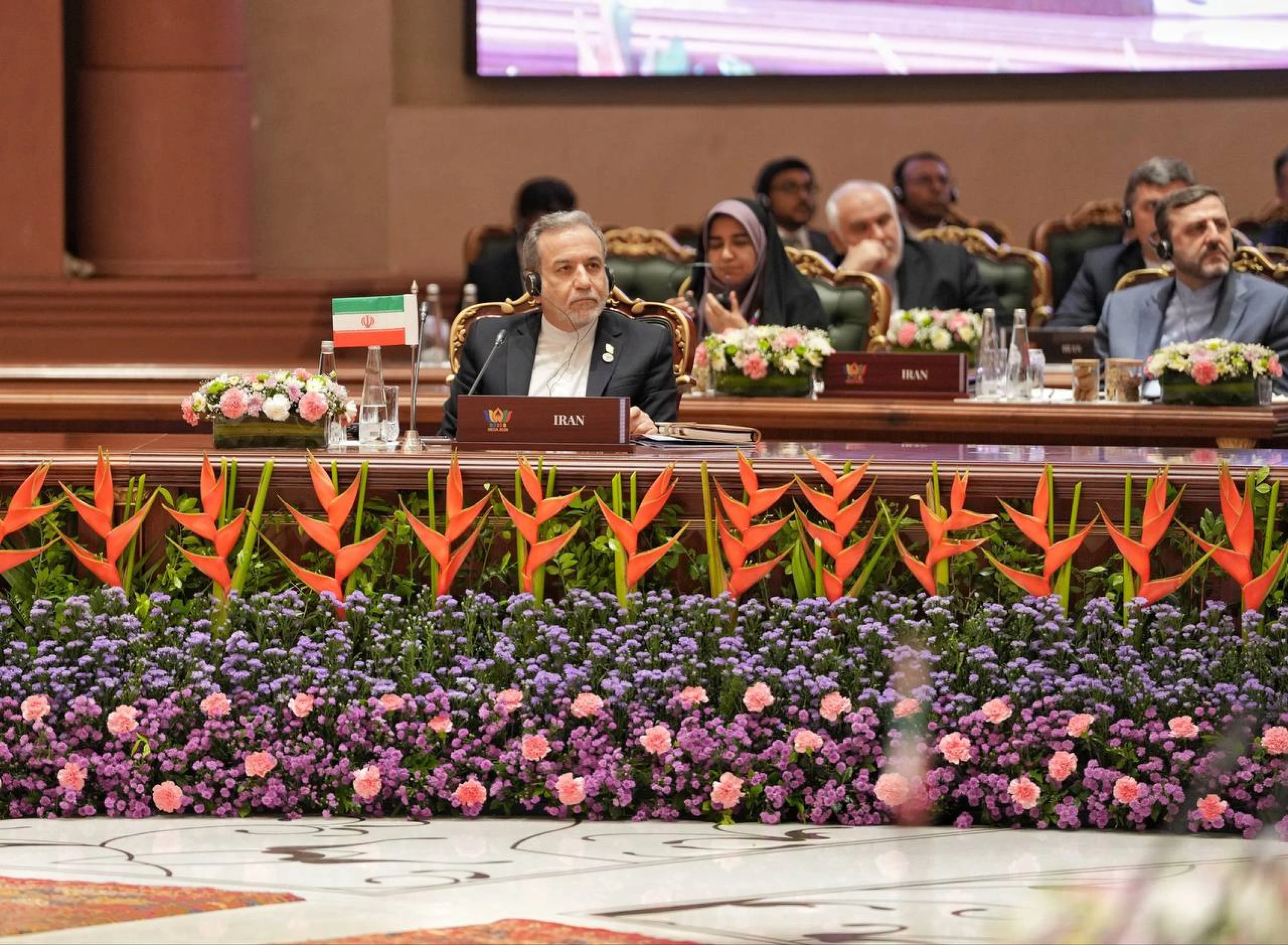
ERBIL, Kurdistan Region of Iraq – Iranian Foreign Minister Abbas Araghchi said on the sidelines of a New Delhi summit on Friday that the UAE should not portray itself as a victim of Iran, accusing it of “standing alongside” the US and Israel during the war while urging the Emiratis to reconsider their approach toward Tehran.
Araghchi on Thursday, during his speech at the BRICS foreign ministers' summit, accused the UAE of being “directly involved” in attacks against Iran, alleging that Abu Dhabi had provided “intelligence and other facilities” used by the US and Israel during the conflict.
Throughout the recent regional conflict, the UAE was targeted by Tehran more than any other regional state, including Israel, with Iran regularly citing Abu Dhabi’s cooperation with Israel as justification.
“The UAE stood alongside the United States and Israel in this war and cannot now play the victim and say that our territory has been attacked,” Araghchi said in an interview with state broadcaster IRIB published on Friday.
“The UAE provided American bases for operations against Iran, provided them with its airspace and territory, and provided the necessary services to American forces,” he said while citing available information and documents, stressing that, in contrast, Tehran only “targeted American targets on UAE territory.”
Regarding his response to the UAE at the summit, Araghchi said that since Abu Dhabi had raised the issue, “we were forced to tell the international community the facts.”
“It is better for them to change their view of the Islamic Republic of Iran,” he added.
“This issue requires them to seek security in cooperation between the countries of the region, not in relying on foreign forces,” he added while citing the two states' long history of neighborliness.
Longstanding tensions between Iran and the UAE escalated again on Wednesday after Israeli Prime Minister Benjamin Netanyahu’s office claimed he had held a “secret” meeting with UAE President Mohamed bin Zayed Al Nahyan in the Emirates during the US-Israeli war on Iran.
The developments prompted Iranian warnings that those who collaborated with Israel would be held “accountable,” although the UAE later denied the allegations.
"He who betrays in secret shall be exposed in public," Iranian foreign ministry spokesperson Esmail Baghaei wrote on X on Friday, likely referring to the visit's unveiling.
Netanyahu's disclosure came a day after the US Ambassador to Israel Mike Huckabee confirmed an April 27 Axios report that Tel Aviv had provided the UAE with an Iron Dome battery, a Spectro surveillance system, and a version of the Iron Beam laser defense system, along with the personnel required to operate them.
“Israel just sent them Iron Dome batteries and personnel to operate them,” Huckabee said at a Tel Aviv conference, attributing the move to what he described as an “extraordinary relationship” between Israel and the UAE, Israeli state media reported.
The UAE is now classified as hosting “hostile bases” under the Islamic Republic’s security doctrine, Iranian lawmaker Ali Khezrian said earlier in May, adding that the same designation applies to the Kurdistan Region.
In Iranian defense doctrine, such a designation allows Tehran to conduct preemptive strikes on actors that could pose a threat to its security, generally encompassing foreign military facilities and, in the Kurdish case, dissident armed groups.
“Now is the time for the Islamic Republic of Iran to consolidate its position and demonstrate its regional role more than ever,” Araghchi stressed.
 Facebook
 LinkedIn
 Telegram
 X
X