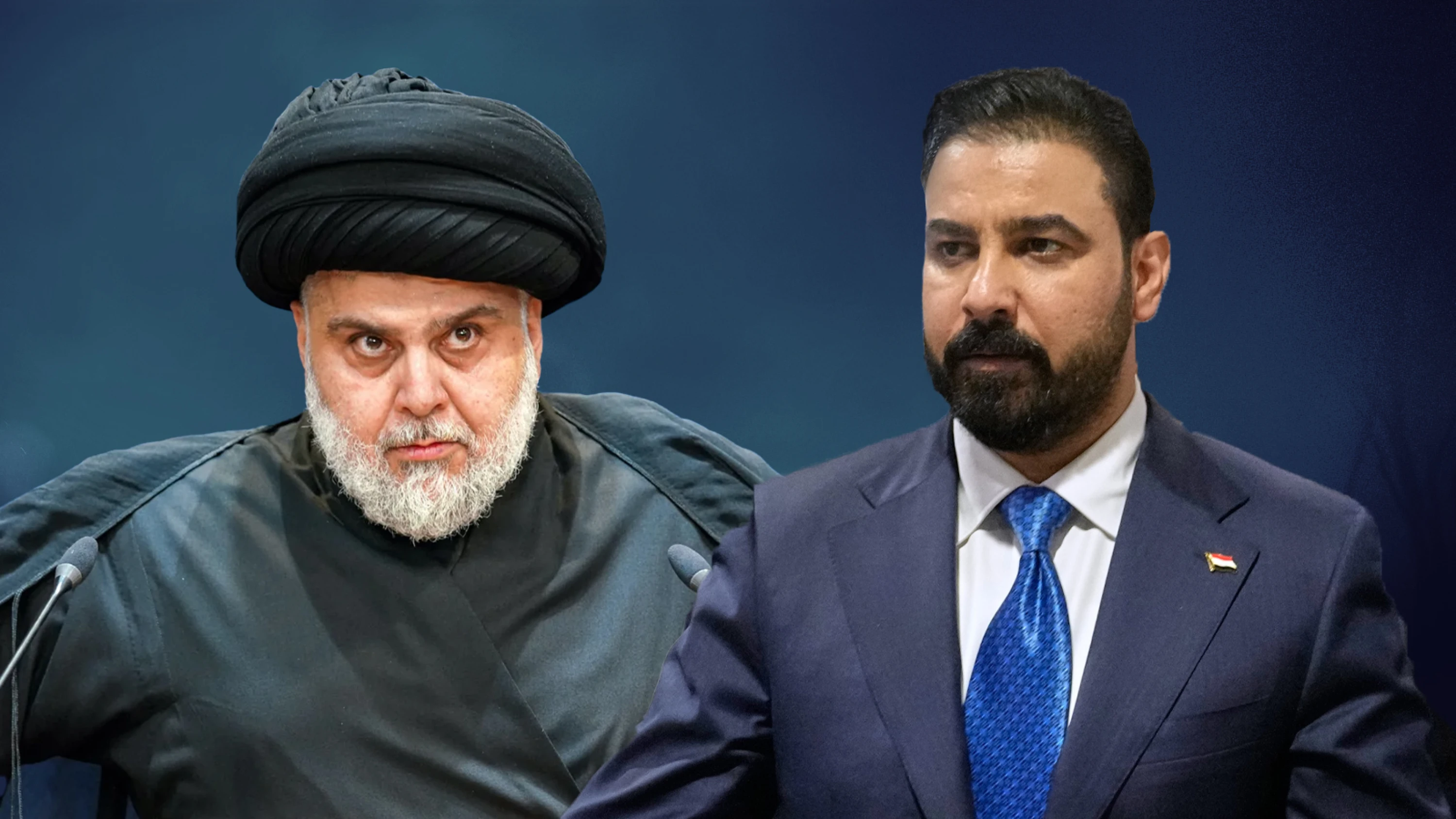
ERBIL, Kurdistan Region of Iraq - Prominent Iraqi Shiite cleric Muqtada al-Sadr held a phone call with Prime Minister Ali al-Zaidi on Sunday, congratulating him on the formation of the new government as well as urging him to protect Iraq’s sovereignty and improve public services.
According to a statement from the cleric's, Sadr said he had seen in Zaidi “determination, resolve, and insistence to improve Iraq’s situation,” while calling on the premier to preserve the country’s sovereignty and address long-standing service issues affecting citizens.
Sadr also urged Zaidi to take a firm stance against corruption, protect Iraq’s resources, and ensure “a dignified life for Iraqis through the provision of services, meeting citizens’ needs, and safeguarding their rights.”
Zaidi, for his part, acknowledged the importance of Sadr's followers to the "political and social reality" in Iraq, according to a statement from the prime minister's office.
The phone call comes days after Iraq’s parliament granted confidence to Zaidi’s government and approved its ministerial program following months of political negotiations over cabinet formation.
Ahead of forming the government, Sadr had called on Zaidi to exclude any politician affiliated with armed factions from the cabinet and urged all armed groups, including his own Saraya al-Salam faction, to hand over their weapons to the state.
"As we have repeatedly stressed for years, the upcoming government must transform armed factions, regardless of their affiliations, into formations under the authority of the shrine administration or humanitarian organizations," Sadr said at the time.
"Whoever refuses should be considered outside the law," he added.
Zaidi’s government program later pledged to restrict weapons to the hands of the state while maintaining and developing the Popular Mobilization Forces (PMF) within Iraq’s official security framework.
Iraq plunged into a prolonged political crisis in 2022 after Sadr’s movement emerged as the largest bloc in the October 2021 parliamentary elections but failed to form a majority government excluding its rivals in the Coordination Framework.
In June 2022, Sadr ordered his 73 lawmakers to resign from parliament, a move that ultimately strengthened his rivals’ position.
The crisis escalated in July and August 2022 when Sadrist supporters stormed and occupied parliament inside Baghdad’s Green Zone.
Deadly clashes erupted on August 29 after Sadr announced his “final retirement” from politics, with fighting between his followers and rival armed factions leaving at least 30 people dead before he ordered his supporters to withdraw.
By October 2022, the Coordination Framework succeeded in forming a government, sidelining the Sadrist movement from formal power.
 Facebook
 LinkedIn
 Telegram
 X
X