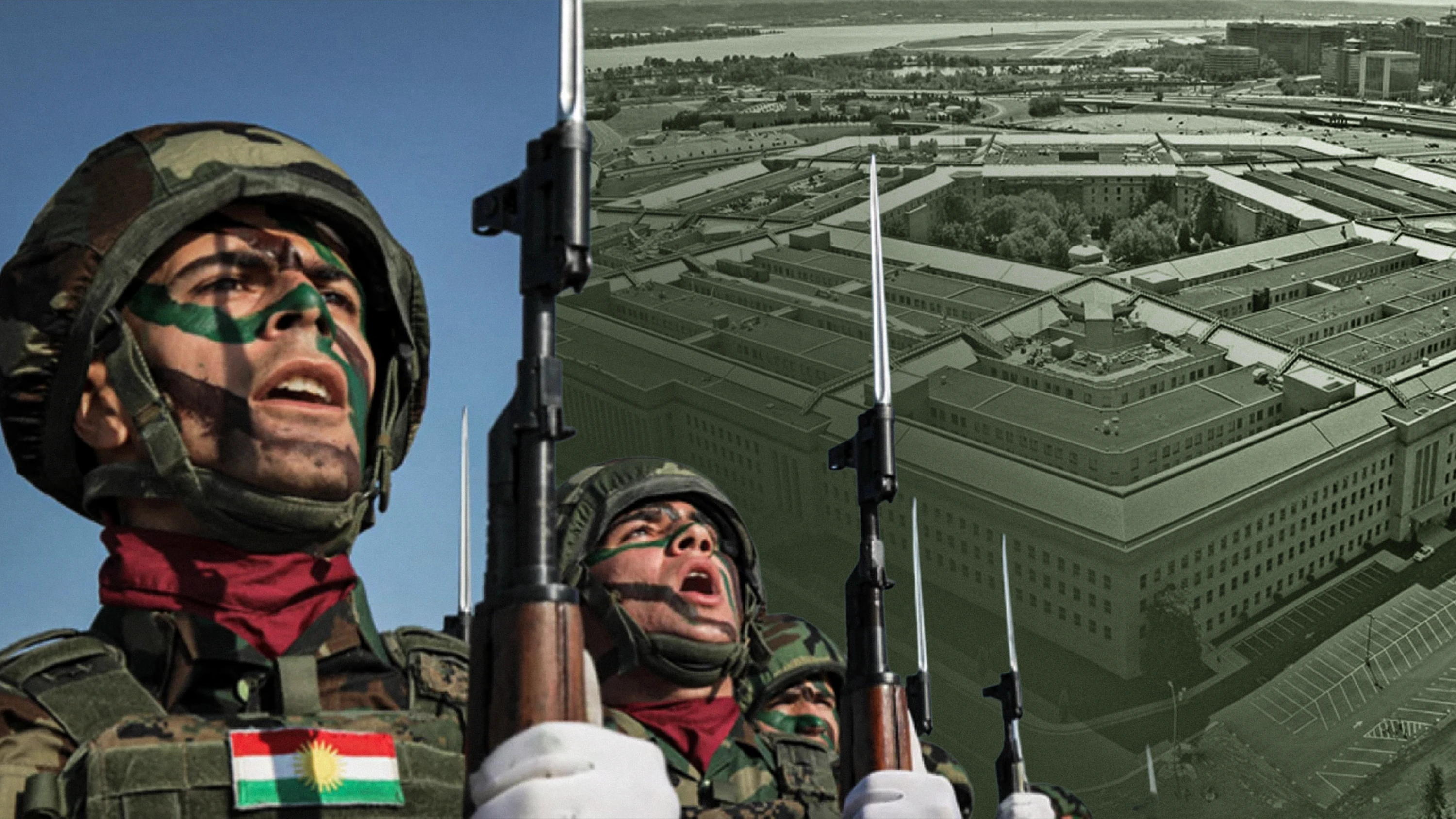
ERBIL, Kurdistan Region of Iraq - On April 3, 2026, the US Department of Defense (DoD) released its budget request for the 2027 Counter-ISIS Train and Equip Fund (CTEF) program for Iraq, which included decreased support for Kurdish Peshmerga Forces. So far, the request has not been approved and can still be amended.
This has led to online speculation that US President Donald Trump is punishing the Kurds for allegedly withholding weapons from Iranian protesters or that the US reduced support due to the lack of progress in the Peshmerga reform program.
The DoD budget request decreases the Ministry of Peshmerga Affairs Counter-ISIS Train and Equip Fund (CTEF) support from $61 million to zero. Stipends for the Peshmerga forces were already cut last year from $60 million to zero.
Nevertheless, the budget request still includes over $1.35 million in medical supplies to the Ministry of Peshmerga Affairs. The budget request mentions that while CTEF support is decreasing, this would allow Peshmerga leadership “to continue building independent capabilities” and that these medical supplies will support Peshmerga anti-ISIS [Islamic State] operations and training.
The Ministry of Peshmerga Affairs on May 3 denied reports that US support for the Peshmerga forces has been suspended.
“These rumors are baseless, and the support process continues in accordance with the joint understanding signed between the US Department of Defense and the Ministry of Peshmerga,” the Ministry said.
The Ministry of Peshmerga noted that the suspension only applies to the counter-terrorism cooperation against ISIS, citing a “limitation and reduction of ISIS terrorist activities.”
The budget request also includes $1.82 million in supplies for the Kurdish Sulay SWAT, citing their effectiveness against ISIS north of the Kurdish Coordination Line (KCL) alongside US special operations forces, and their need for improved night-vision capabilities.
It also includes $57 million for the Iraqi Counter Terrorism Service and $38 million for the Iraqi Ministry of Defense (MoD). In total, the budget request reduces CTEF support to Iraq from $175,02 million to $96,45 million.
On May 19, during a recent briefing by US military leaders, Rep. Mike Turner expressed concerns over the overall funding for the Peshmerga forces.
US Assistant Secretary of Defense for International Security Affairs Daniel Zimmerman, in response, said "it's hard to find a more willing, capable group to work alongside, and we welcome the support funding that Congress has provided to continue that partnership.”
He also added that the harmful actions by Shiite militia groups in Iraq during the recent war with Iran “showcased how helpful the Iraqi Kurdish partners are.”
The Iran-backed Shiite armed groups since the 28 February war have carried out hundreds of drone attacks on US bases and diplomatic facilities in Erbil and Baghdad.
“Today’s congressional hearing reaffirmed that the Kurdistan Region of Iraq and the Peshmerga remain among America’s most reliable and effective partners in promoting stability and combating terrorism in the Middle East,” Treefa Aziz, Kurdistan Regional Government (KRG) Representative to the United States of America, told The New Region after the hearing.
“The KRG welcomes congressional support to restore funding for Peshmerga forces. At a time of growing regional uncertainty, weakening support for trusted partners would create unnecessary risks and undermine years of hard-earned progress against extremist threats.”
Peshmerga unification
In 2022, Erbil and Washington signed a four-year Memorandum of Understanding (MoU) to support the reform and unification of the Peshmerga forces, which was extended until September 2026 last year.
The goal of the unification and reform program is to bring the Kurdistan Democratic Party’s (KDP) Unit 80 and the Patriotic Union of Kurdistan’s (PUK) Unit 70 under the Ministry of Peshmerga.
Victoria Taylor, former US Deputy Assistant Secretary of State for Iraq and Iran and Director of the Iraq Initiative in the Atlantic Council’s Middle East program, told The New Region that “the Memorandum of Understanding with the United States on Peshmerga reform was set to end in 2026, so the end of the stipend should not be a surprise.”
“While it is always possible that the Trump administration could decide to negotiate a new MOU or to extend the funding, this administration has reduced American assistance across the world, so Kurdish officials should be prepared for the funding to come to an end,” Taylor added.
The latest Pentagon Inspector General report released on February 17 also mentions that the Coalition is executing “its planned reduction of Peshmerga support as its current memorandum of understanding reaches completion.” This shows that the reduction is not related to the Iran war.
However, the Pentagon report mentions that individual countries “within the Coalition may also retain bilateral security partnerships to continue developing the Ministry of Peshmerga Affairs (MoPA).”
The report also mentions Peshmerga reforms were to be completed by September 2025, “but even with a year extension, their full completion seems unlikely.”
The US-led Coalition is also planning to withdraw its troops from the Kurdistan Region by September 2026 as part of the 2024 agreement with the Iraqi government to end the anti-ISIS coalition mission in Iraq. Already last year, the Coalition pulled out most troops from Iraq, apart from the Kurdistan Region.
Ministry of Peshmerga Secretary General Staff Lieutenant General Bakhtiar Mohammed Sidiq also told The New Region that the reduction in the US support for Peshmerga forces is related to the ending of the MoU.
“Every year, the support is reduced 25 percent. Until now, we have not received a proper budget (from Baghdad). Perhaps after the new Iraqi government is established, there will be further discussions on the budget,” he said.
Another Peshmerga source told The New Region on condition of anonymity that since the MoU was signed in 2022, support to the Peshmerga was “reduced 25 percent each year, starting from 2022.”
The source added that the Coalition wanted the Peshmerga Ministry to “coordinate with the Iraqi government to eventually be part of the Iraqi army.”
According to Sidiq, the US stipend is limited only in support that the Peshmerga was not dependent on it. “It is still beneficial for us that the Peshmerga are included in the US defense budget alongside other Iraqi forces,” he said, stressing that in the end the Peshmerga forces should receive a fixed budget from Baghdad.
The DoW budget request also mentions that by 2027, the MoPA force structure will include 11 divisions under two area commands.
Sidiq also noted that the future of bilateral cooperation between Baghdad and Western military forces remains unclear, but he added that the Kurdistan Region is trying to secure a new MoU with the United States through Baghdad on a bilateral basis.
“Germany and the UK are especially watching what the US will do, and may follow Washington’s lead. France and Italy are more likely to make independent decisions (on bilateral agreement),” he said.
On May 18, Italian Defense Minister Guido Crosetto told Kurdistan Region President Nechirvan Barzani in Rome that Italy’s support on military and security matters will continue.
Currently, the Netherlands, Italy, France, Germany, the UK, and the United States are part of the Multinational Advisory Group that supports the Peshmerga unification process with advisors. But it’s not clear if they will continue their programs after September 2026.
On May 14, Kurdistan Region President Nechirvan Barzani, in a speech at the graduation ceremony at the military academy in Zakho, mentioned that necessary progress has not been achieved in the Peshmerga unification process.
“Our allies in the international coalition continue to provide support, planning, and assistance while expecting us to demonstrate the necessary political will. Unfortunately, this has not happened to the required extent, which has negatively affected the reputation of the Kurdistan Region,” Barzani stated.
Yerevan Saeed, Director of the Global Kurdish for Peace at American University, told The New Region that “the MoU between the Ministry of Peshmerga and the US Department of Defense included a sunset clause set for 2026, so its expiration should not come as a surprise. What matters more is the frustration among US and coalition officials over the slow integration of the 70 and 80 Forces under the ministry’s command.”
“The reform process has moved far more slowly than expected. In many cases, it has stalled altogether. The KRG would have had a stronger case for renewing the MoU and securing continued funding for the Peshmerga if it had followed the coalition’s roadmap more closely. That roadmap called for restructuring the ministry and merging the KDP- and PUK-affiliated forces under a unified command.”
He also denied that the reduction was related to the Iran war or to alleged US anger over the Kurds withholding weapons. “This was clear from the start,” Saeed said.
An anonymous Peshmerga official told The New Region that “ultimately, achieving meaningful and lasting unification will depend both on internal political convergence and on sustained support from the United States and the Coalition.”
“As the Ministry of Peshmerga continues to unify forces, the financial support and advice from the United States military has been essential for the success and security of Iraq’s Kurdistan Region,” Retired US Army Colonel Myles B. Caggins III, former spokesman for the Global Coalition to Defeat ISIS in Iraq and Syria and a senior nonresident fellow at the New Lines Institute, added.
“In recent days, during the Iran war, Iraq’s Kurdistan Region has been blasted by more than 700 drones and rockets—including direct hits on US oil production facilities—US Congress should immediately authorize the sale of anti-drone technology to the Kurdistan Regional Government to protect American investments and maintain security in the region,” he told The New Region.
“For $60 million annually, the Peshmerga have maintained the peace throughout the Kurdistan Region and enabled access for the anti-ISIS coalition and international businesses for less than the cost of 1 day of war in Iran; the partnership between the US and Kurdistan is low-cost, high-value.”
 Facebook
 LinkedIn
 Telegram
 X
X