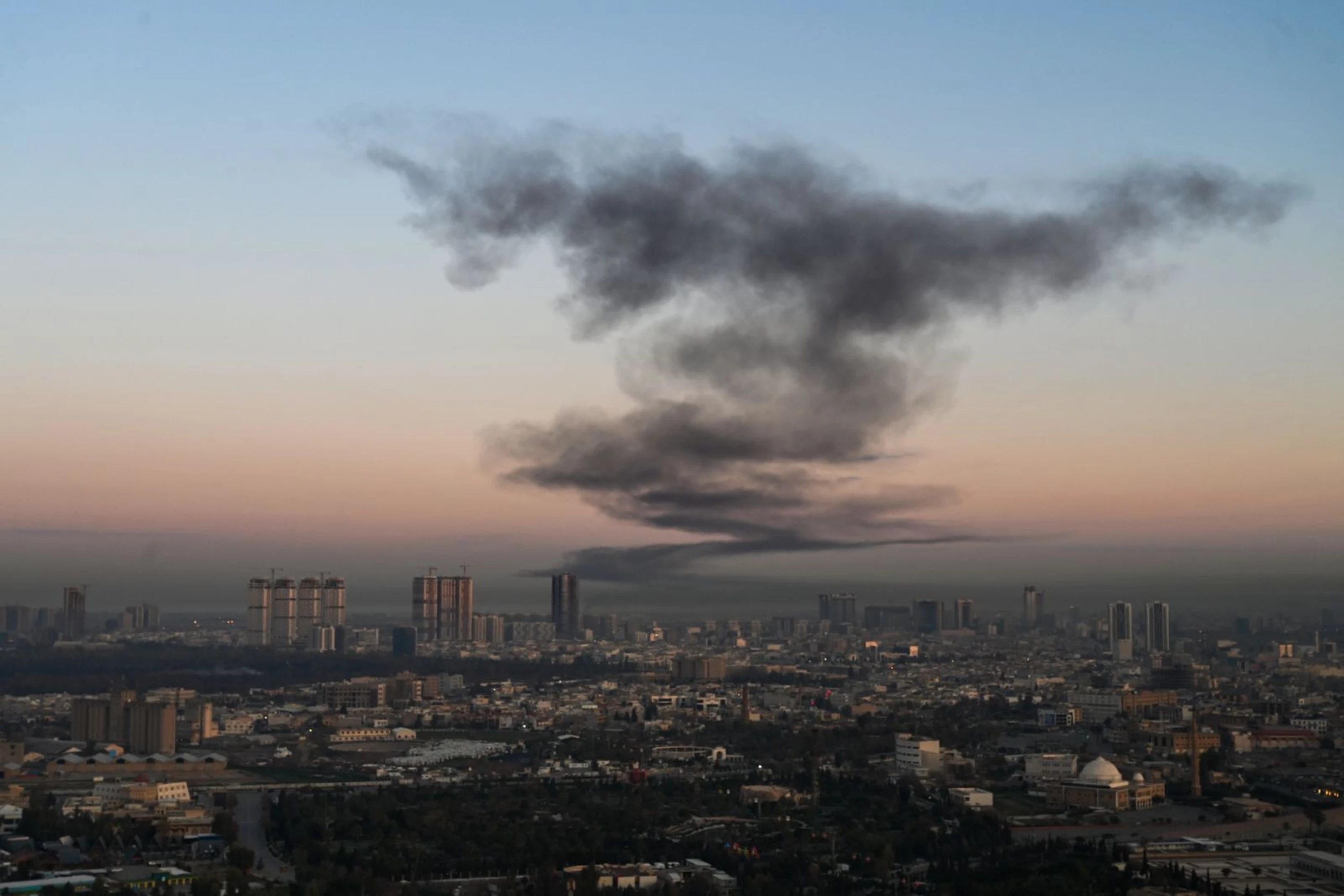
ERBIL, Kurdistan Region of Iraq – On Saturday morning, the Kurdistan Region woke up to the US and Israel launching strikes on Iran, witnessing the war firsthand as salvos of missiles flew over the Region and its capital Erbil, where Iran has been repeatedly targeting a US base near the airport.
Residents of the Kurdistan Region flocked to the markets to stock up on food and water. Long queues amassed before gas stations. The airspace over Iraq was closed, schools were closed, and people began preparing for the worst-case scenario - a prolonged war between the US and Israel against Iran.
The Islamic republic quickly acted on its warning to the UN Security Council in mid January, when it said that it would target all US bases in the region. In the immediate aftermath of the relentless strikes on Iran, a massive retaliation was launched against US interests in the region, including an American military base near Erbil airport and the US Consulate General in Erbil - the largest consulate in the world.
The MIM-104 Patriot defense system has been hard at work since Saturday, effectively intercepting Iranian missiles and drones. Still, the Kurdistan Region’s position is precarious, with its people left uneasy.
Attacks on Erbil continued on Sunday evening, with numerous explosions heard by residents across the Kurdistan Region’s capital. Several projectiles fell near Erbil International Airport and the US military base in its vicinity, while the 120-meter ring road was damaged.
US base – a bigger target
The American military base in Erbil has become a more lucrative target after US-led coalition forces left most of federal Iraq, such as the large Ain al-Assad base in the western Anbar province, and moved most of their forces to the Kurdistan Region as part of a deal with Baghdad to withdraw coalition forces from Iraq entirely by September.
“The consolidation of US assets in Erbil, presents a target that the Iranians are unlikely to pass up.” Nicholas Heras, Senior Director for the Strategy and Programs Unit in the Academic Division at the New Lines Institute, told the New Region, adding that “Erbil is the front line of Iran's immediate response.”
In anticipation of the strikes, most of the non-essential personnel of the US-led coalition were previously moved out. This is also not the first time that Iraqi Kurdistan has been hit.
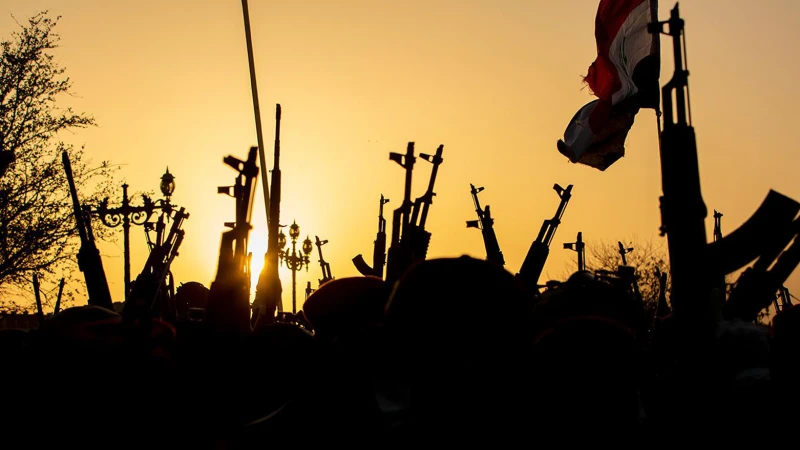
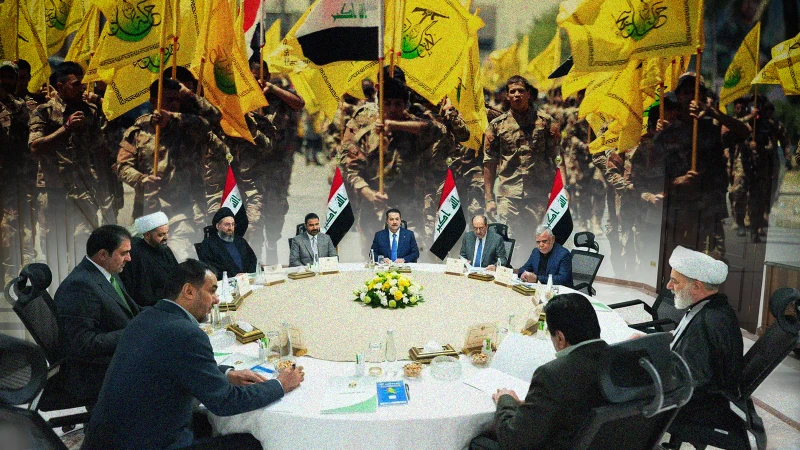
According to an older report by the Washington Kurdish Institute between 2018 and 2023, the Iranian regime and its Iraqi proxies, who are affiliated with the Popular Mobilization Forces (PMF), have launched at least 32 attacks on the Kurdistan Region, including on US bases, Iranian Kurdish opposition parties, oil and gas facilities, and the Kurdish Peshmerga forces. This continued until today.
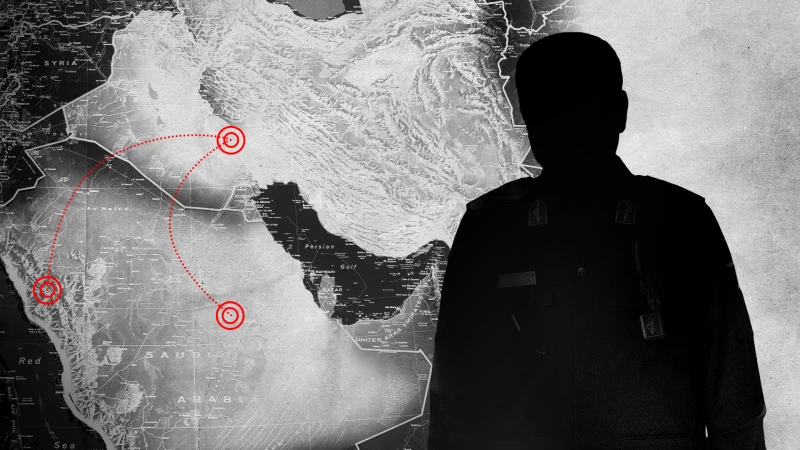
Dana Stroul, formerly the US Deputy Assistant Secretary of Defense for the Middle East in the Joe Biden administration, and now a Senior Fellow at The Washington Institute for Near East Policy, told The New Region that Iran's retaliation strategy is to spread chaos across the region and “punish” Erbil for its ties with Washington.
“The regime is attacking any country that hosts US forces and US bases, and it quickly shifted to also attacking civilian targets across the Gulf. Iran has attacked Erbil in the past, including strikes against what it claimed were bases hosting US forces,” she said.
“It will try to punish the Iraqi Kurdistan region again for its special relationship with the United States. This is why CENTCOM spent weeks reducing risk and increasing its air defenses across the region - to support the defense of its forces and its partners.”
Iranian Kurdish opposition groups
Among Iran’s main targets in the Kurdistan Region are the Iranian Kurdish opposition groups, five of which on February 22 formed an alliance aimed at toppling the Iranian regime. These groups have long been targeted by Tehran, including on Saturday.
READ MORE: Iranian Kurdish opposition groups form new joint alliance
“It is too early to see how the war will affect Iraqi Kurds, although it is interesting to note that five Iranian Kurdish groups announced their coming together on February 22,” Alan E. Eyre, a former Persian language spokesperson of the US Department of State and Fellow at the Middle East Institute, told The New Region. “Iran will target US forces in the region, which could well apply to Iraq.”
Following the alliance’s announcement, the Kurdistan Region’s interior ministry quickly rushed to reject threats made against a “neighboring country,” asserting that it will not allow any party to use the Region to attack a neighboring state.
Aso Saleh, a member of the Kurdistan Democratic Party of Iran (KDPI), confirmed that Iran launched three missiles and drones at their party headquarters in Koya on Saturday. “But all were successfully intercepted and destroyed by the Patriot defense system,” he told The New Region.
“We are in a different time,” he said, adding that the American air defense system interfered to take down Iran’s missiles and drones.
In September 2022, 16 members of the KDPI were killed in Iranian attacks on the Kurdistan Region, and dozens more were injured.
Sources from the Kurdistan Freedom Party (PAK), another opposition group, confirmed that three missiles targeting their base were successfully intercepted by the US, which was due to the expansion of the Patriot system. Previously, a drone attack in late January killed a PAK member.
David Witty, a retired US Army Special Forces Colonel and Foreign Area Officer, told The New Region that “the Iranians have long accused the government in Erbil of hosting Iranian opposition groups, and of course, remaining US forces and elements of the international coalition in Iraq are now concentrated in the IKR [Iraqi Kurdistan Region], making it a tempting target.”
Energy infrastructure
“At least three of the pro-Iranian Iraqi militias have stated that they will defend Iran and target US forces, and the militias have long been suspected of being behind numerous attacks on Kurdish energy infrastructure and the Harir base in Erbil,” Witty said.
Iran-backed groups have also previously targeted Kurdish energy infrastructure, drawing strong condemnation from the Kurdistan Regional Government (KRG). Erbil has blamed the PMF on several occasions for the attacks.
The Norwegian oil company DNO and UAE’s Dana Gas also temporarily shut oil and gas production at their fields in the Kurdistan Region of Iraq, fearing potential strikes.
This has resulted in partial electricity blackouts in the Kurdistan Region, since the shutdown reduced the Kurdistan Region’s electricity production capacity by 2,500-3,000 megawatts.
“As of now, Iran has not targeted the Kurdish oil sector. But there is a risk of that. A few IOCs in the region are American, and if Iran targets them, then the sector will stand still. How long depends on this conflict and how extensive an attack will be,” said Alan Mohtadi, the head of T&S Consulting Energy and Security.
“If they don't or the attack isn't significant, then KRG will benefit from the price surge that will most likely happen. Also, Iraq and the KRG could restart Kirkuk oil to Ceyhan if Hormuz is closed for Basra oil,” Mohtadi added.
Regime weakening or change
With Khamenei dead, analysts have suggested that this could lead to regime change or the severe weakening of the Islamic republic. One of the main goals of the current US-Israeli campaign seems to be regime change.
Witty said that in the near term, “the real question for the IKR and the larger region is whether and for how long the regime in Tehran can endure the US and Israeli onslaught.”
Exiled opposition figure Reza Pahlavi, the eldest son of Mohammad Reza Pahlavi, the last shah of Iran, who recently made a dash at the Munich Security Conference, also hopes to seize power.
The Kurdistan Region in the past maintained ties with the shah, who supported the Kurds against Baghdad prior to the 1979 Islamic Revolution. Afterwards, relations continued with the Islamic regime in Tehran.
Alex Plitsas, a Nonresident Senior Fellow at the Atlantic Council, who previously worked in the US Secretary of Defense’s office and was twice deployed to Iraq, said that the “impact to Kurdistan will depend on how this plays out over the next couple of days.”
“A change in [the Iranian] government could mean new policies and relations with Kurdistan. Turkey has also made it clear that it will move into Iran and create a buffer zone to prevent a flow of refugees, though I suspect the Kurdish question is at the heart of that as well,” he said, referring to Turkish fears over the ambitions of Kurdish groups in the region.
It remains to be seen in the next few days if the Iranian attacks will continue in the Kurdistan Region, and if the current weakened Iranian regime stays or will fall.
The outcome remains unclear, but the Kurdistan Region is working to uphold its peace despite missiles and drones flying overhead, and with the Region bordering Iran.
 Facebook
 LinkedIn
 Telegram
 X
X