DUBAI, UAE - Lebanese leaders on Monday marked the anniversary of Israel’s withdrawal from southern Lebanon in 2000 with renewed calls for full Israeli withdrawal and state sovereignty, while Hezbollah Secretary-General Naim Qassem insisted the group would not disarm, exposing growing divisions inside Lebanon.
In a statement marking Resistance and Liberation Day, Lebanese President Joseph Aoun said those who “liberated the south with their blood, soldiers and resistance fighters, deserve a strong and cohesive state with full sovereignty and legitimate institutions.”
Aoun said Lebanon rejects continued Israeli attacks and the occupation of southern villages, stressing that full Israeli withdrawal remains a “fixed national demand to be achieved through negotiations without concession or surrender.”
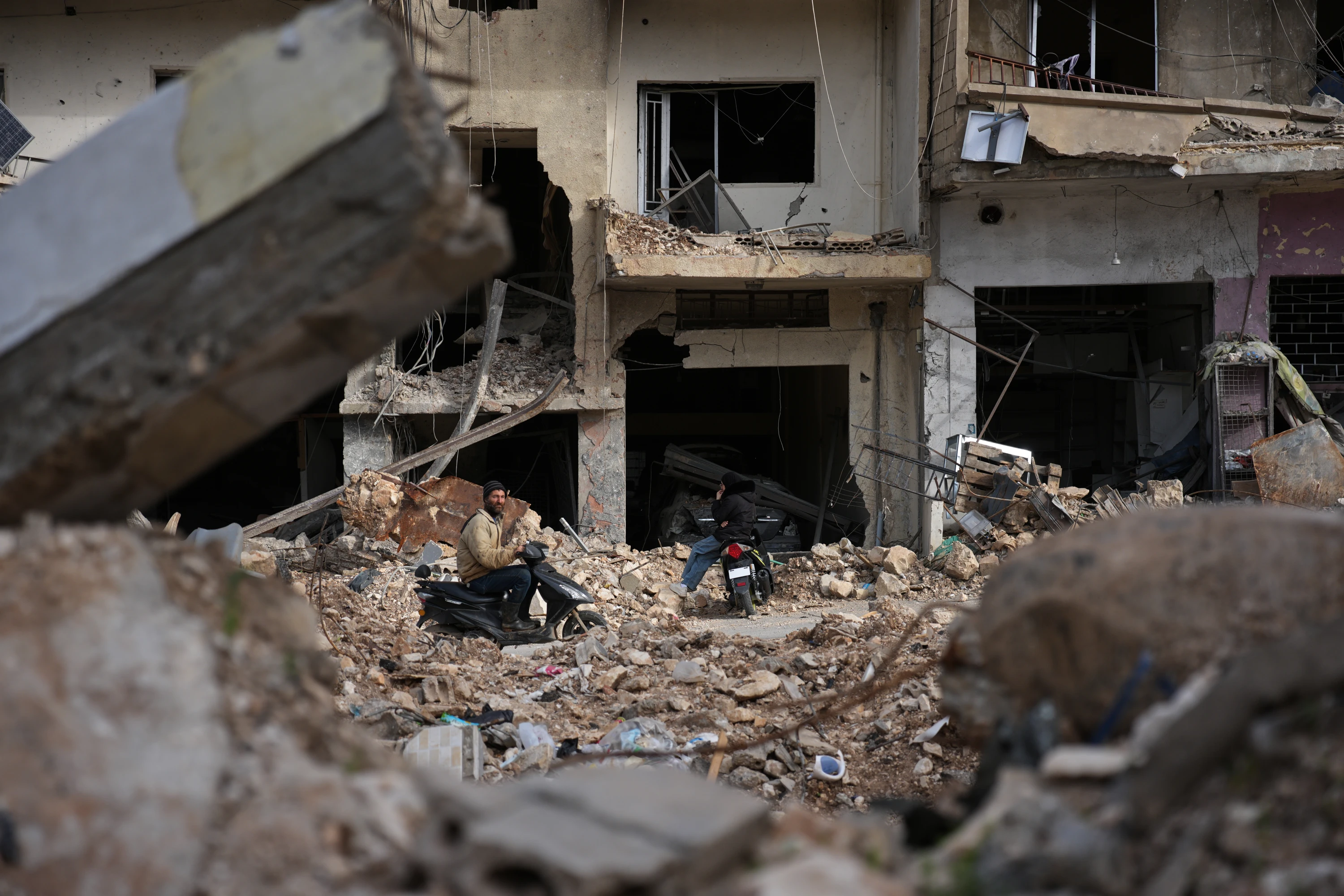
Lebanese Prime Minister Nawaf Salam also said there would be “no celebration of Resistance and Liberation Day until Israel fully withdraws from Lebanese territory and displaced residents return home in safety and dignity.”
Salam called for the occasion to instead serve as a day of solidarity with the families of “martyrs, the wounded, prisoners, displaced people, and residents remaining in southern frontline villages.”
The statements contrasted sharply with remarks delivered a day earlier by Qassem, who rejected calls for Hezbollah to surrender its weapons amid mounting US pressure on Beirut to ensure that arms remain solely under state control.
“Disarming means removing Lebanon’s defensive power in preparation for annihilation, and this is something we cannot accept,” Qassem said during a televised speech marking the same anniversary.
Qassem said Hezbollah’s weapons would remain “until the Lebanese state is capable of carrying out its duties,” adding that the group would confront anyone targeting it “just as we confront Israel.”
His remarks come amid an intensifying domestic debate in Lebanon over Hezbollah’s arsenal, with Lebanese officials increasingly emphasizing the need for the state and army alone to hold weapons, while Hezbollah argues that continued Israeli attacks justify maintaining its military capabilities.
The dispute has gained further significance following months of cross-border fighting between Hezbollah and Israel that escalated alongside the US-Israeli military campaign against Iran earlier this year.
Qassem also linked Hezbollah’s position to ongoing US-Iran negotiations, saying he hoped Tehran and Washington would reach an agreement leading to a “full cessation of hostilities,” including in Lebanon.
“God willing, this agreement will be finalized and there are signs of its completion, and accordingly that we too will be among those included in this agreement,” he said.
Iran has repeatedly pushed for Lebanon to be included in any broader regional arrangement tied to negotiations with the United States.
In response to reporters’ questions on Monday on whether Lebanon would be included in the emerging US-Iran, US Secretary of State Marco Rubio said that Washington is dealing with Lebanon separately.
“The problem is not Lebanon and Israel. The problem is Hezbollah… And as long as Lebanon exists with armaments, as long as an armed Hezbollah exists, it's going to be hard to achieve peace in Lebanon,” he added.
In Mid-May, Lebanon and Israel agreed to extend their ceasefire for another 45 days following US-mediated talks in Washington, while Israeli strikes on Hezbollah targets in Lebanon have continued nearly daily.
Israeli Prime Minister Benjamin Netanyahu said Sunday that US President Donald Trump had reaffirmed during a phone call Israel’s “right to defend itself against threats on every front, including Lebanon.”
According to Lebanon’s health ministry, at least 3,151 people have been killed and 9,571 wounded in Lebanon since clashes between Hezbollah and Israel reignited on March 2.
 Facebook
 LinkedIn
 Telegram
 X
X