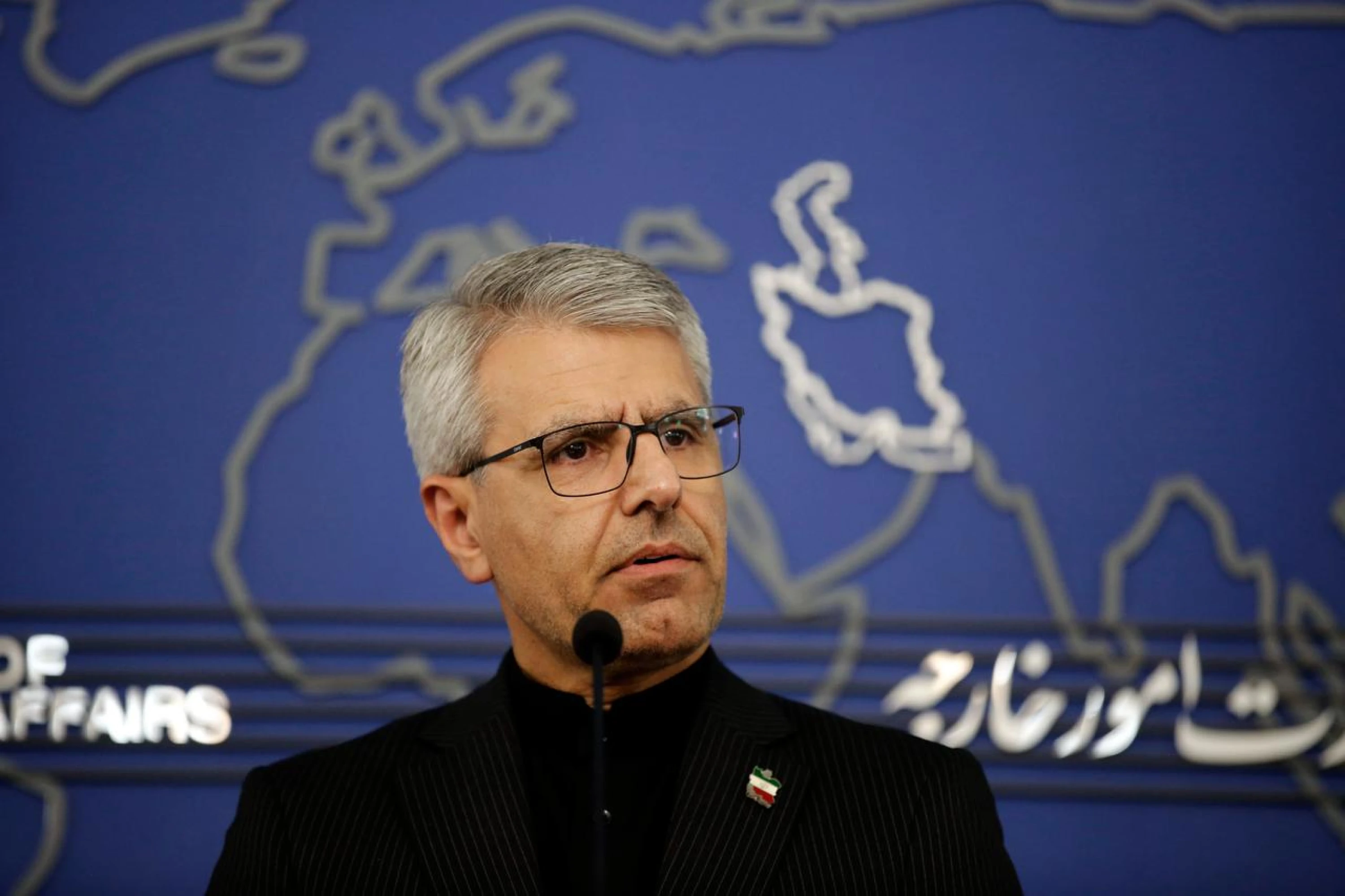
ERBIL, Kurdistan Region of Iraq - Iran’s foreign ministry said Monday that Tehran and Washington have “reached a conclusion on a large part of the issues” under discussion after weeks of indirect talks through Pakistani mediators, while stressing that no final agreement has been reached.
Replying to reporters during his weekly press conference, foreign ministry spokesperson Esmail Baghaei said recent developments were the result of “several weeks of talks through a Pakistani mediator,” adding that “some other countries also made efforts during the process.”
“It is correct to say that we have reached a conclusion on a large part of the issues under discussion,” Baghaei said. “But no one can make such a claim to say that this means the imminent signing of an agreement.”
US President Donald Trump said Sunday that talks with Iran are “proceeding in an orderly and constructive manner” and that he has instructed US negotiators “not to rush into a deal in that time is on our side,” coming as a possible agreement draws closer.
Baghaei said exchanges between Iran and the United States are currently taking place through Pakistani mediation and there is “no need” for face to face talks at this stage.
He accused Washington of frequently changing its positions, saying US decision-making suffers from “institutionalized instability,” which complicates negotiations.
“Nevertheless, just as we acted with authority on the battlefield, we will also strive in the field of diplomacy with open eyes and taking into account previous experiences to protect Iran’s national interests,” he said.
Baghaei also addressed discussions surrounding the Strait of Hormuz, denying repeated US allegations that Iran plans to impose tolls on ships passing through the strategic waterway.
He said Iran and Oman are working on a mechanism to ensure safe navigation and provide maritime and environmental protection services in the waterway.
He also rejected proposals reportedly discussed by France and the United Kingdom regarding management of the Strait of Hormuz, saying responsibility lies with Iran and Oman as the coastal states.
“In the very first stages, the US actions under the name of the naval blockade must be stopped,” Baghaei said, referring to discussions tied to maritime security m and Iranian shipping.
On Sunday, Trump said that the US blockade on Iranian ports will remain in place until a deal is reached, as the US Central Command (CENTCOM) claimed to have redirected 100 commercial vessels attempting to access Iran since mid-April.
 Facebook
 LinkedIn
 Telegram
 X
X