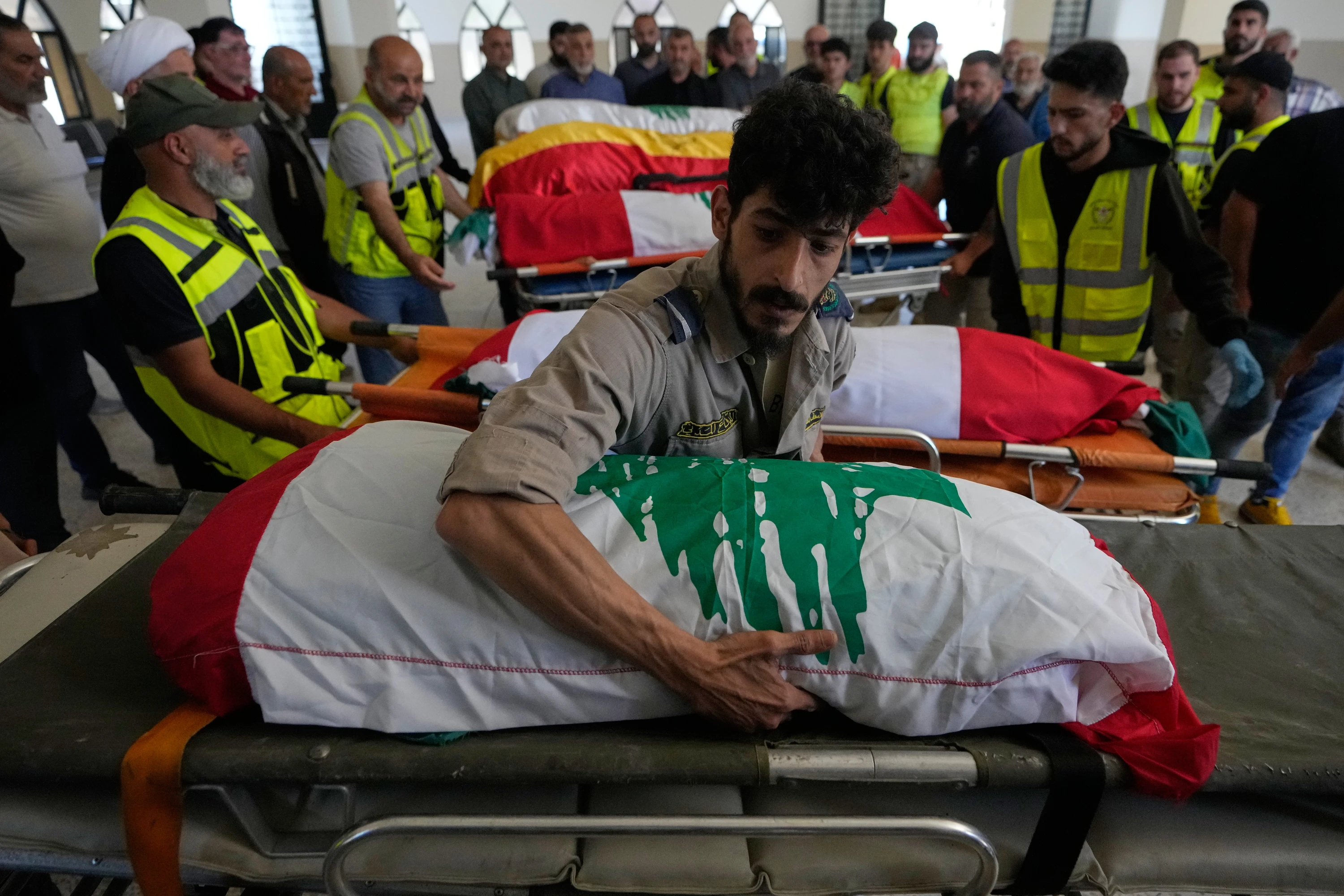
ERBIL, Kurdistan Region of Iraq - The United Nations said Friday that systematic Israeli attacks in Lebanon have either killed or injured an average of 11 children per day over the past week, despite the ceasefire between Israel and Hezbollah nominally being in effect.
The UN children’s agency, UNICEF, reported that 15 children have been killed and over 62 injured in the last seven days, labeling the figures “staggering” while reiterating that international humanitarian law mandates the constant protection of children during armed conflict.
"According to the Lebanese Ministry of Public Health, 77 children have reportedly been killed or injured over the past week alone," UNICEF spokesman Ricardo Pires told media in Geneva.
"We understand the vast majority of these children were impacted by airstrikes in south Lebanon. Only yesterday, seven children were killed and 30 injured. 15 children killed and 62 injured in seven days: that's an average of 11 children every 24 hours," he added.
Since the ceasefire was announced on April 16, a total of 55 children have been killed and 212 wounded, Pires said, urging all parties to fully respect the truce and comply with international humanitarian law, under which “children and civilian infrastructure must be protected at all times.”
Hostilities between Israel and Hezbollah escalated on March 2 under the backdrop of the US-Israeli war on Iran, triggering a wave of Israeli strikes that have killed more than 3,300 people and displaced over one million, according to Lebanese authorities.
Israel and Lebanon have agreed to extend the ceasefire between them for another 45 days following talks in Washington, the US State Department announced on May 15.
Israel has violated the ceasefire dozens of times, with Lebanese President Joseph Aoun insisting on April 29 that “Israel must realize once and for all that the only path to security is through negotiations, but it must first implement a complete ceasefire before moving to the negotiating phase.”
“If Israel believes it can achieve security through violations and the destruction of border villages, it is mistaken,” Aoun said, adding that “it has tried this before, and it yielded no results.”
But Lebanon’s humanitarian situation is becoming increasingly dire: according to a report released on May 6 by the Integrated Food Security Phase Classification (IPC) – a United Nations-backed group that monitors hunger and malnutrition – 1.2 million people in Lebanon face acute hunger due to war.
“Around 1.24 million people are facing high levels of acute food insecurity (IPC Phase 3 or above) between April and August 2026, which is worse than was previously projected for this period in the IPC analysis released in October 2025,” the report read.
"At present, more than three million people, meaning more than half of the population here in Lebanon, depend on humanitarian aid to survive," EU crisis management chief Hadja Lahbib told reporters after meeting Aoun in Beirut in early May.
Israel now controls nearly 600 kilometers of territory in southern Lebanon, where dozens of towns and villages fall within the so-called “yellow line” set by the Israeli military.
Following months of fighting with Hezbollah and a fragile ceasefire announced by US President Donald Trump on April 16, Israel drew the yellow line extending roughly 4 to 10 kilometers inside Lebanese territory, from the Mediterranean coast to the Syrian border. At least 55 villages have been designated off-limits, with residents barred from returning as homes and infrastructure are demolished to create a cleared, uninhabited buffer zone.
According to US-based independent conflict monitor ACLED, approximately 14.3 percent of Lebanese territory is currently occupied or under Israeli evacuation orders, with over 1.2 million people forced to flee their homes.
Israeli Prime Minister Benjamin Netanyahu has said Israeli forces will remain in what he described as a “reinforced security zone” indefinitely.
 Facebook
 LinkedIn
 Telegram
 X
X