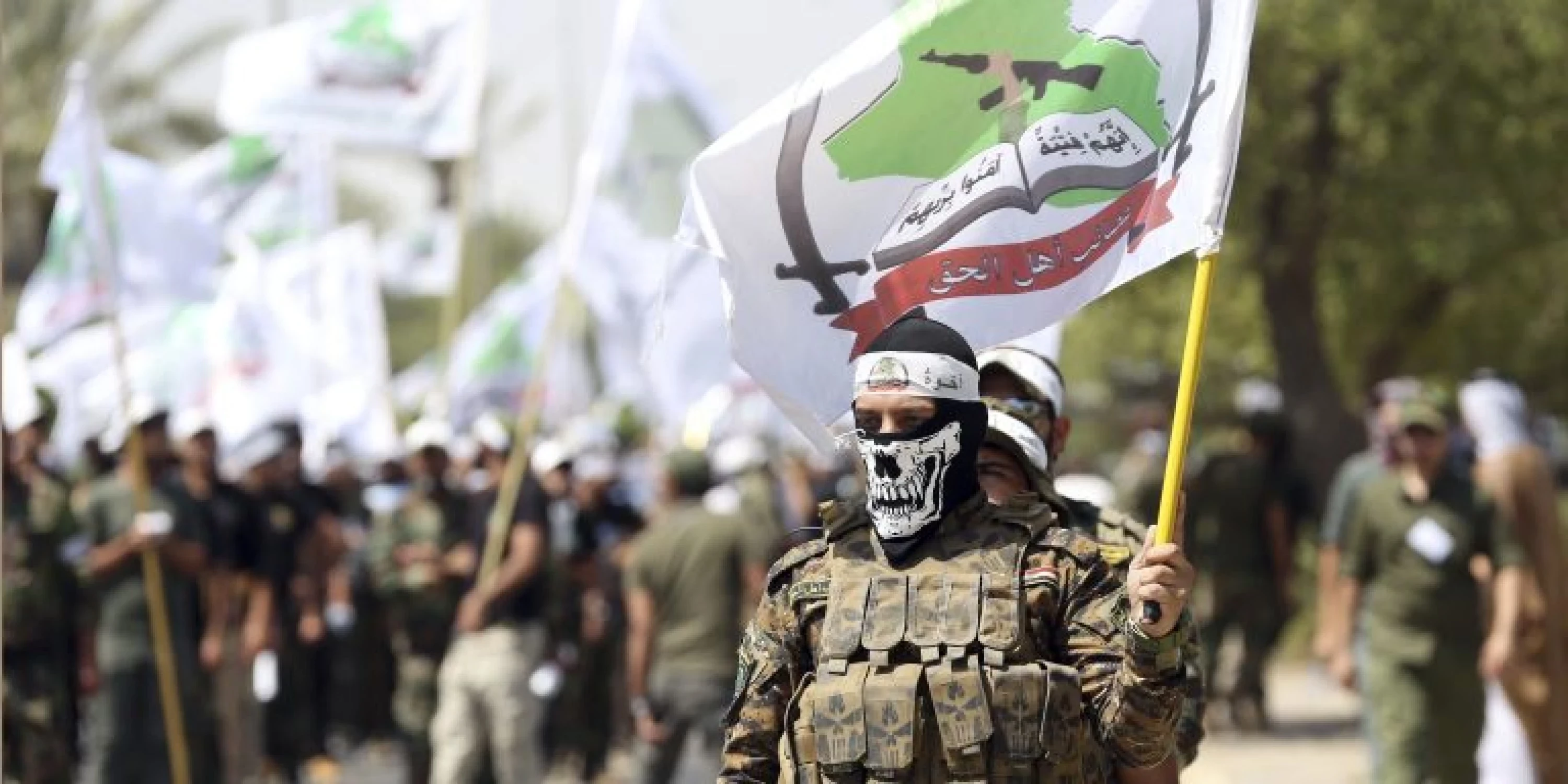
ERBIL, Kurdistan Region of Iraq – Iraq’s Asaib Ahl al-Haq (AAH) militia announced Tuesday that it is set to form a committee to oversee severing ties with the Popular Mobilization Forces (PMF) and restricting weapons to the state, coming after the ruling Shiite Coordination Framework's call for greater state control over arms.
In a statement, the Iran-backed militia announced a decision by the group’s leadership to form a central committee to begin implementing the process of “severing ties with the [PMF] and restricting weapons to the state.”
AAH said that the decision is in accordance with a call by Iraq’s supreme religious authority Ayatollah Ali al-Sistani as well as the Coordination Framework’s decision to support the process.
The announcement follows an early Tuesday statement by the ruling Shiite body, in which it announced support for a project to restrict weapons to the state, and sever the PMF’s ties with “all political, partisan, and social frameworks.”
In late 2024, Sistani called for limiting the possession of arms to the state after a meeting with Mohammad Hassan, the head of the UN Assistance Mission to Iraq (UNAMI) at the time.
The AAH committee will be responsible for “completing all requirements and procedures related to implementing this decision, including inventorying all personnel, weapons, vehicles, equipment, and logistical resources,” and coordinating with Prime Minister Ali al-Zaidi.
Asaib Ahl al-Haq previously called for restricting weapons to the state in a January statement, marking the Iraqi army’s 105th founding anniversary. The group stressed the importance of preserving the country’s “full national sovereignty,” rejecting “any form of illegal foreign military presence on Iraqi land or in its airspace.”
Iran-backed militias, including AAH, have previously rebuffed disarmament calls, saying they maintain the right to “resistance” as long as there are foreign forces present in the country.
In contrast, the Ashab al-Kahf militia, another Iran-backed armed faction operating within Iraq, denied claims that Sistani had called for “surrendering weapons,” in a statement early Tuesday, noting that “a review of history reveals that the religious authority has never hesitated to call for bearing arms and confronting the occupiers.”
The move comes amid a heightened call to integrate armed groups into state institutions, initiated by Zaidi, who set state control of weapons at the forefront of his government program earlier in May.
On May 13, Iraq’s National Security Advisor Qasim al-Araji stressed that centralizing control of weapons to the state is of “paramount importance” for the country’s next government.
US Charge d’Affaires in Baghdad Joshua Harris on Tuesday reiterated support for measures to restrict weapons to the state in a meeting with Araji, describing the Coordination Framework’s stance as “a qualitative leap forward in consolidating independence and sovereignty for a promising future for Iraq.”
Days before the Coordination Framework’s statement, Influential Iraqi Shiite cleric and head of the National Shiite Movement Muqtada al-Sadr on Wednesday announced the “complete separation” of his armed faction Saraya al-Salam from his party, and its “complete integration” within the Iraqi state’s forces.
Sadr’s announcement was welcomed by the Iraqi leadership and national political forces, who further urged other armed groups in the country to follow suit and integrate into the state.
Illegal weapons in Iraq stand out as one of the most pressing challenges to security and stability. Unofficial data puts the number of arms within Iraqi society at around 15 million medium and light weapons, with armed groups and tribes possessing the bulk of them.
Iraq’s interior ministry said in late April that it had registered around 5.8 million firearms in a national database.
 Facebook
 LinkedIn
 Telegram
 X
X