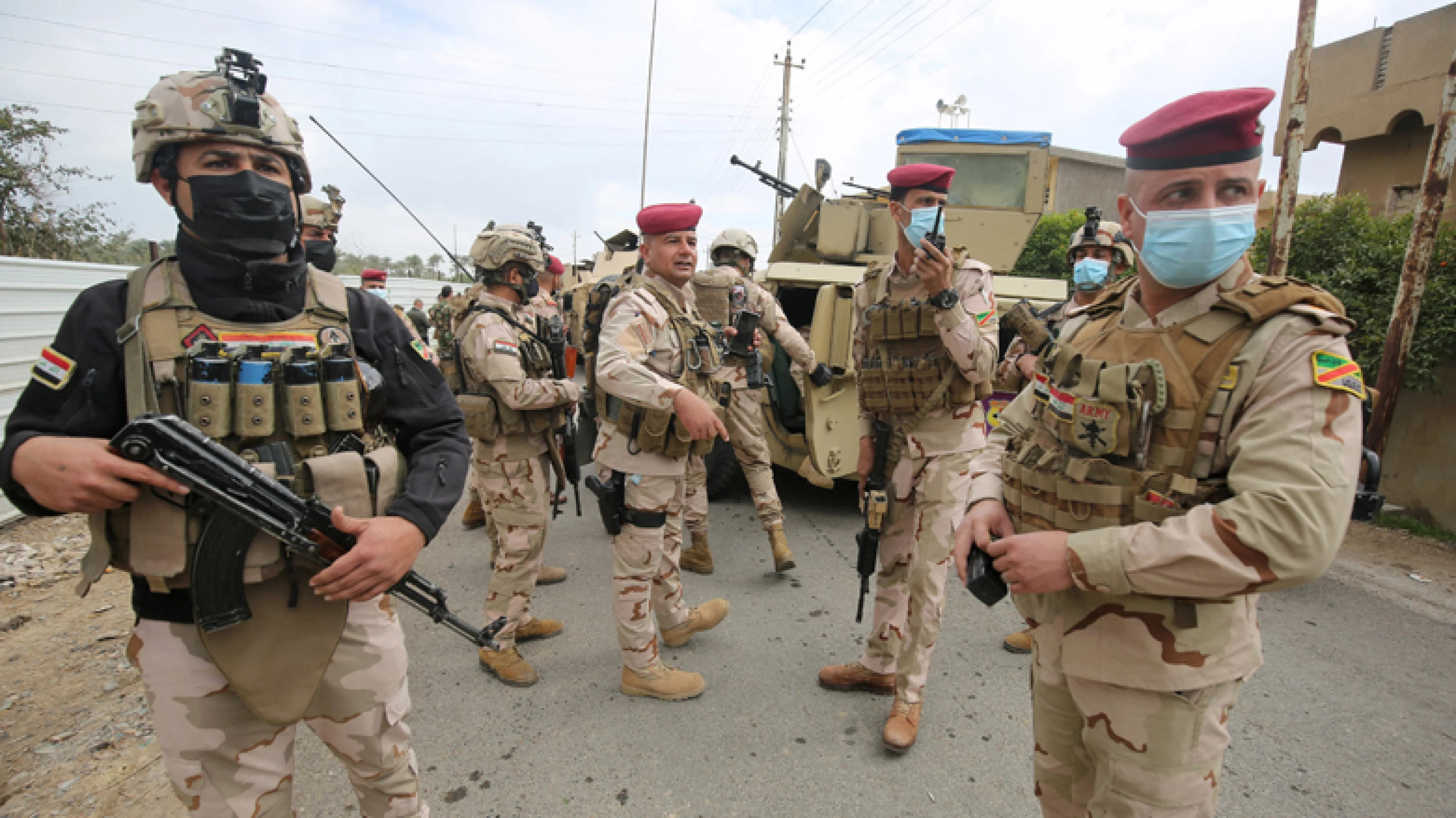
ERBIL, Kurdistan Region of Iraq – The Iraqi army is set to withdraw from all of the country’s cities and urban areas by the end of the year, a top official said on Sunday, with the interior ministry said to take full control of the areas.
Sabah al-Numan, spokesperson for the Iraqi prime minister, told the state-run al-Sabah newspaper that the plan would “transfer responsibility for internal security entirely to the interior ministry and its specialized agencies,” allowing army units to focus on border protection, strengthening defensive capabilities and improving military readiness.
According to Numan, Baghdad is pursuing a broad structural plan to consolidate the authority of the state. He said that the government is relying on “dialogue and constructive coordination with all national forces and formations rather than threats or strict deadlines.”
He stressed that salaries, financial entitlements and administrative benefits are a constitutional obligation that “will not be affected,” while the Popular Mobilization Forces (PMF) Commission will continue to operate as an official state institution.
“The operational aspect is subject fully and directly to the authority of the commander in chief of the armed forces through the official channels of the ministries of defense and interior,” Numan said.
He added that the measures are intended to ensure unity in military decision-making, end political affiliations within armed formations and transform all units into regular forces operating under strict institutional discipline.
On Thursday, Iraq’s Joint Operations Command announced the formation of a committee tasked with severing armed groups’ affiliations with the PMF and placing all weapons under state control.
Qais al-Muhammadawi, deputy commander of the Joint Operations Command, said the forces would be integrated into state institutions under the authority of Prime Minister Ali al-Zaidi, as part of a broader government effort to consolidate state control over weapons.
The initiative has been supported by several armed groups, including Muqtada al-Sadr’s Saraya al-Salam, Asaib Ahl al-Haq and Kataib al-Imam Ali, which announced their disengagement from the PMF and pledged to hand over their weapons.
However, factions such as Ashab al-Kahf, Harakat al-Nujaba and Saraya Awliya al-Dam have rejected the move.
During the recent US-Israeli war on Iran, several pro-Iran PMF factions carried out attacks on US interests and targets in the Kurdistan Region, actions that Baghdad viewed as inconsistent with its policy of neutrality.
 Facebook
 LinkedIn
 Telegram
 X
X