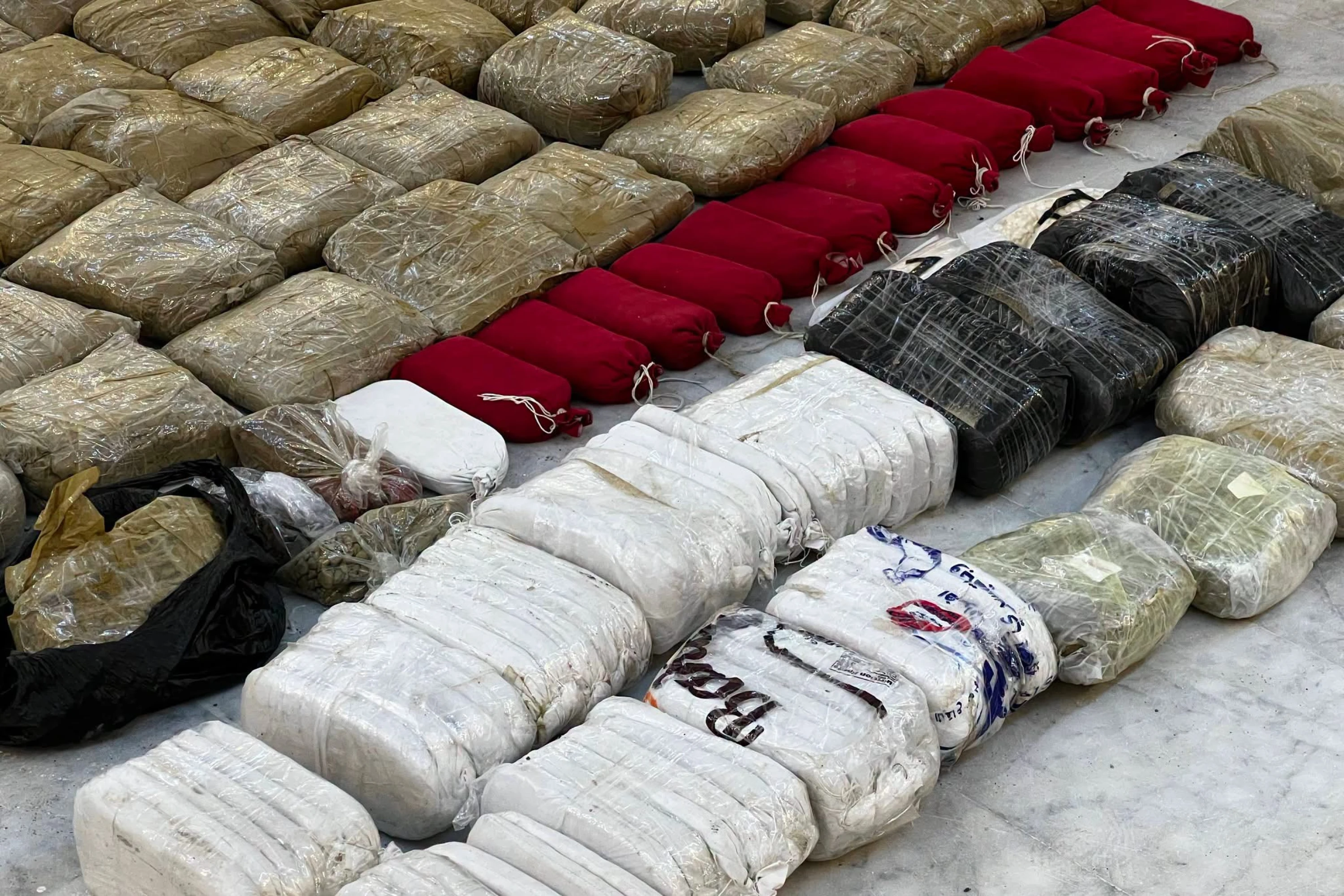
ERBIL, Kurdistan Region of Iraq - Iraqi and Syrian authorities seized 200 kilograms of narcotics “deep inside Syria,” Iraq’s anti-narcotics directorate said Sunday, adding that nine suspected traffickers were arrested in the joint operations.
Iraq’s anti-narcotics said it conducted a series of operations across several days “deep inside” Syria’s eastern Deir ez-Zor and central Homs provinces in coordination with Syrian forces.
“The operation resulted in the dismantling of an international network comprising nine major drug traffickers and the seizure of 200 kilograms of various narcotics intended for smuggling into Iraqi territory for distribution,” the directorate said in a statement.
The seizure included 800,000 Captagon pills and 60 kilograms of hashish “all intended for smuggling and distribution,” according to the Syrian interior ministry.
With its extensive borders with Syria, Iran, Saudi Arabia, and Kuwait, Iraq has become a major transit route for drug trafficking.
Baghdad frequently cooperates with neighboring countries to combat narcotic trafficking, as it has ramped up its anti-narcotic efforts.
“This operation underscores the high level of coordination and effective intelligence cooperation between the anti-narcotics agencies of both countries. It is part of joint efforts aimed at cutting off smuggling routes, disrupting the supply lines of international drug networks, and apprehending the most dangerous figures involved in this trade,” the statement added.
Despite imposing severe penalties, Iraq continues to face an escalating drug problem that has intensified since the US invasion in 2003.
Iraq's stringent narcotics laws, which impose death or life sentences for drug-related offenses, are a response to the severity of the crisis but have failed to curb the increasing drug use and trafficking fully.
Captagon, the brand name for the amphetamine-type psychostimulant fenethylline, was mainly produced and distributed in Syria during Bashar al-Assad’s regime. It is mainly used in the Gulf countries, with Saudi Arabia being the main consumer.
Since Assad’s fall in Syria, the new authorities in Damascus have repeatedly announced the mass seizure of drugs around the country, but neighbouring countries continue to report the interception of shipments.
 Facebook
 LinkedIn
 Telegram
 X
X