
ERBIL, Kurdistan Region of Iraq - Iraqi National Security Advisor Qassim al-Araji said Sunday that Iraq continues to pursue a balanced foreign policy aimed at boosting ties with allied countries.
“Iraq continues to pursue a balanced foreign policy that strengthens partnerships and expands cooperation with sisterly and friendly countries,” Araji said in a post on X.
“Restoring international relations is not a protocolary task, but a strategic choice that enhances trust between states and supports security, stability and shared interests,” he added.
The advisor stated that stronger international ties are key to supporting Iraq’s national security and regional and international standing.
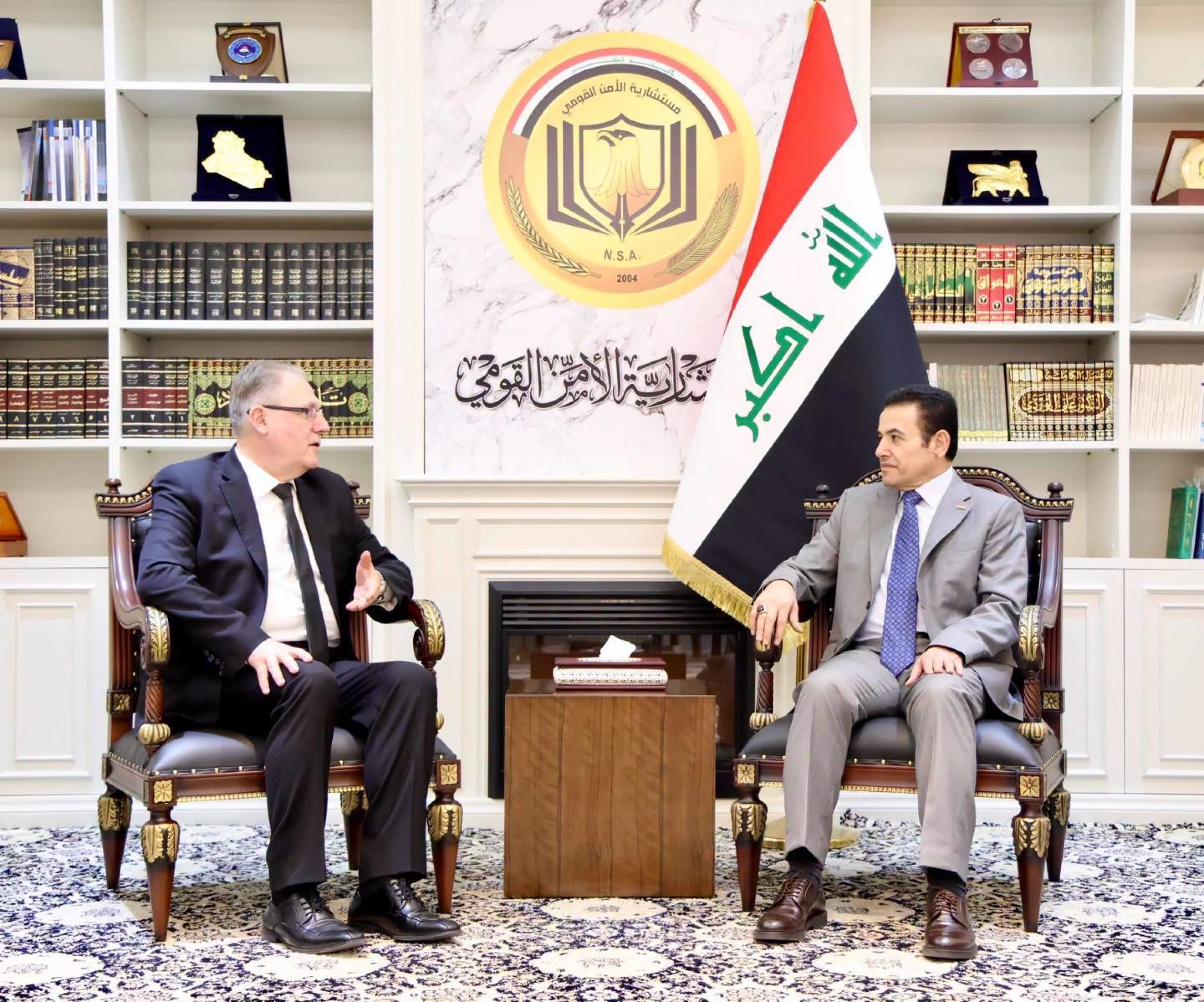
Later on Sunday, Araji met with UN Assistant Secretary General and UN Development Programme (UNDP) Regional Director for Arab States Abdullah al-Dardari to discuss cooperation between Iraq and the United Nations.
“Iraq has balanced relations with all countries of the world,” Araji said, adding that regional stability would support strategic projects, including the Development Road project, rail connectivity, artificial intelligence, and cybersecurity.
He also stressed the need for “international efforts to promote peace and confront violent extremist rhetoric.”
Dardari reaffirmed the UNDP's readiness to strengthen cooperation with Iraq and reiterated continued UN support for the country's development and stability efforts.
Government spokesperson Haider al-Aboudi said last week that the mission of the US-led anti-Islamic State (ISIS) coalition is expected to end in September.
The tenuous balance between US and Iranian interests has long been a hallmark of Iraqi politics, with the recently-inaugurated Prime Minister Ali al-Zaidi, who is perceived as a compromise candidate in the Iraqi political sphere, having both expressed openness to American investment and urged the restriction of non-state actors, policies supported by Washington, while also rejecting the use of Iraq as a launching pad for foreign military powers, something that is in Tehran's national interest.
During the war between the United States, Israel, and Iran that began on February 28, several pro-Iran Iraqi factions carried out attacks targeting US diplomatic and military facilities across Gulf countries, and sites in the Kurdistan Region.
The attacks heightened regional tensions and prompted renewed calls for Baghdad to tighten state control over armed groups.
The issue has since become a central part of Zaidi's agenda, with the government moving to bring weapons under state control ahead of the expected end of the US-led coalition mission in Iraq in September.
 Facebook
 LinkedIn
 Telegram
 X
X