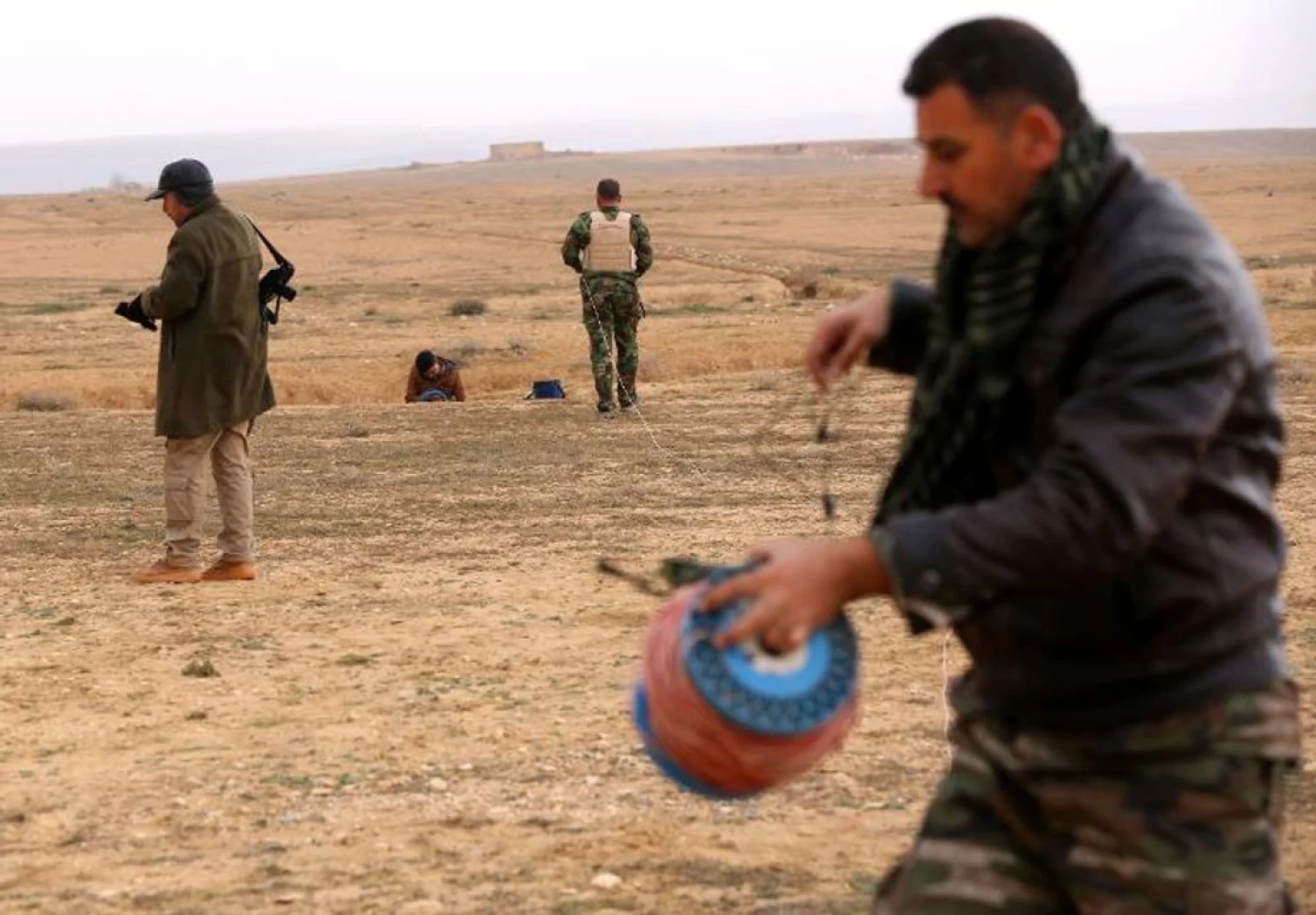
ERBIL, Kurdistan Region of Iraq – The Green Iraq Observatory said Sunday that nearly 4,800 square kilometers of Iraqi land remain contaminated by landmines, unexploded ordnance and war remnants, describing the issue as one of the country's most serious environmental and humanitarian challenges.
“The roots of this crisis date back to the Iraq-Iran war, which lasted eight years, followed by the Gulf War in 1991, then the successive military operations after 2003, and finally the war against ISIS in 2014,” the monitor said in a statement.
The scale of landmines and unexploded ordnance has caused heavy human losses over the years, according to the monitor, adding that the contamination is the result of successive conflicts.
“These contaminated areas have caused severe human losses over the years, as tens of thousands of victims were killed or injured as a result of landmine explosions and war remnants,” it said, adding that “children, women, shepherds and farmers were among the groups most affected by these risks.”
The statement said the impact extends beyond public safety and has damaged Iraq's agricultural sector and economic development.
“The contaminated areas mean that tens of thousands of dunams of agricultural land are out of production,” the observatory said.
It added that the issue “negatively affects food security and economic development, in addition to depriving many local communities of safely investing in and benefiting from their land.”
“Iraq needs between 10 and 15 years to deal with this file effectively if sufficient government and international support and funding are available,” the statement said, stressing that “the scale of contamination and its wide geographical distribution make it difficult to close this file within a short period.”
The Green Iraq Observatory described the need to clear the lands as a “fundamental step toward restoring damaged lands, promoting sustainable development, protecting citizens’ lives, and enabling local communities to return safely to their areas and practice their economic and agricultural activities without risks.”
Landmines and war remnants remain a major challenge across Iraq decades after successive conflicts.
According to government figures submitted to international mine-ban treaty meetings, Iraq recorded 34,249 people killed or injured by landmines and explosive remnants of war between 2003 and 2024, while the United Nations has reported hundreds of child casualties in recent years.
Basra remains the country's most heavily contaminated province, with much of the threat linked to the 1980-1988 Iran-Iraq war.
The United Nations has also described Iraq as one of the world's most mine-contaminated countries, with explosive hazards affecting communities, farmland and infrastructure across several provinces.
Iraqi authorities say about 60 percent of mine and war-remnant contamination has been cleared since 2003, and the government has allocated $40 million for demining operations.
Officials are working to meet international clearance obligations by 2028, although newly discovered contaminated sites and the scale of the challenge continue to complicate efforts.
 Facebook
 LinkedIn
 Telegram
 X
X