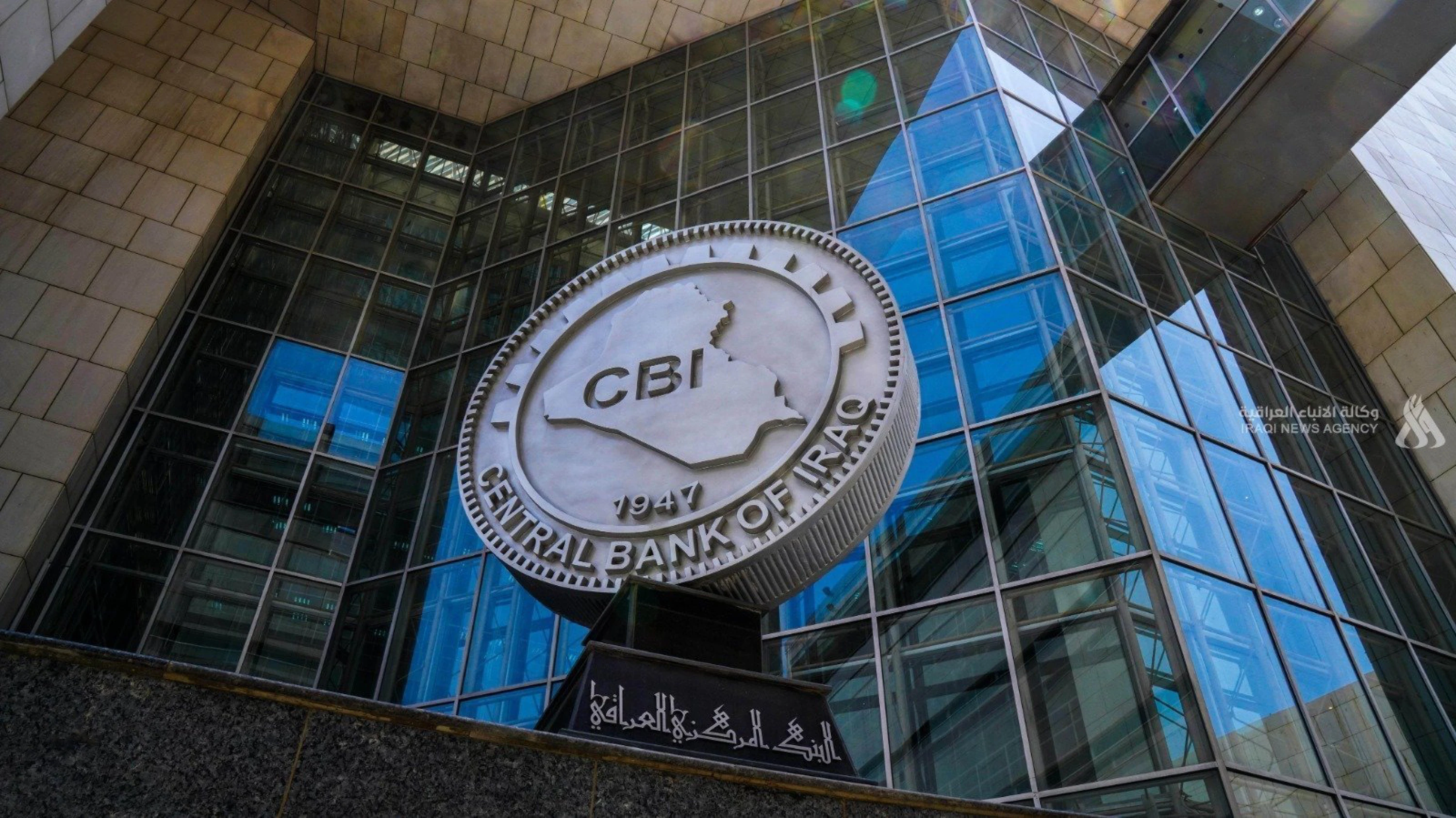
ERBIL, Kurdistan Region of Iraq - The Central Bank of Iraq (CBI) on Monday said it has no plans to change the official exchange rates, also announcing the completion of the procedures to reintegrate a number of banks that have been restricted from dealing in the US dollar.
The CBI in a statement emphasized its commitment to developing Iraq’s banking sector and enhancing monetary and financial stability through its “comprehensive reform program.”
“The CBI has completed the procedures and requirements for the reintegration of a number of banks restricted from dealing in US dollars in external transfers in foreign currencies, after meeting the requirements of the reform plan and the relevant regulatory and technical standards, and strengthening its frameworks for combating money laundering and terrorist financing,” read the statement.
The value of the Iraqi dinar has experienced severe turbulence in recent years, experiencing rapid inclines and declines at the currency exchange markets corresponding to major political and economic events locally, regionally, and internationally.
Since 2023, the CBI has set the official exchange rate at 1,320 dinars per one US dollar. Although that rate is used in official government transactions, it has never been in use at the currency exchange markets, which set a frequently-changing and way lower value for the dinar.
The CBI statement stressed the bank’s keenness to “meet the demand for the US dollar in accordance with the approved controls and standards, to ensure the flow of transfers and cover the legitimate needs of the public and private sectors.”
It also announced that it has completed the technical and procedural requirements to raise the ceilings of electronic payment cards for registered companies and businesses.
The Iraqi dinar crashed to its lowest value in over 2.5 years and briefly traded at 160,000 IQD per $100 on Monday. Economic expert Mustafa Hasan cited two main causes for the fall: The US-Israeli war on Iran, and the replacement of the CBI governor.
Earlier on Monday, the Iraqi state-owned bank announced that Nizar Nasser has officially assumed the position of CBI Governor, taking over from the outgoing Ali al-Alaq, as part of a broader reshuffle of the Iraqi government’s top security and economic posts.
During the handover ceremony, Nasser, a veteran CBI insider who has previously been in charge of the bank’s anti-money laundering and counterterrorism financing branch, stressed “the importance of continuing institutional work and enhancing the efficiency of performance to contribute to achieving the objectives of CBI.”
In October, Iraq’s Central Bank issued a new set of measures to tackle foreign currency smuggling and money laundering, including a requirement that businesspeople submit detailed receipts for purchases made abroad before transferring funds outside Iraq.
The measures came after the US Treasury Department sanctioned three Iraqi bank executives in October, accusing them of money laundering for Iran’s Islamic Revolutionary Guard Corps (IRGC) and Iran-backed armed groups in Iraq.
 Facebook
 LinkedIn
 Telegram
 X
X