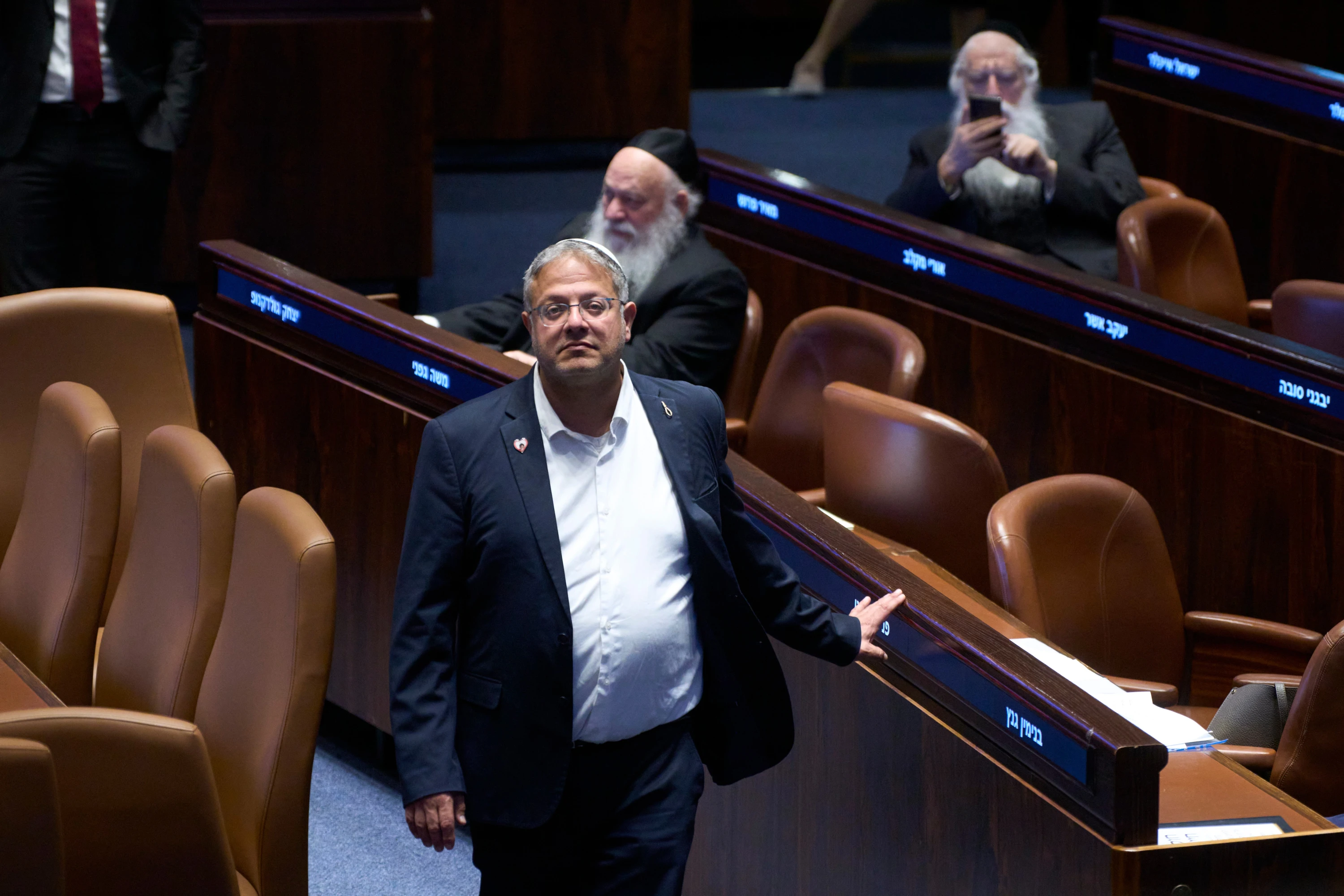
ERBIL, Kurdistan Region of Iraq - Israeli National Security Minister Itamar Ben-Gvir on Monday urged the government to “attack Beirut” while Lebanese President Joseph Aoun and US Vice President JD Vance met to discuss a de-confliction mechanism for Lebanon, coming as the Levantine state continues to serve as a crucial flashpoint that threatens to undermine the tentative US-Iran peace process.
“The cost of giving in to international pressure is a heavy one,” the far-right ultranationalist minister said during a weekly meeting of his party in the Israeli Knesset.
“My position is that instead of a ceasefire, we should attack Beirut,” despite Israel having announced Sunday that all war-related restrictions in its northern border areas were lifted from Monday morning.
Ben-Gvir's belligerent statements come after the US and Iran signed a memorandum of understanding (MoU) last Wednesday to end hostilities whose very first point calls for the immediate and permanent termination of military operations on all fronts, including in Lebanon, while ensuring Lebanon’s territorial integrity and sovereignty.
Despite Israeli airstrikes on Lebanon that have threatened to undermine the agreement late last week, hostilities in the region have been on hold since Saturday night.
“Over the past 24 hours, it's probably been the most peaceful the situation in Lebanon has been. The previous 24 hours were pretty good. Obviously, there was some shooting 72 hours ago. This is a work in progress,“ JD Vance said on Monday.
US President Donald Trump has previously expressed discontent at Israel’s conduct in Lebanon, slamming Israeli Prime Minister Benjamin Netanyahu for attacking southern Lebanon on the day that Tehran and Washington were poised to announce the finalization of the deal.
Ben-Gvir, however, rejected US concerns over Israel's bomardment. “We appreciate our friends, we love Trump, but first and foremost Israel's soldiers, first our fighters, first our residents,” he continued, warning that Lebanon would face consequences if it allowed its territory to be used against Israel.
“We must attack,” he declared. “My position is that we cannot accept even a single tear of an Israeli mother, even if there are tears from a thousand Lebanese mothers, and we must continue and press forward.”
“The State of Israel must be secure. If Israel is not secure, Beirut will look like Beit Hanoun,” Ben-Gvir concluded, threatening to reduce the Lebanese capital to the same level of destruction as Beit Hanoun, a city in the northeastern Gaza Strip that has suffered catastrophic damage during the ongoing Israeli genocide.
The far-right minister's claims were echoed by Netanyahu, who stated Monday that Israeli forces had been granted “full freedom of action to thwart any direct or developing threat to them or to the residents of the North [of Israel],“ stressing that the army “has no restrictions on this matter.”
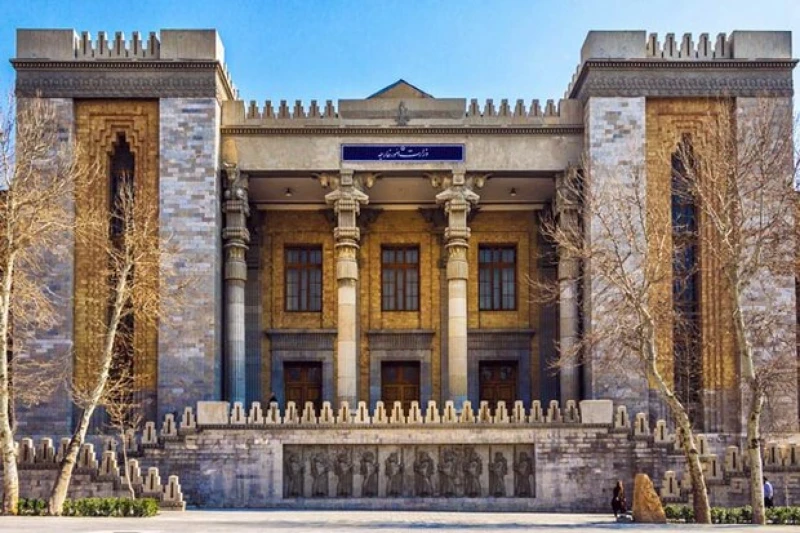
Iranian foreign ministry spokesperson Esmail Baghaei recently said that Tehran had “adhered” to all of its commitments, and the US is also “obliged to force the Zionist regime to stop attacking Lebanon.”
Baghaei stressed that the outcome of the deal is inexorably tied to the cessation of hostilities in Lebanon, as Tehran considers Article One of the MoU “its most important section,” adding that if any part of the MoU is not implemented, the entirety of the accord will be “compromised”.
Hezbollah Secretary-General Naim Qassem on Sunday praised Tehran’s emphasis on Lebanon in its negotiations with the US, adding that if Trump decides to compel Netanyahu, “he will stand up ‘whether he likes it or not’ and will not dare oppose the American position.”
Meanwhile, despite threats from Netanyahu’s government, Aoun held a call on Monday with Vance, Trump’s son-in-law Jared Kushner, and Qatari Prime Minister Sheikh Mohammed bin Abdulrahman Al Thani, during which they discussed “the issue of consolidating the ceasefire in Lebanon, stopping the Israeli military escalation and steps that should be taken in this regard, including the possibility of forming a cell for this purpose,” according to a statement from the Lebanese presidency.
Vance later stated at a news conference in Switzerland that the purpose of establishing a “de-confliction mechanism“ was to guarantee “that when things happen, they don't spiral into a broader escalation.“
Hostilities between Israel and Hezbollah escalated on March 2 under the backdrop of the US-Israeli war on Iran, triggering a wave of Israeli strikes that have killed more than 4,100 people and displaced over one million, according to Lebanese authorities.
Israeli onslaught has so far resulted in the complete destruction of “11,095 buildings... impacting 17,891 housing units, while 2,242 buildings sustained partial damage... and 9,311 buildings incurred minor damage,“ the United Nations Development Programme (UNDP) and Lebanon's National Council for Scientific Research (CNRS) reported on Monday.
Following months of fighting with Hezbollah, Israel set the so-called “yellow line” extending roughly 4 to 10 kilometers inside Lebanese territory, from the Mediterranean coast to the Syrian border, designating at least 55 villages off-limits, barring Lebanese residents from returning as homes and infrastructure have been demolished to create a cleared, uninhabited buffer zone.
Israeli Defense Minister Israel Katz said Sunday on X that “Israel has no intention of withdrawing from the Beaufort, which is an integral part of the security zone in Lebanon and essential for the defense of the Galilee settlements and [Israeli] forces.”
“As Prime Minister Netanyahu and I have clarified - Israel will not withdraw from the security zone in Lebanon,” Katz added.
 Facebook
 LinkedIn
 Telegram
 X
X