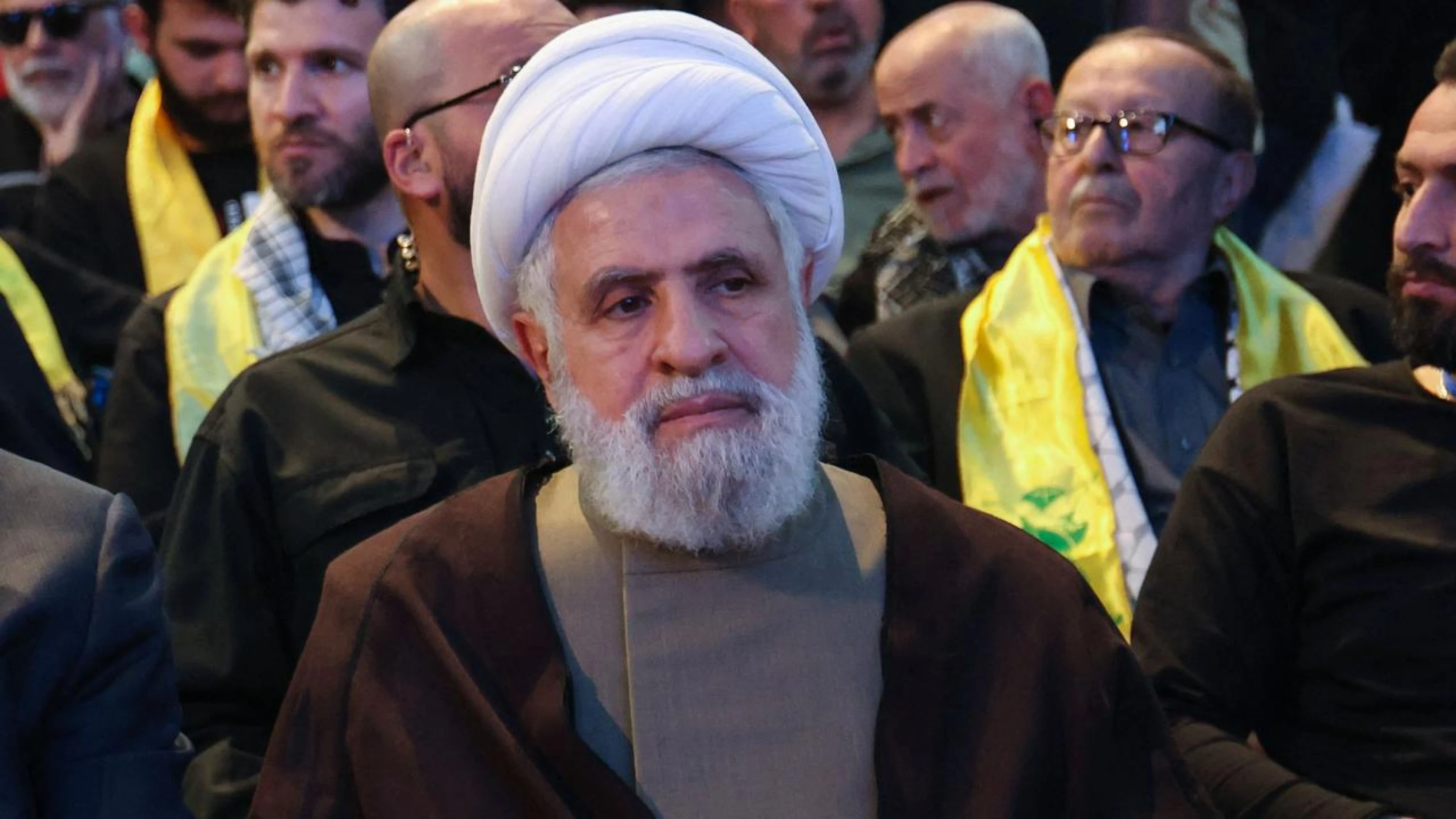
ERBIL, Kurdistan Region of Iraq - Hezbollah leader Naim Qassem claimed on Tuesday that his group had thwarted the “Greater Israel” project, calling for a full, timetabled withdrawal of Israeli forces from southern Lebanon and condemning a “treacherous attack“ that killed two people
“We now have a ceasefire. The withdrawal must take place according to a timetable. Israel has no choice but to fully withdraw from all Lebanese territory, without retaining an inch,“ Qassem declared in a televised address.
The United States and Iran signed a memorandum of understanding (MoU) last Wednesday to end hostilities whose very first point calls for the immediate and permanent termination of military operations on all fronts, including in Lebanon, while ensuring Lebanon’s territorial integrity and sovereignty.
“The project to eliminate the existence of Hezbollah and all those with it was part of the path toward ‘Greater Israel’,” Qassem continued, adding that “we can say that after all of Israel's attempts over the past two or three years, we have reached a stage where the project has been broken.”
The concept of ‘Greater Israel’ refers to the attempt to increase the size of the territory that Israel claims as its own, restoring the alleged biblical borders of a kingdom whose existence as a state-like entity archaeologists have cast doubt upon.
Beyond its genocide in Gaza and the de facto annexation of the occupied West Bank, Israel has seized additional territory in Syria following the fall of former President Bashar al-Assad in 2024, moving beyond the illegally annexed Golan Heights. Analysts have suggested it is also working to reestablish a zone of occupation in southern Lebanon.
Ministers from the Religious Zionism and Jewish Power parties, as well as Likud lawmakers, have openly pushed for Israeli sovereignty and settlement in the country. Far-right Finance Minister Bezalel Smotrich had called for Israel to “expand to Damascus” in 2024, while Prime Minister Benhamin Netanyahu had said he feels “very much connected“ to the territorial vision of Greater Israel.
“We are currently in a stage called ‘breaking the Israeli project’. We are in a new phase of Lebanon's history, its resistance, its army, its people, and its future,” said Qassem.
The woes of withdrawal
As a fifth round of Israel-Lebanon talks opened in Washington on Tuesday, Lebanese President Joseph Aoun rejected both Israel’s occupation and foreign interference, expressing hope for “the full restoration of Lebanon’s sovereignty over every grain of its soil.“.
“We accept nothing less than an end to the Israeli occupation and, at the same time, the fall of foreign tutelage, because our only option is our national sovereignty and our sole wager is on the Lebanese state,” Aoun said, according to his office.
According to Israeli public broadcaster KAN, Israeli officials are considering a US-backed proposal for a gradual troop withdrawal from southern Lebanon, a plan expected to be discussed during US-brokered talks in Washington from June 23-25.
Lebanese newspaper Al-Akhbar reported that negotiators will examine a proposed “pilot zone” near Nabatieh along the Litani River, where Israeli forces would withdraw, the Lebanese Army would deploy, and Hezbollah fighters would leave under US supervision, while Haaretz reported that the Israeli military is already preparing a partial pullback from non-essential positions within the so-called “Yellow Line.”
However, Israeli Defense Minister Israel Katz said Sunday on X that “Israel has no intention of withdrawing from the Beaufort, which is an integral part of the security zone in Lebanon and essential for the defense of the Galilee settlements and [Israeli] forces.”
“As Prime Minister Netanyahu and I have clarified - Israel will not withdraw from the security zone in Lebanon,” Katz added.
Sporadic violence
Earlier Tuesday Lebanon's National News Agency (NNA) reported that two men were killed the same day when Israeli soldiers “opened fire with their machine-guns in their direction while they were standing near an excavator that was unblocking a road“ in Nabatieh al-Fawqa, something Qassem condemned as a “treacherous attack.“
The incident comes amid a halt in larger-scale military actions, though Israeli Prime Minister Benjamin Netanyahu stated Monday that Israeli forces had been granted “full freedom of action to thwart any direct or developing threat to them or to the residents of the North [of Israel],“ stressing that the army “has no restrictions on this matter.”
US President Donald Trump has previously expressed discontent at Israel’s conduct in Lebanon, pressuring the Netanyahu government to ease its bombardment after Iran threatened to withdraw from the peace process over the failure to halt bloodshed on the Lebanon front.
Hostilities between Israel and Hezbollah escalated on March 2 under the backdrop of the US-Israeli war on Iran, triggering a wave of Israeli strikes that have killed more than 4,100 people and displaced over one million, according to Lebanese authorities.
Israeli onslaught has so far resulted in the complete destruction of “11,095 buildings... impacting 17,891 housing units, while 2,242 buildings sustained partial damage... and 9,311 buildings incurred minor damage,“ the United Nations Development Programme (UNDP) and Lebanon's National Council for Scientific Research (CNRS) reported on Monday.
Following months of fighting with Hezbollah, Israel set the so-called “yellow line” extending roughly 4 to 10 kilometers inside Lebanese territory, from the Mediterranean coast to the Syrian border, designating at least 55 villages off-limits, barring Lebanese residents from returning as homes and infrastructure have been demolished to create a cleared, uninhabited buffer zone.
 Facebook
 LinkedIn
 Telegram
 X
X