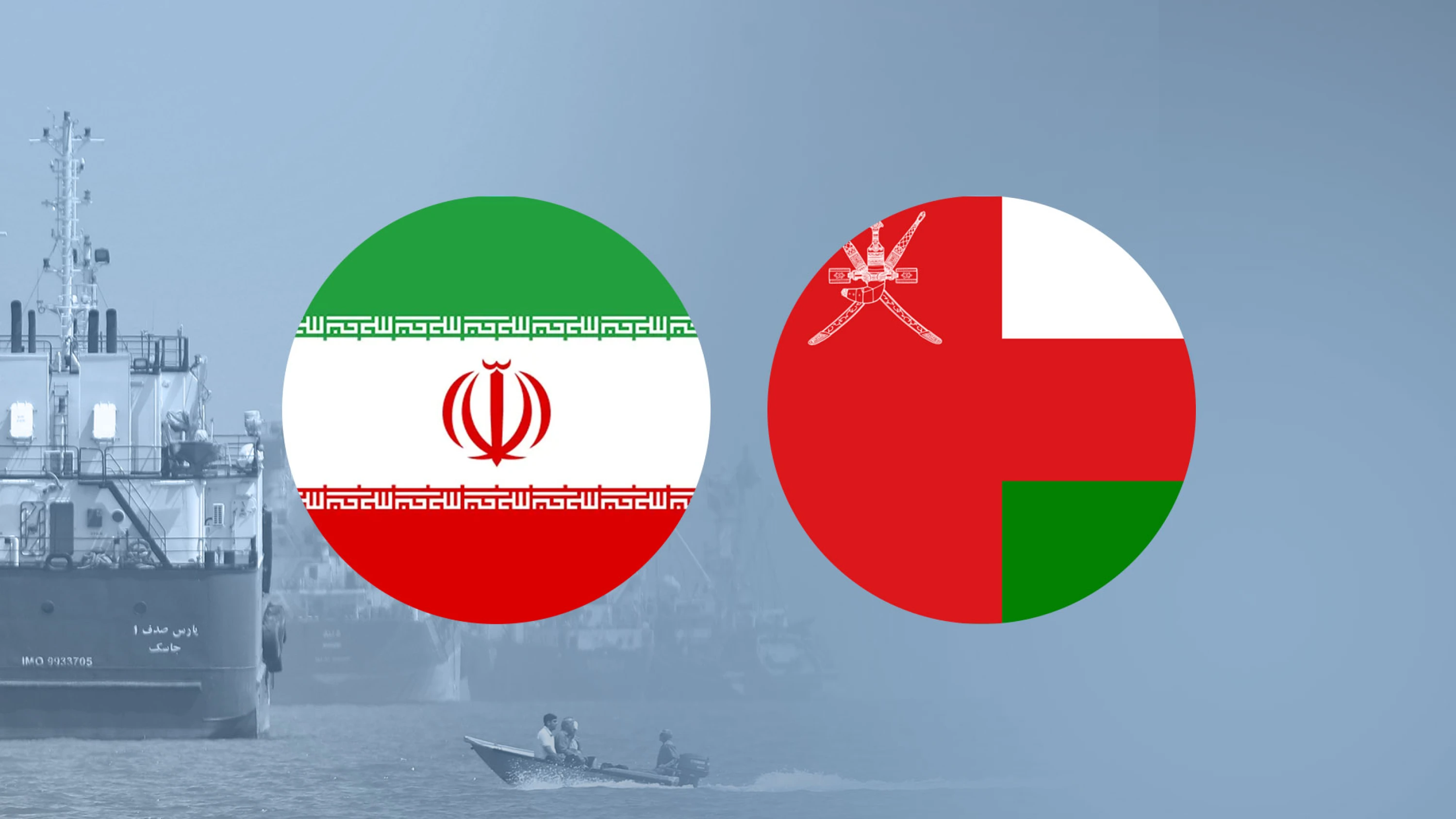
ERBIL, Kurdistan Region of Iraq – Iran’s Islamic Revolutionary Guard Corps (IRGC) on Thursday criticized the new temporary maritime transit arrangement in the Strait of Hormuz announced by coastal state Oman, saying it was implemented without coordination with Tehran and describing the suggested routes as “completely dangerous.”
Oman on Tuesday announced it has coordinated with the International Maritime Organization (IMO) to provide all vessels transiting through the Strait of Hormuz with the option of “a temporary maritime corridor,” providing coordinates for the temporary routes and requiring a “gradual and controlled” evacuation of vessels.
“Safe passage through the Strait of Hormuz is only possible through the routes announced by Iran,” the IRGC Navy said.
“Some authorities announced a new route for ships transiting the Strait of Hormuz, which is unacceptable and completely dangerous,” the IRGC said, in an indirect reference to the new Omani maritime corridor arrangement.
Amid the instability in the Middle East, Oman and Iran have held extensive discussions in recent months, aimed at devising a mechanism to jointly administer passage through the Strait Hormuz after the war, as the waterway’s two coastal states.
IRGC further noted that the announcement was made “without informing or coordinating” with Tehran, despite Muscat saying on Tuesday the maritime corridor had been reached “in line with the outcomes and efforts” reached in the US-Iran deal.
Top Iranian and Omani officials held a high-level meeting in Muscat on Tuesday, where they agreed on the formation of a joint working group to decide future administrative structures for the strategic Strait of Hormuz.
Both sides also discussed the “costs associated” with commercial transit in the strait and reaffirmed their commitment to the “safe passage” through the waterway in line with “applicable international law.”
IRGC reaffirmed that “the only permitted route” for passing through the Strait of Hormuz is that announced by Tehran, while warning to “strictly refrain from any movement outside the announced routes.”
“The movement of vessels outside these routes is very dangerous and prohibited.”
Since US-Iran negotiations began in early April, the Strait of Hormuz has remained a central point of contention, with both Tehran and Washington imposing maritime restrictions in and around the strategic waterway before the recent memorandum of understanding.
Last week, the US and Iran remotely signed an agreement aimed at ending the conflict between the two countries and reopening the Strait of Hormuz.
However, tensions rose again on Saturday after Tehran announced the closure of the Strait of Hormuz, citing the US’ failure to implement the recently-signed agreement due to Israel’s continued attacks in southern Lebanon.
 Facebook
 LinkedIn
 Telegram
 X
X