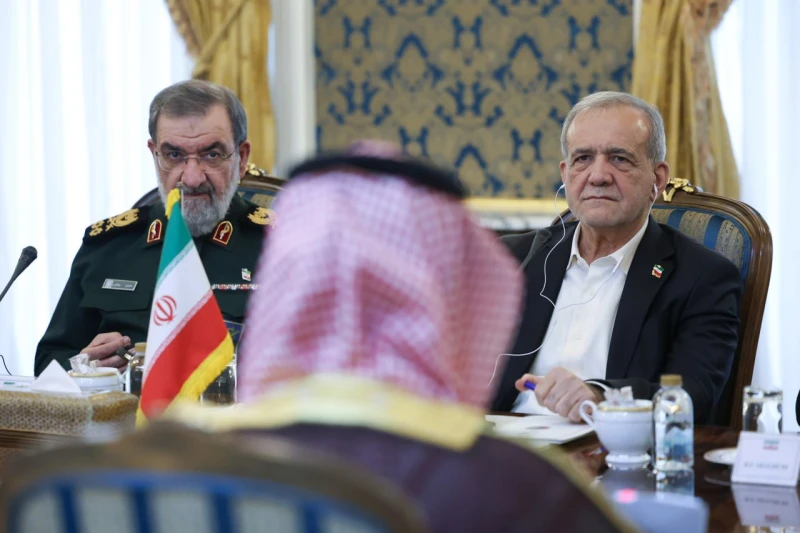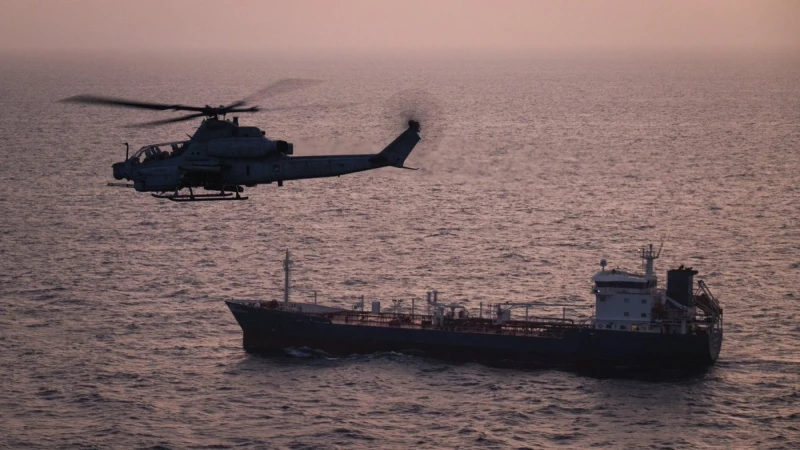
ERBIL, Kurdistan Region of Iraq - Iranian state media reported on Friday that Tehran and Washington have established a communication line aimed at preventing incidents in the Strait of Hormuz from triggering military escalation following talks in Switzerland, with the Islamic Revolutionary Guard Corps (IRGC) later dismissing the claim as an “outright lie.”
Iranian state TV said the channel was created to help avoid incidents in the strategic waterway and implement provisions of the Islamabad memorandum of understanding reached during the negotiations.
US Vice President JD Vance described the mechanism as a deconfliction channel in an interview with the British news site UnHerd, published on Thursday.
“One of the things we wanted to come out with [was a] channel on the Iranian side [for reducing conflict], which we did,” Vance said.
“They were like, ‘OK, fine, we'll send somebody from the IRGC to go hang out in Doha with somebody from CENTCOM [US Central Command],’ and that's how we're going to settle a lot of these disputes,” he added.
However, IRGC spokesperson Sardar Mohibi denied the existence of such a channel, with the state-run IRNA quoting him as saying that the arrangement “has not happened and will not happen.”
”The Strait of Hormuz is Iranian territory and has no connection with the United States,” said Mohibi.
According to the Iranian report, Tehran has insisted that vessels transiting the Strait of Hormuz must use routes announced by the Islamic republic.
Iranian Deputy Foreign Minister Kazem Gharibabadi said: “Safe passage through the Strait of Hormuz cannot be guaranteed under ambiguous arrangements, parallel routes, or decision-making that does not take Iran's role as a coastal state into account.”
He also warned that any failure to coordinate with Tehran would lead to the suspension of parallel routes.
The reported communication line comes after a separate dispute over transit routes in the Strait of Hormuz. Oman on Tuesday announced it had coordinated with the International Maritime Organization to offer vessels “a temporary maritime corridor,” but Iran’s IRGC rejected the arrangement, saying it was made “without informing or coordinating” with Tehran.
“Safe passage through the Strait of Hormuz is only possible through the routes announced by Iran,” the IRGC Navy said.
The IRGC described the suggested routes as “unacceptable and completely dangerous” and warned vessels to “strictly refrain from any movement outside the announced routes,” adding: “The movement of vessels outside these routes is very dangerous and prohibited.”
Updated at 20:01 with IRGC denial
 Facebook
 LinkedIn
 Telegram
 X
X