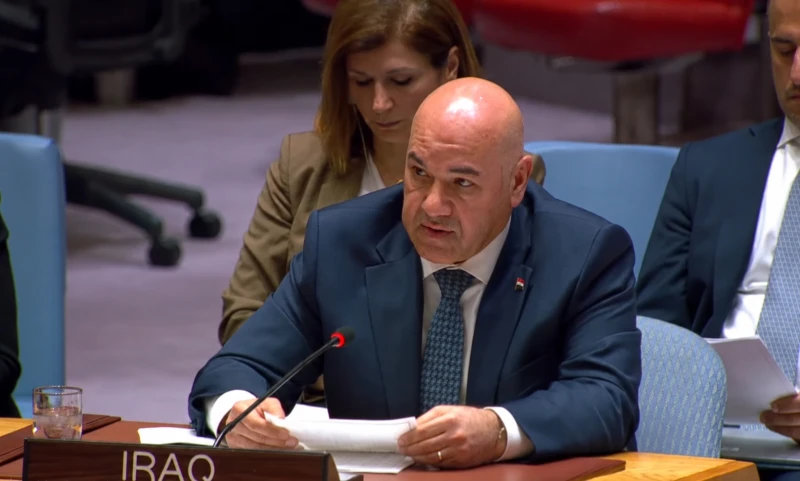
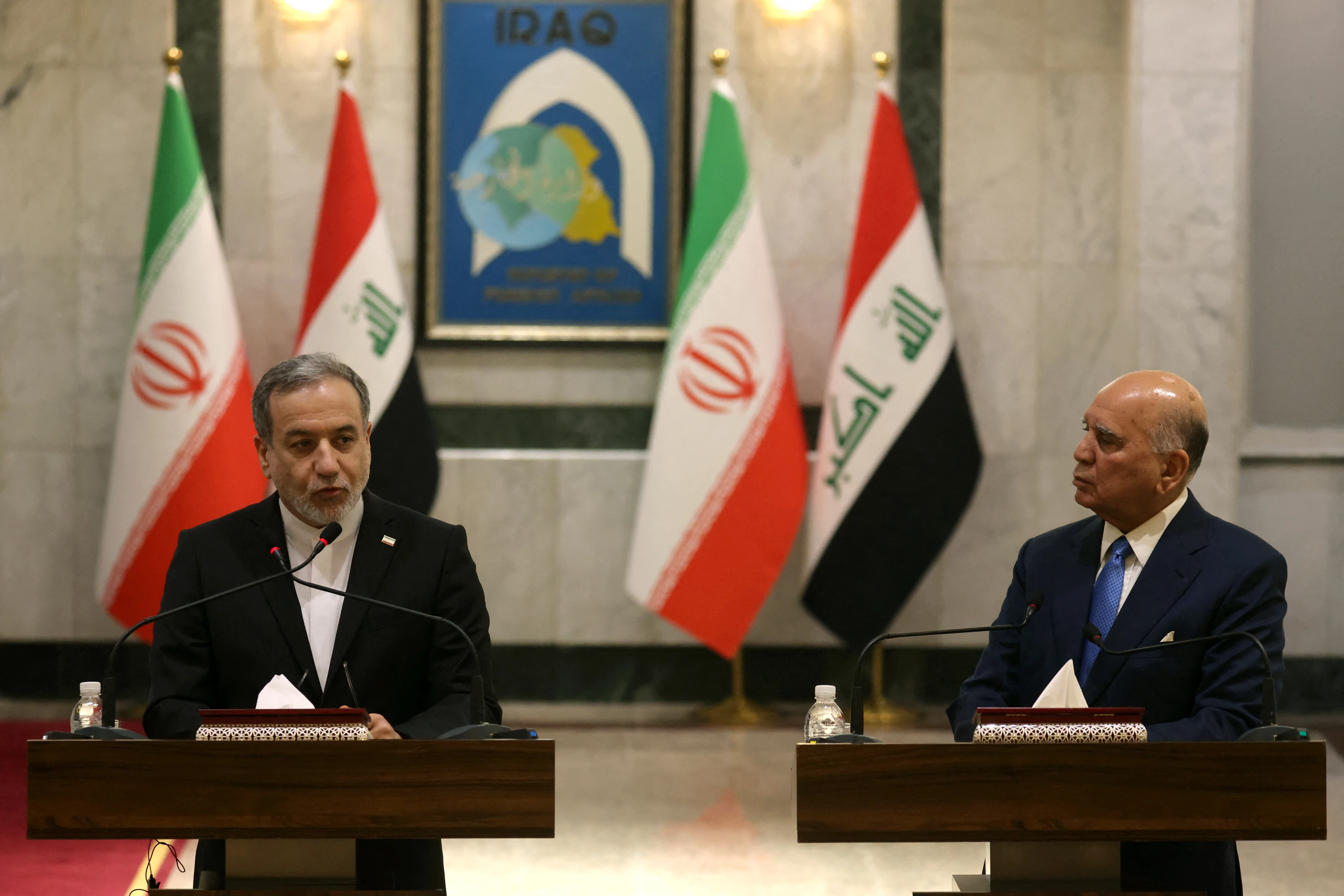
ERBIL, Kurdistan Region of Iraq – Iraq has proposed hosting a meeting between Iran and the Gulf states to end the ongoing Middle East war, Iraqi Foreign Minister Fuad Hussein said on Sunday during a visit by his Iranian counterpart, Abbas Araghchi, to Baghdad.
Speaking at a joint press conference with Araghchi, Hussein called for "a meeting bringing together the Arab Gulf states, Iraq, and Iran," confirming that "Iraq is ready to host the Gulf states to discuss regional security and ending the war.”
The proposal comes as Washington and Tehran seek to implement a deal signed on June 17 that committed both sides to halt hostilities on all fronts and begin broader negotiations. However, tensions have remained high, with renewed exchanges of strikes in and around the Strait of Hormuz and continued fighting between Israel and Hezbollah.
The US military said it carried out new strikes Saturday on multiple targets in Iran in response to a fresh attack on a commercial vessel transiting the Strait of Hormuz. Tehran responded by launching strikes on US military bases in the Gulf early Sunday.
Hussein said Iraq played “an important role” in establishing the agreement between Washington and Tehran, adding that Baghdad maintains “excellent” relations with both the United States and Iran.
He said he and Araghchi discussed several issues, including “Iraq being subjected to several attacks during the recent war” and the economic and financial impact of the closure of the Strait of Hormuz on Iraq.
Iran has repeatedly imposed restrictions on maritime traffic through the strategic waterway since the war began. The disruption dealt a major blow to Iraq’s oil exports, reducing them by around 80 percent compared with pre-war levels.
During the war, US and Israeli strikes targeted Iran-backed armed groups in Iraq, while Iran and allied Iraqi militias launched hundreds of rocket and drone attacks on US military and diplomatic facilities, as well as military installations and energy infrastructure in the Kurdistan Region.
For his part, Araghchi said "the primary purpose” of his visit was “to express gratitude” to the Iraqi government and people, saying they had “taken important stances in condemning the aggression against us,” referring to the US-Israeli military campaign against Iran that began in late February.
He also reaffirmed Iran's “insistence” on continuing strategic cooperation with the Iraqi government.
Addressing the Strait of Hormuz, Araghchi said, "No party should interfere in the management of the Strait of Hormuz,” stressing that the waterway “is under Iranian management, and once obstacles are removed, things will return to their previous state.”
“No entity bears responsibility for the operation of the Strait of Hormuz, and anything contrary to this violates the memorandum of understanding with Washington,” he said.
 Facebook
 LinkedIn
 Telegram
 X
X