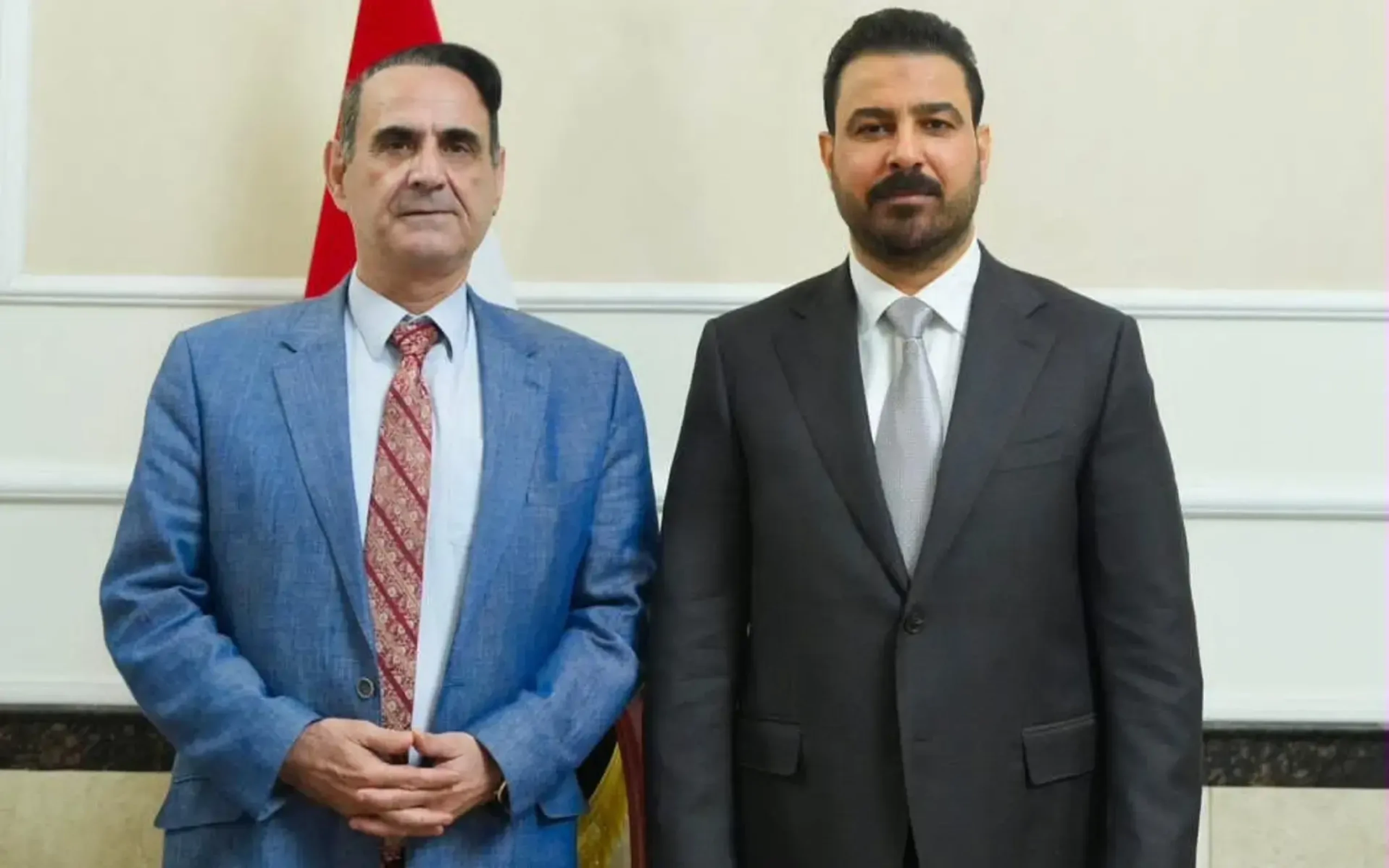
ERBIL, Kurdistan Region of Iraq - Munir Haddad, a judge who read out former dictator Saddam Hussein’s death sentence and now serves as legal advisor to Prime Minister Ali al-Zaidi, said Monday that the government’s anti-corruption campaign will continue to target officials accused of graft regardless of sect or ethnicity, suggesting that those who have fled the country will be pursued through extradition efforts.
In an interview with The New Region, Haddad said the campaign did not begin with the arrest of a former Deputy Oil Minister Adnan Al-Jumaili and should not be viewed as limited to one sector.
“The case is much bigger than that,” Haddad said. “Many people have been arrested, and others will be arrested because of money laundering, abnormal wealth, and other corruption-related files.” Haddad said the number of arrests has steadily increased and now includes prominent political and parliamentary figures.
Over 20 Iraqi officials have now been taken into custody after a series of raids were launched in Baghdad's Green Zone on Sunday, according to government spokesperson Haider al-Aboudi, sending shockwaves through the Iraqi political scene as myriad party leaders found themselves detained on graft charges.
Iraqi state media had previously reported that 47 individuals were arrested during the raids.
Those arrested included Sunni Azm Alliance leader Muthanna al-Samarrai, lawmakers Mohammed al-Karbouli, Ziad al-Janabi, Hind al-Abbasi and Mudhar al-Karawi, former Wasit governor Mohammed Jamil al-Mayahi, Oil Ministry Undersecretary Ali Ma’arij al-Bahadli, and Ibrahim al-Sumaidaie, a senior advisor to former Prime Minister Mohammed Shia’ al-Sudani.
“Every day people are being arrested,” Hadded said. “Well-known personalities and senior political figures are among those who have been detained.”
“Some of these people spent years talking about fighting corruption,” Haddad said. “Then it turned out they were among the most corrupt.”
“Billions of dinars, large amounts of dollars, and significant quantities of gold were found. Some owned horse farms with horses worth hundreds of thousands or even millions of dollars.”
The legal advisor, who gained notoriety when he presided over the issuing of a death sentence for Hussein in 2006, is a Feyli Kurd, a minority that suffered extensively at the hands of the Baathist regime.
Reflecting on Iraq’s post-2003 history, Haddad said corruption had undermined public hopes after the fall of the dictator. “The Iraqi people were happy when Saddam Hussein was removed,” he said. “But corruption later damaged that joy and harmed the Iraqi state.”
Haddad repeatedly stressed that corruption should not be viewed through a sectarian or ethnic lens. “There are corrupt people among all communities,” he said. “This is not a Sunni issue, a Shiite issue, or a Kurdish issue. Anyone who stole public money must be held accountable.”
“Corruption reached a level that the mind cannot accept. Projects were implemented at many times their real value, and some projects increased problems instead of solving them.”
He also criticized Iraq’s investment sector, saying some projects had been used to generate private gains rather than public benefit. “In other countries, investment helps the state,” Haddad said. “Here, some investors received land and privileges and made enormous profits while the country gained little.”
An unrelenting push
Haddad said he had personally discussed corruption files with Zaidi and described the prime minister as determined to continue the campaign regardless of political pressure. “He told me there are no exceptions and no red lines,” Haddad said. “He will not stop pursuing corruption cases.”
The judge described Zaidi as a capable and knowledgeable leader with a strong understanding of public finance, administration, and major state sectors. “He is prepared to continue this battle,” Haddad said.
“He said, ‘I will not exempt anyone and I will not favor anyone, even if it costs me politically,’” Haddad said. “He wants history to record that he confronted corruption and restored the prestige of the Iraqi state.”
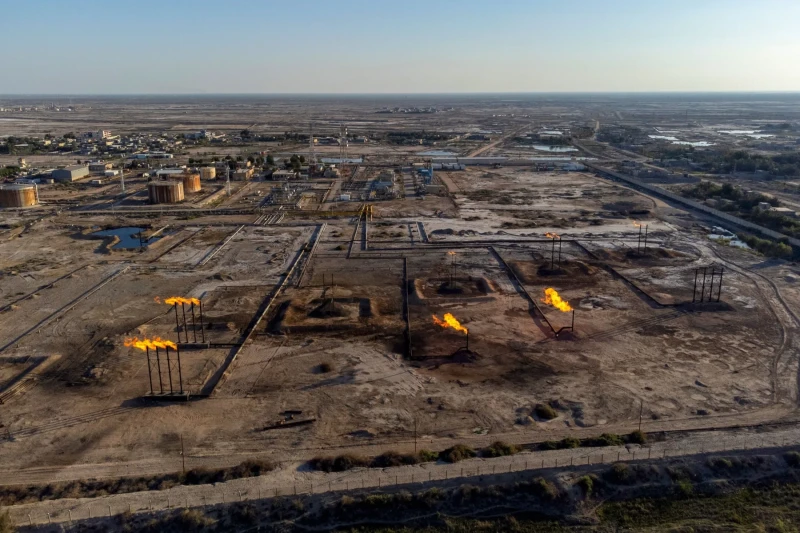
Haddad identified the oil sector as one of the most important files because of its central role in Iraq’s economy, but said investigations also extend to electricity, housing, reconstruction, and investment projects.
“Corruption existed in most state institutions and in many ministries,” he said. “The scale of it is clear and cannot be accepted by any reasonable person.”
“Many believed they would stay in authority forever,” Haddad said. “What we are seeing now is one of the biggest corruption disasters in Iraq’s modern history.” The legal advisor said many of the current charges involve embezzlement, bribery, abuse of office and theft of public funds, crimes that carry severe penalties under Iraqi law. “These are major criminal offenses and can result in very heavy sentences,” he said.
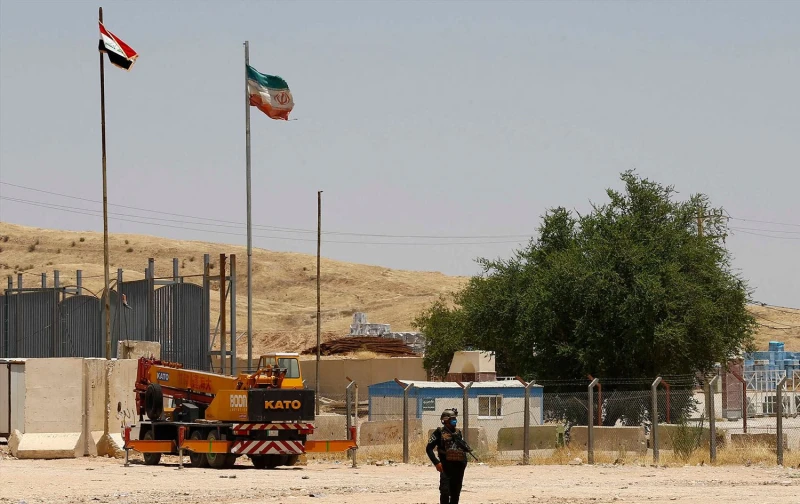
Haddad acknowledged that some suspects had fled Iraq but said they could still be pursued internationally. “Those involved in corruption and money laundering can be brought back,” he said. “Iraq has good relations with regional countries, the United States, and Western states, and there will be cooperation in bringing fugitives to justice.”
He also praised Supreme Judicial Council President Faiq Zidan and said cooperation between the government and judiciary was essential to the campaign.
According to Haddad, anti-corruption efforts will apply equally to all Iraqis regardless of ethnicity, religion, or political affiliation. “The law applies to everyone,” he said. “There are no exceptions for party leaders, ministers, senior officials or any other figure.”
Haddad said he was aware of additional cases and personalities under scrutiny but declined to discuss them publicly, saying only the judiciary could disclose details of ongoing investigations. “I am not a judge in these cases,” he said. “The courts will announce the results when the investigations are complete.”
Iraq has long suffered from rampant corruption and bribery. The country ranked 140 out of 180 countries on Transparency International’s 2024 Corruption Perceptions Index, despite successive Iraqi governments’ vowing to clamp down on the phenomenon.
 Facebook
 LinkedIn
 Telegram
 X
X