
ERBIL, Kurdistan Region of Iraq – Iraq’s Oil Minister Basim Mohammed Khudair said Saturday that the Iraqi government has agreed to provide compensation to oil companies if violations occured from within the country, while denouncing attacks on oil companies operating in the country.
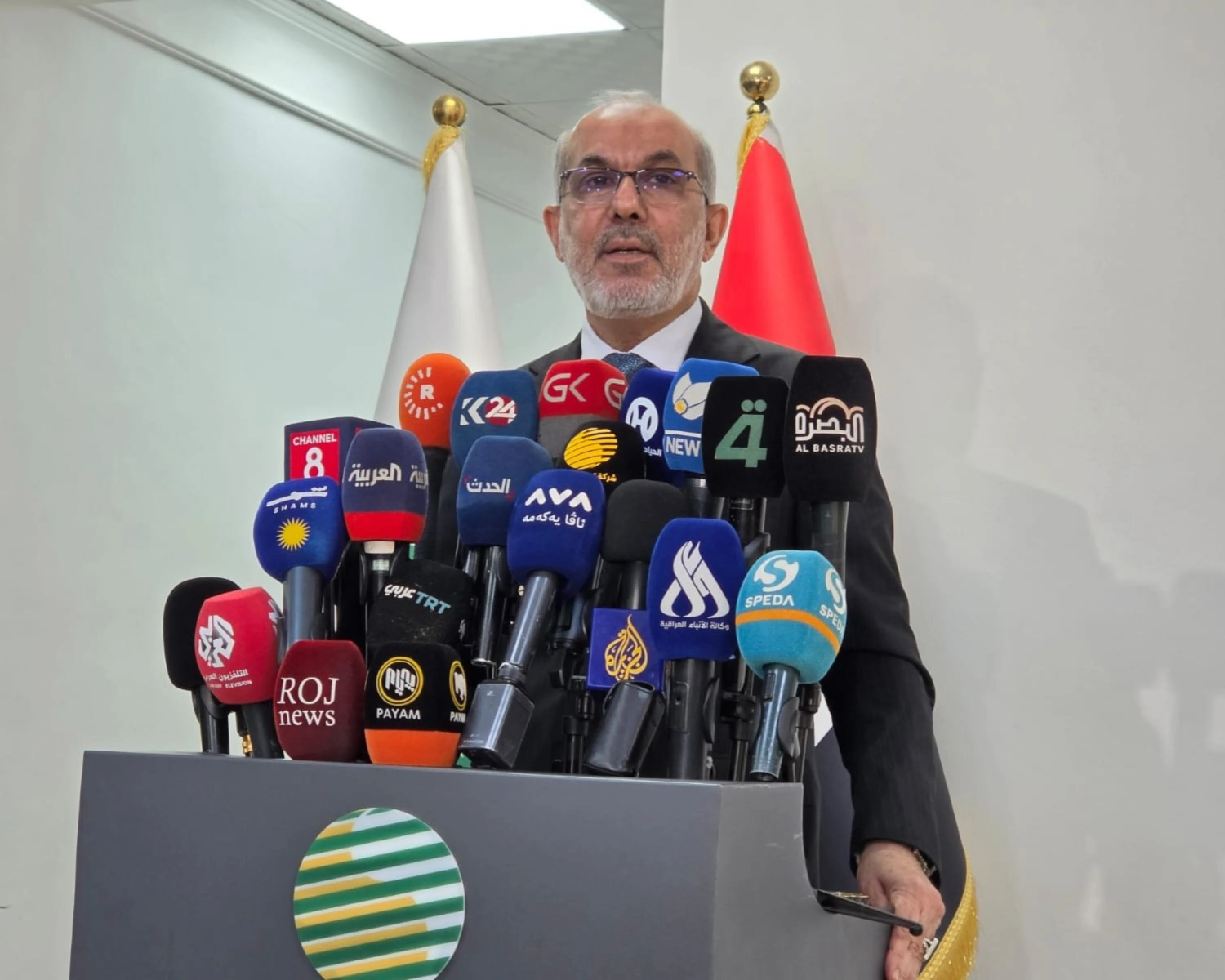
“We reject any attacks on oil companies in Iraq,” the minister told The New Region during a press conference, adding that Baghdad "agreed with the companies that when it is proven that there are violations from within [the country], the iraqi government will compensate these companies."
"But if the attacks are external, the government has no authority over this topic," Khudair said, noting that most of the attacks were launched from outside Iraq "anonymously".
The Kurdistan Region's energy infrastructure has been a target of drone strikes from Iran and its allied militias for years, reaching unprecedented rates following the 12-Day War in June 2025 and the more recent US, Israel, Iran conflict which started in late February.
The offensives have led to numerous operation suspensions in recent months, reducing oil and gas production and contributing to electricity and fuel shortages across the Region.
Earlier in June, Baghdad and Erbil reached an agreement aimed at protecting oil companies, ending attacks targeting them, and supporting the resumption of production and exports to boost the economy.
Khudair stressed that the ministry "does not differentiate between citizens in Kurdistan and any citizen in any other province,” adding that "the Kurdistan Region issue requires extensive dialogue.”
He further emphasized, “the importance is continuing negotiations to reach solutions that serve the national interest."
The minister also highlighted the need to develop mechanisms to diversify crude oil export routes, citing maritime restrictions at the Strait of Hormuz through which much of Iraq’s oil is exported.
“There is dialogue with Iran to allow the export of Iraqi oil, but it is not yet activated,” he added.
Iraq pocketed $2.3 billion from oil exports for May and June combined. The country needs over $5.3 billion for monthly salaries alone.
The continuation of the war has raised concerns that measures implemented by the Iraqi government to offset declining revenues may not be viable long-term solutions, potentially leaving Baghdad struggling to pay civil servant salaries in the coming months.
CORRECTION: The initial version of the article did not specify that the minister said the compensation is conditional upon the attack being proven to be from Iraqi territory.
 Facebook
 LinkedIn
 Telegram
 X
X