

ERBIL, Kurdistan Region of Iraq - Qais al-Khazali, leader of Iraq’s Iran-backed Asaib Ahl al-Haq (AAH), on Monday accused Bahrain of seeking to “eliminate the Shiite presence,” after the country sentenced dozens of Shiite clerics to life imprisonment over alleged “terrorist” ties to Iran.
Bahrain’s High Criminal Court on Monday issued its verdict on a case involving 60 Shiite clerics and nine affiliates, sentencing 64 defendants to life imprisonment and five to 15 years in prison over terrorism charges and alleged links to Iran’s Islamic Revolutionary Guard Corps (IRGC).
The wave of arrests reportedly began following the February US-Israeli war against Iran.
“The imprisonment of more than sixty pious and devout scholars is not merely a trial of individuals, but a blatant act of aggression and a transparent attempt to eliminate the Shiite presence and target the religious and national identity of Bahraini Shiites completely,” read a statement from the AAH leader.
Ayatollah Sheikh Isa Ahmed Qassim, a prominent Bahraini Shiite cleric and religious scholar, is reportedly among those sentenced to life imprisonment. He pursued extensive Islamic studies in Iraq and Iran.
The Shiite community in Iraq is “closely monitoring these unfortunate and dangerous developments and their potential repercussions,” Khazali said. “We hope that reason and logic will prevail in addressing this issue.”
Bahrain’s High Criminal Court accused the defendants of establishing and managing “a terrorist group linked to the IRGC,” that had allegedly received funds from Iran and sought to overthrow the constitutional government, commit terrorist acts, and promote the ideology of Wilayat al-Faqih.
Wilayat al-Faqih (Guardianship of the Islamic Jurist) is a religious and political doctrine in Twelver Shiite Islam that grants a qualified Islamic jurist authority to govern during the occultation of the Twelfth Imam.
It is a central principle of the Islamic Republic of Iran's political system.
Bahrain and other Gulf states have faced repeated Iranian attacks since the US-Israeli war against Iran began in late February. The latest strike occurred on Sunday, with Iran’s IRGC claiming it had targeted a US radar facility in Bahrain using six drones.
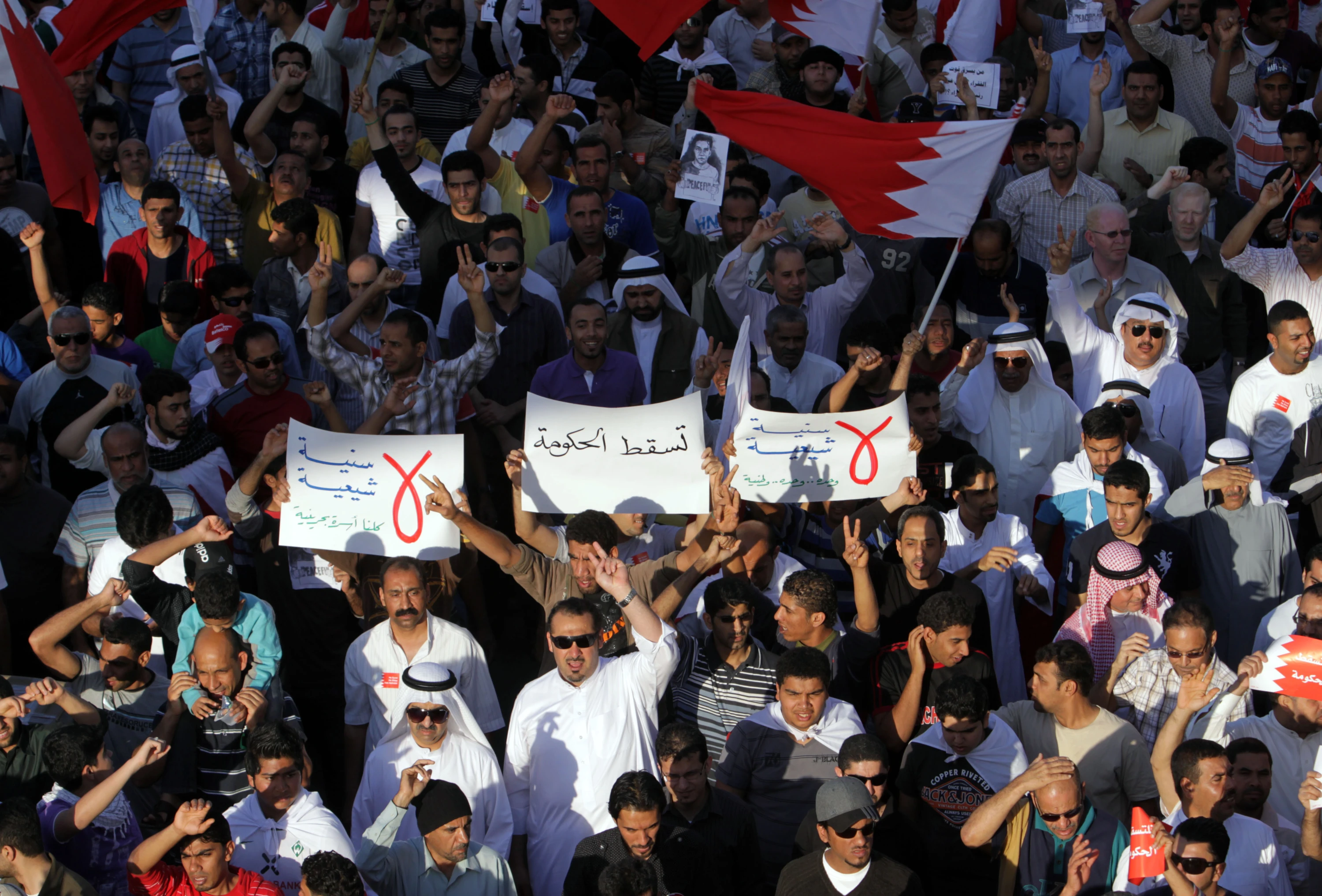
Although Shiites making up the majority of Bahrain’s indigenous population, the country is a constitutional monarchy ruled by the Sunni Al Khalifa royal family. The Bahraini government has for years been accused of oppressing its Shiite population.
On Sunday, protests broke out in several Shiite-majority areas of the kingdom after reports circulated that the court was set to issue its verdict on the Shiite clerics’ case on Monday.
The Bahrain Institute for Rights and Democracy (BIRD), a UK-based human rights watchdog, condemned the Monday verdicts, citing “credible allegations of torture, coerced confessions, and severe restrictions on the defense,” and described the convicted as “casualties of the conflict.”
“This is an attack on the faith and identity of Bahrain’s Shia community, carried out through the courts,” Sayed Ahmed Alwadaei, Director of Advocacy at BIRD, was cited by the monitor as saying.
The watchdog claimed to have documented “several accounts which describe detention at undisclosed locations, interrogation without lawyers, prolonged blindfolding and handcuffing, forced standing, sleep deprivation and threats of sexual violence against defendants and their relatives.”
 Facebook
 LinkedIn
 Telegram
 X