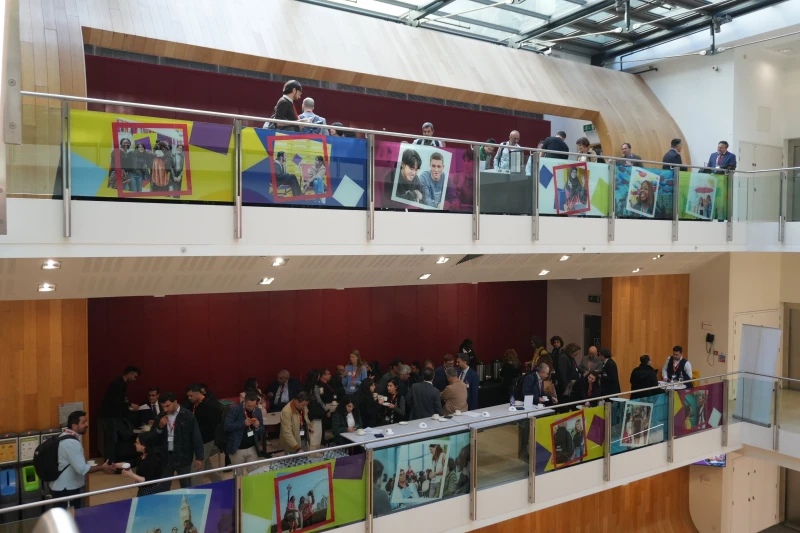
DUBLIN, Ireland - Over 4,000 kilometers away as the crow flies from his native Sulaimani, Hiwa Wahab has made a home for himself in Dublin, Ireland. Like many Kurds living in the diaspora, he remains intimately engaged in the goings on of his homeland, and has gone the extra mile to unite people from all over Kurdistan living in Ireland by forming a Kurdish cultural center.
While European countries such as Sweden, Germany, and the United Kingdom traditionally have large Kurdish communities, Ireland’s nascent Kurdish component has only begun to grow in recent decades, Hiwa explained at the cultural center’s venue in west Dublin, estimating that the community currently comprises roughly 10,000 people.
With only 2,500 of that number having been recognised as Kurds in Irish government statistics, owing to the fact that the majority are classified on account of their national passports, the community has often remained dispersed and lacked a unified voice, an issue that Wahab has sought to resolve with his community engagement efforts.
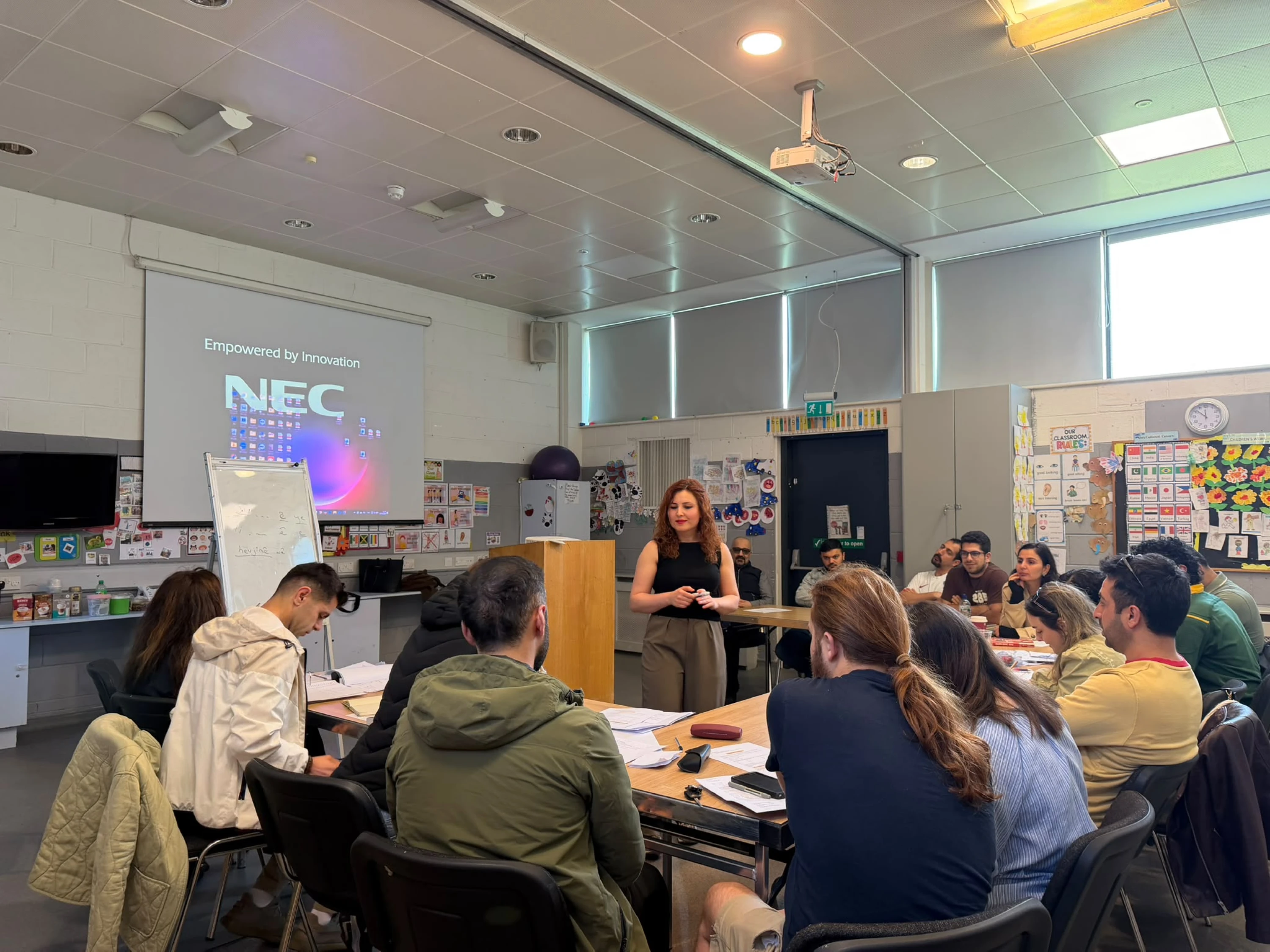
The results have been impressive. The Kurdish Cultural Centre Ireland now serves as a focal point for the diaspora, organizing weekly Sorani and Kurmanji language classes, assisting recent arrivals, arranging Newroz, Eid, Christmas, and Saint Patrick's Day celebrations, as well as engaging in widespread volunteer efforts.
Volunteers work to provide translation and interpretation support for immigrants across all aspects of life, includig those filing applications for asylum, seeking hospital treatment, corresponding with solicitors, and many other essential services. The center also shares Irish news content through Kurdish-language posts on social media, allowing those with limited English skills to keep up to date with recent events.
“This commitment sees me work seven days a week on an entirely voluntary basis,” said Wahab, noting that he receives calls at all hours from those requiring emergency assistance. He works as a driving instructor and translator for asylum seekers by day, but running the cultural center ostensibly serves as a full-time job.
Hiwa Wahab, originally from Sulaimani, is the founder of the Kurdish Cultural Centre in Ireland, a hub that seeks to promote the Kurdish language and culture in the diaspora
— The New Region (@thenewregion) June 25, 2026
Working as a volunteer seven days a week, Wahab serves as the first port of call for Kurds in Ireland who… pic.twitter.com/0aKEV6WJSm
Assistance in times of strife
Indeed, such commitment has proved invaluable in times of tragedy. Wahab recounted a harrowing incident that took place in 2021, when Kurdish PhD student Karzan Sabah Ahmed, his wife Shahen Qasm, and their eight-month-old daughter Lina were killed after another driver, who was attempting to commit suicide, crashed into their vehicle head-on.
The death of the young family, who had excitedly been planning their new life in Ireland as Ahmed completed his doctoral research, garnered widespread media attention, and Wahab served as a key conduit between the family of the deceased and Irish authorities to organize their repatriation to Erbil.
Moreover, subsequent work by Wahab and his team helped raise over €120,000 for relatives of the late family, a testament to the power of the Kurdish community to rally together and give generously in the face of such awful circumstances. To this day, the University of Galway offers a research bursury dedicated in honor of Ahmed in the faculty of natural sciences, the field in which the Kurdish scholar was awarded his doctorate posthumously.
The cultural center’s work is not limited to the interests of the Kurdish community, however. Wahab and his team are involved in myriad partnerships and charitable efforts, having participated in Ireland’s annual Africa Day event and other volunteering initiatives. The Sulaimani native received a letter of appreciation from Irish Prime Minister Micheál Martin for his volunteer work during the COVID-19 pandemic, during which he volunteered online and in person, providing direct assistance to members of the local community, such as buying groceries for those unable to leave their houses and checking in on the elderly during the lockdown period.
“I would like to thank you on behalf of myself, the Government, and all the people of Ireland for your ongoing invaluable contribution to our society,” the premier said in the signed missive. “Volunteers are not paid – not because they are worthless, but because they are priceless.”
Martin signed off with the Irish-language phrase “Míle buíochas,” meaning “a thousand thank yous.”
The salience of heritage
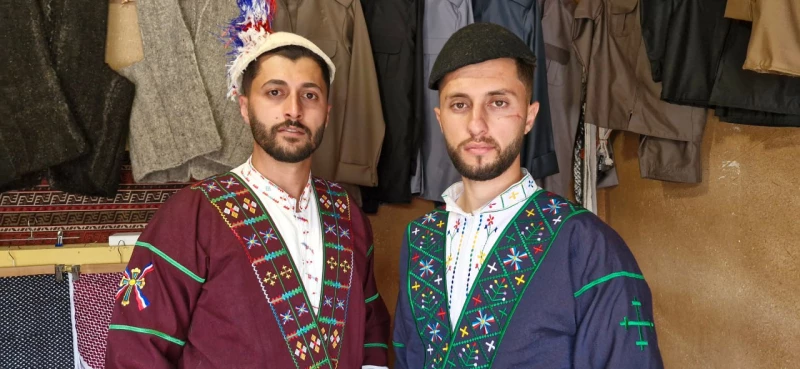
Wahab stressed the importance of the cultural center in preserving the Kurdish language and heritage in the diaspora, particularly for the youth. Every Saturday, children attend language classes that not only focus on linguistic instruction but also detail Kurdish history and culture. With students from Rojhelat, Bashur, Rojava, and Bakur, such opportunities are indispensable in passing on a sense of Kurdishness to children not growing up within Kurdistan itself.
“The majority of Kurds in Ireland are from Rojhelat, followed by Rojava and Bashur,” said Wahab. There is a growing number from Bakur that have come to study in Ireland, many of whom avail of the center’s adult Kurmanji classes on account of the Turkish state’s repressive linguistic policies, he added.
The congealing of the Kurdish community in Ireland in the cultural center has also allowed for a level of political activism that did not exist previously. Amid the Syrian military offensive in Rojava in January, Wahab and others organized demonstrations outside the Irish parliament to call for diplomatic action against the brutal incursion, a bout of violence that did little to quell the European Union’s growing support for the government of Syrian President Ahmed al-Sharaa.
Wahab expressed his wish that Ireland, at both the popular and governmental levels, had a greater degree of awareness regarding the plight of Kurds, lamenting that the lack of tangible support stems not from any malign intent but mere ignorance of the Kurdish struggle. He contrasted the overwhelming and vocal Irish support for the Palestinian cause, which he noted was a positive, with the relative silence relating to its Kurdish counterpart, and voiced his hope that, with greater awareness, public sentiment will broaden to demand action on all situations of injustice in the Middle East.
A mingling of cultures
As the Kurdish community in Ireland continues to grow, more cross-cultural awareness will likely be engendered. Wahab has taken academic courses in the history and politics of his adopted country, and noted the plethora of similarities between the Irish and Kurdish struggles against foreign conquest, linguistic assimilation, and repression. He pointed out many similarities between the two cultures; a strong national identity, an amiable nature, and a love for folk music, all elements that bridge the gap for new Kurdish arrivals.
Perhaps the most famous example of the blending of the two cultures is Zak Moradi. Born in a refugee camp in Iraq’s Ramadi to parents from Rojhelat who fled the horrors of the Iraq-Iran war in the 1980s, Moradi came to Ireland as a child and quickly became involved in the Gaelic Athletic Association (GAA), which governs the country’s most popular sports, Gaelic football and hurling. Moradi emerged as a high-level hurler, playing what is the fastest field sport on earth, featuring two teams of 15 playing a game involving wooden sticks and a small, hard ball known as a sliotar, for his adopted county of Leitrim.
His rise to the highest levels to a sport profoundly associated with Gaelic heritage attracted strong attention in Ireland, and Moradi has since published a book detailing his journey and has been the subject of a documentary. “I have many friends from hurling and football all around the country, and I’ve realised that 99.9 percent of Irish people are really genuine people, and I want others like me to have that same experience,” Moradi said in an interview with the GAA.
The Kurdish athlete is a regular speaker at the cultural center, serving as a profound success story that serves as an inspiration to Kurds and Irish people alike. For Wahab, Moradi’s growing star has helped put Ireland’s Kurdish community on the map. As the Kurdish Cultural Centre founder bade farewell and returned to his unremitting volunteer efforts, one cannot doubt the Kurdish community’s bright future in Ireland, thanks in no small part to the work of unsung heroes like Wahab and his team.
 Facebook
 LinkedIn
 Telegram
 X
X