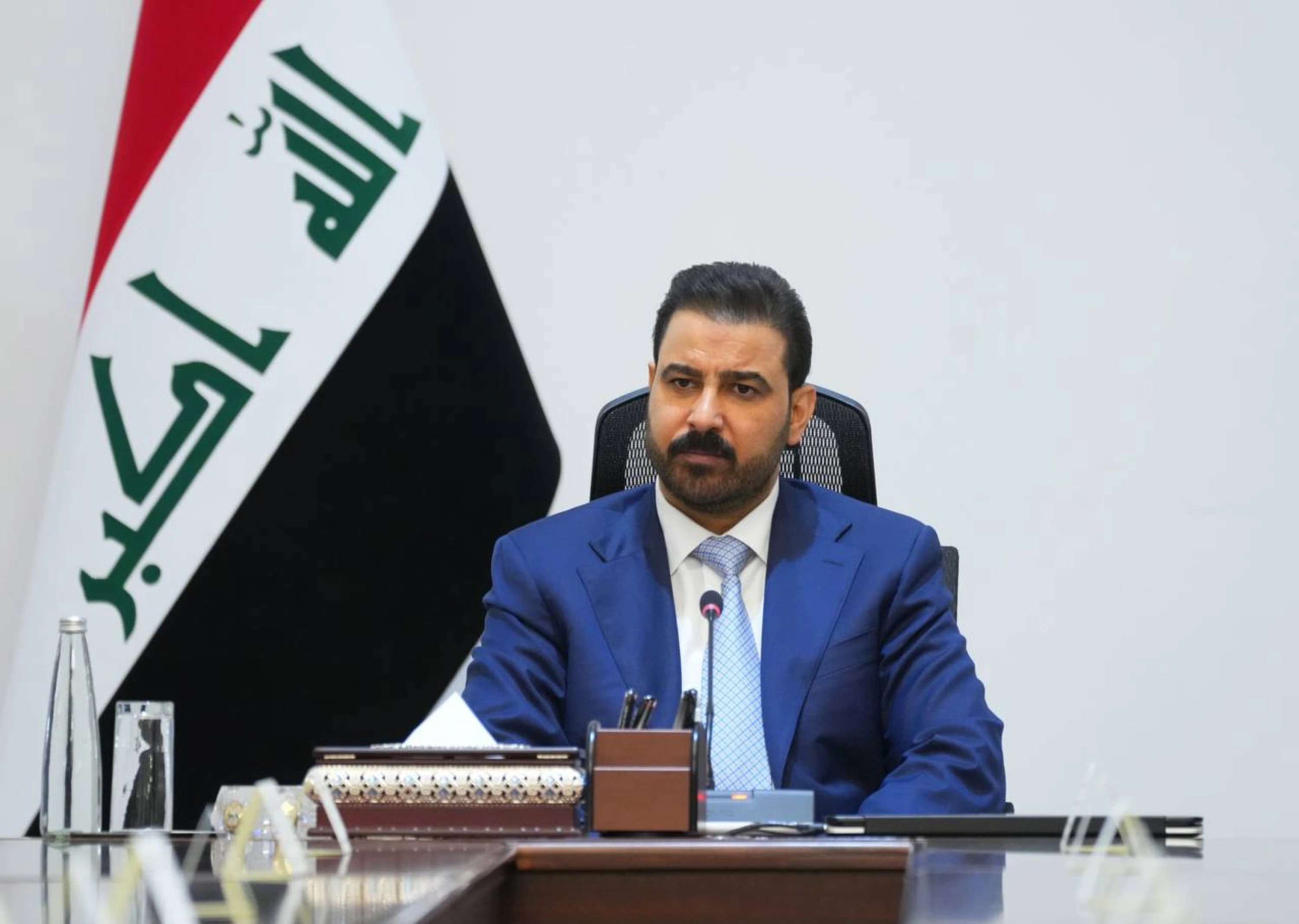
ERBIL, Kurdistan Region of Iraq – Iraqi Prime Minister Ali al-Zaidi aims to shift relations with the US from a military and security alliance to an economic one during his Washington visit set for later this month, officials said Saturday.
Since taking office in May, Zaidi has enjoyed staunch US support. US President Donald Trump personally congratulated him in a phone call, expressing his anticipation for a “highly productive” new bilateral relationship and extending an invitation to visit Washington, which is set for this month.
Mudher Mohammed Salih, financial advisor to the prime minister, told state media that relations between Baghdad and Washington are shifting from a security and military standpoint “to a broad investment and development partnership that aligns with the goals of Iraq Vision 2050.”
“Current US investments in Iraq are estimated at tens of billions of dollars, concentrated in the oil, gas, and electricity sectors, while the volume of foreign direct investment in Iraq amounts to approximately $67 billion,” Salih said.
“Iraq aspires to expand this partnership through the establishment of the Iraqi-American Energy and Development Fund, whose financing could reach $400 billion over thirty years,” he added.
Last month, Iraqi government spokesperson Haider al-Aboudi said Zaidi’s program in Washington will center on expanding trade and investment ties with the US, adding that strengthening ties between the Iraqi and US private sectors will also be high on the agenda.
Salehi added that Baghdad is working on giving US companies priority in future contracts “on a competitive basis,” directing the ministries of oil, electricity, and communication to increase cooperation with them, and opening an Iraqi-American business council in Baghdad, while simplifying investment procedures and updating investment legislation.
Wafaa al-Tai, an Iraqi lawmaker, said they have made legislative efforts to streamline the foreign investment process, and Zaidi is expected to explore developing relations with US companies, particularly in the energy, infrastructure, and technology sectors.
She said one of the most important legislative frameworks that has facilitated foreign investments is the Investment Law “which provides incentives and exemptions, ensures the protection of foreign capital, allows for foreign ownership of projects in many sectors, and simplifies investment procedures.”
A banker and businessman, Zaidi was appointed as prime minister following at least seven meetings held by the ruling Shiite Coordination Framework aimed at naming a candidate for the top post.
Largely seen as a compromise candidate, Zaidi was picked after a “lack of consensus on choosing a candidate from the proposed names,” according to his predecessor Mohammed Shia’ al-Sudani.
The confinement of weapons within the authority of the Iraqi state has emerged as one of the central objectives of Zaidi’s government program, which the US has pushed for over the years.
Several pro-Iran Iraqi factions have already announced their willingness to hand over weapons and integrate into the state security apparatus, with some also declaring their willingness to sever their ties with the Popular Mobilization Forces (PMF).
Under Zaidi’s directive, Baghdad has also intensified efforts to curb corruption in the country.
The government launched a large-scale anti-graft campaign in late June, when security forces entered Baghdad’s heavily fortified Green Zone and arrested scores of senior officials and lawmakers over alleged corruption and theft of public resources.
 Facebook
 LinkedIn
 Telegram
 X
X