ERBIL, Kurdistan Region of Iraq – The Islamic Resistance in Iraq on Sunday rejected Prime Minister Ali al-Zaidi’s upcoming trip to Washington, saying it coincides with the people’s grief over the “heinous crimes” of the US and Israel in the region, as hostilities resume between the warring parties.
Since taking office in May, Zaidi has enjoyed staunch US support. Trump personally congratulated him in a phone call, expressing his anticipation for a “highly productive” new bilateral relationship and extending an invitation to visit Washington.
On Saturday, Iraqi government spokesperson Haider al-Aboudi called the Monday visit “an embodiment of developing balanced foreign relations based on common interests,” during which the premier is expected to discuss deepening economic relations with the US.
The Islamic Resistance rejected the visit, saying it coincides with “heinous crimes” committed by the US and Israel “while the Zionist [Israeli]-American war machine continues to perpetrate brutal massacres and shed the blood of thousands of believers and innocent people in Iraq, Iran, Lebanon, Yemen, and Palestine.”
“We in the Islamic Resistance declare our principled rejection of this visit, which coincides with the boiling grief and sorrow of believers and free people worldwide over the continuation of these heinous crimes,” it added in a statement.
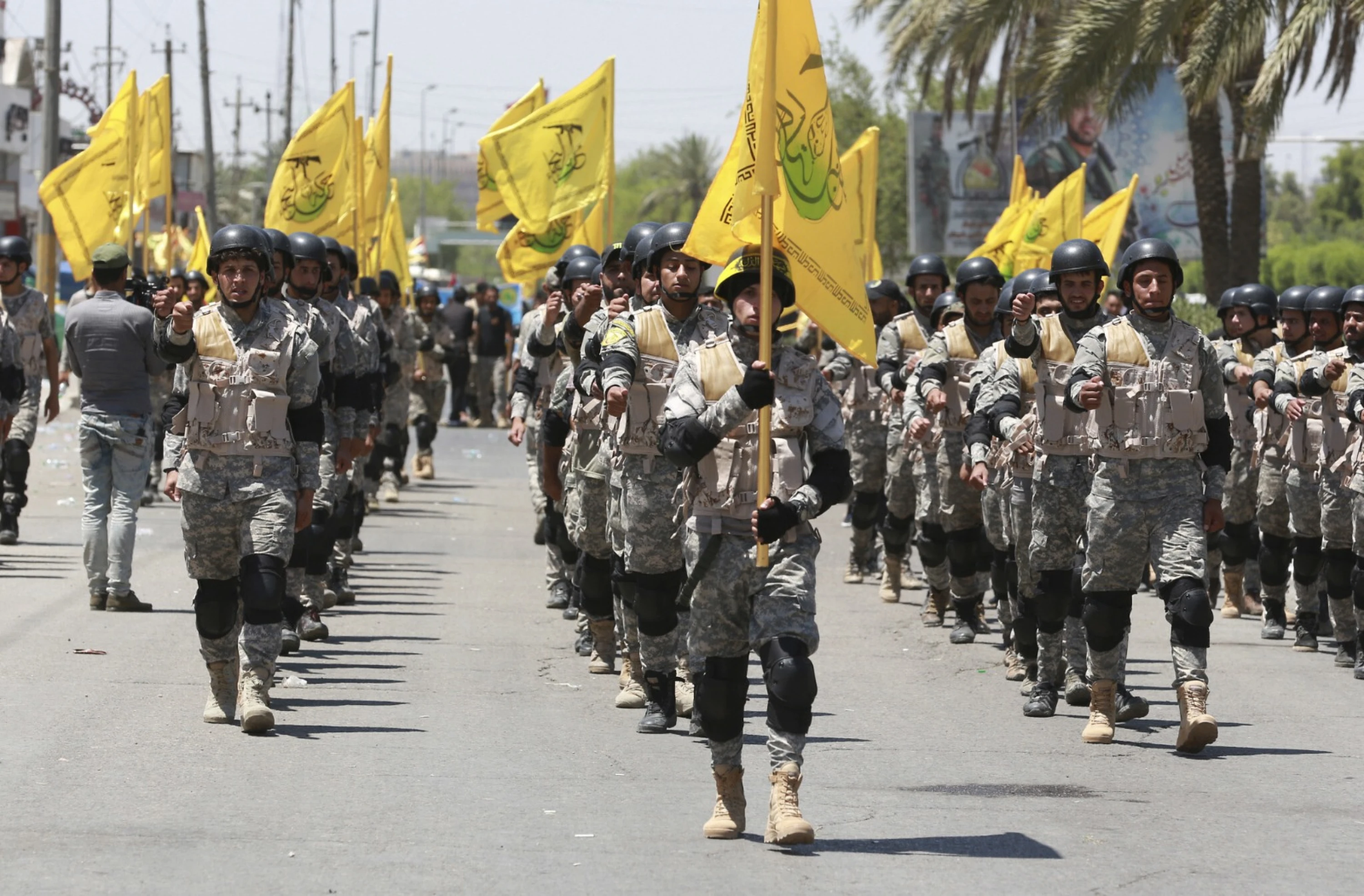
The Islamic Resistance in Iraq, a network of Iran-aligned Iraqi Shiite militias linked to Iran’s Revolutionary Guard Corps (IRGC), has been active during the conflict, launching hundreds of drones and missiles at US interests in Iraq and across the region.
The militias’ attacks were especially concentrated in the Kurdistan Region, where in addition to targeting US diplomatic missions and military sites, the groups claimed responsibility for attacks on residential areas, hotels, and bases belonging to the Kurdish Peshmerga forces, killing dozens.
On Saturday, Mudher Mohammed Salih, financial advisor to the prime minister, told state media that relations between Baghdad and Washington are shifting from a security and military standpoint “to a broad investment and development partnership that aligns with the goals of Iraq Vision 2050.”
The group said that any agreement made during the visit must be brought before the parliament and avoid “legal loopholes” by using phrases such as a memorandum of understanding or a framework for cooperation “to evade parliamentary oversight.”
“International acceptance should not be interpreted as capitulation or submission to arrogant powers, only to be later hailed as a governmental success,” it said.
On Saturday, Wafaa al-Tai, an Iraqi lawmaker, said they have made legislative efforts to streamline the foreign investment process, while Zaidi’s advisor, Salehi, said that US companies would be given priority in future contracts.
“We warn any monopolistic company seeking to exploit Iraq's resources or infringe upon the rights of its people. We affirm that the option of defending the homeland and its legitimate interests remains steadfast,” the group said.
The confinement of weapons within the authority of the Iraqi state has emerged as one of the central objectives of Zaidi’s government program, which the US has pushed for over the years.
Several pro-Iran Iraqi factions have already announced their willingness to hand over weapons and integrate into the state security apparatus, with some also declaring their willingness to sever their ties with the state-integrated Popular Mobilization Forces (PMF).
In a Sunday article on The Washington Post, Zaidi said that his government “has made progress on disarming a significant number of armed groups and opening the door for their integration into state institutions.”
Under Zaidi’s directive, Baghdad has also intensified efforts to curb corruption in the country, which is also seen as a positive step towards attracting foreign investments.
The government launched a large-scale anti-graft campaign in late June, when security forces entered Baghdad’s heavily fortified Green Zone and arrested scores of senior officials and lawmakers over alleged corruption and theft of public resources.
“Our support for the government in pursuing the corrupt does not mean granting it carte blanche in all its policies, nor does it justify passing projects that mortgage the future of generations to companies linked, directly or indirectly, to the interests of the occupation,” the group said, claiming that “genuine partnerships” between the companies and Israel have been proven.
 Facebook
 LinkedIn
 Telegram
 X
X