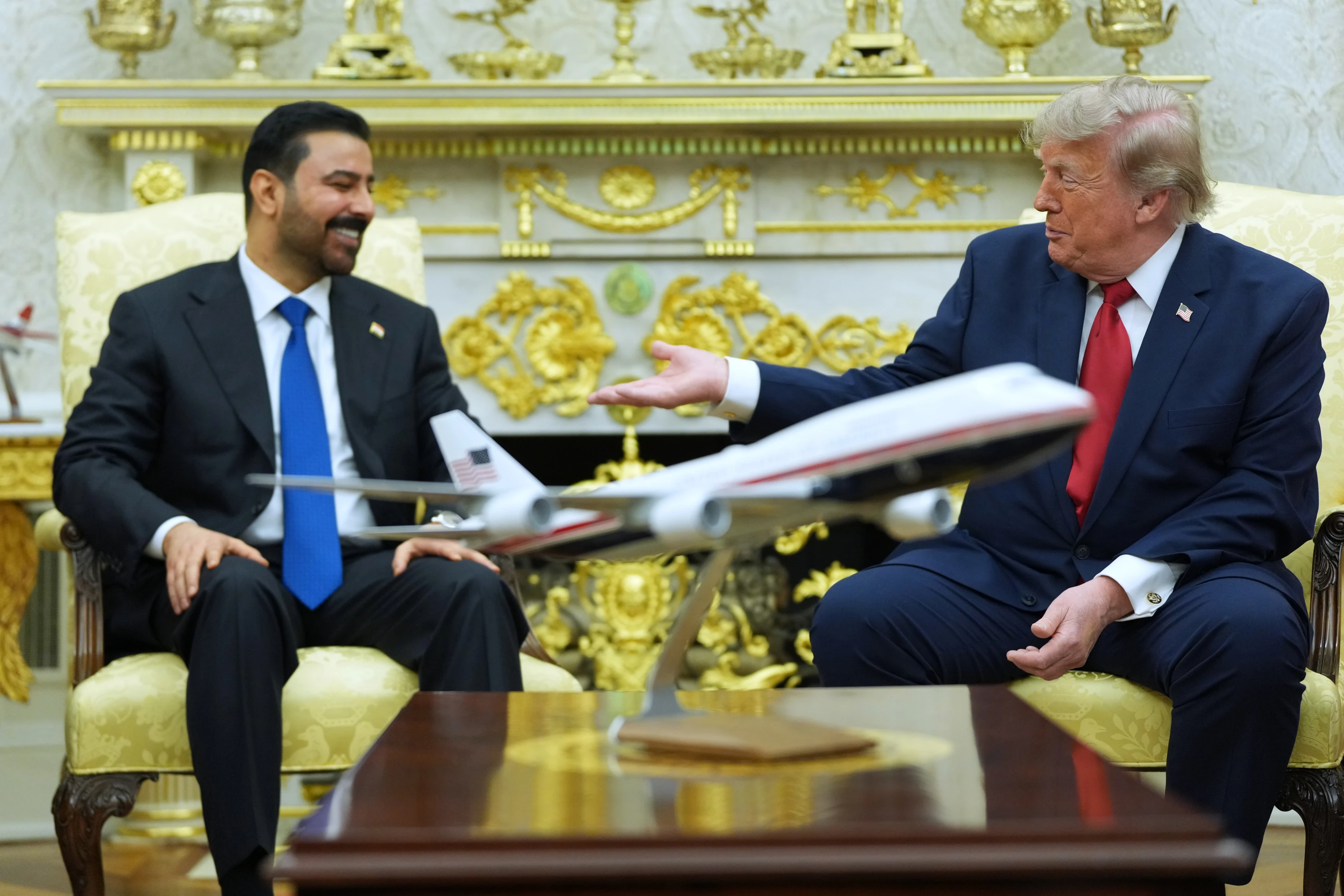
ERBIL, Kurdistan Region of Iraq – Iraqi Prime Minister Ali al-Zaidi received praise from US President Donald Trump during their Tuesday meeting at the White House, with the American president saying that Zaidi will be “one of the great leaders in the Middle East,” and highlighting the strong relationship between the two countries as a foundation for deeper cooperation.
Trump on Tuesday welcomed Zaidi at the White House, marking the premier’s first official overseas trip since assuming office two months ago. The two then held “a good meeting,” according to Trump, who added that he and Zaidi “tremendous chemistry.”
Zaidi will be “one of the great leaders in the Middle East,” Trump said while hosting the Iraqi prime minister in the Oval Office, describing Zaidi as “a great fan of America” who has “done so much” to improve relations between Iraq and the US during his short time in office.
“It was very important to me to have somebody get in there that can do the job and do it well, and we have a fantastic champion [Zaidi]. New champion,” Trump said, adding that it was “a great honor” to host Zaidi.
Since Zaidi was appointed prime minister, breaking an internal Coordination Framework deadlock arising from Trump's outright rejection of Nouri al-Maliki's nomination, the Iraqi premier has enjoyed strong backing from Washington.
Trump also took shots at Zaidi’s opponents for the premiership prior to bis designation, seemingly alluding to Maliki, whom he described as “not, in my opinion, a good person. Not good for America. I don't think good for Iraq.”
Since assuming office in Mid-May, Zaidi's moves to restrict weapons to the hands of the state - welcome news in Washington's corridors of power, where Iranian influence in Iraq has long been a thorn in the side - crack down on state corruption, and pave the way for heightened foreign investment have served to further boost his image from the US perspective.
“Iraq has tremendous potential because of its oil… We're going to be doing a lot of deals,” Trump said, which could be announced “this week or next week.”
Iraq’s monthly oil revenues are deposited into its account at the US Federal Reserve, which are normally transferred back to the country accordingly.
Since early 2026, Iraq has faced a severe fiscal crisis after delays in transferring oil revenues held at the US Federal Reserve amid ongoing regional conflict, raising concerns over the government's ability to pay public sector salaries.
Highlighting a shift toward economic cooperation, Zaidi said US forces “will be out of Iraq” by the end of September, which is the same date the Iraqi government hopes to finish the disarmament of non-state armed factions, adding that by that time “US investment will be in Iraq.” Trump said US investment in Iraq would reach “levels we've never seen before.”
Asked about his relationship with the Kurdistan Regional Government (KRG), Zaidi said the Kurdistan Region “is an important part of Iraq” and no different from other parts of the country.
“I see Iraq as a body. Every geographical area in Iraq is a part of my body. I won't differentiate between one part and another. I can't cut off a part of my body with my own hands. Kurdistan is an important part of Iraq; they are no different from Basra and the other provinces,” said Zaidi.
Erbil and Baghdad have been at odds over several key topics in recent years, including the chronic delay in Kurdistan Region’s budget share and civil servant salaries, dispute over the Region’s oil exports and local revenues, and most recently the implementation of the ASYCUDA customs system.
A KRG official on Thursday said that Erbil and Baghdad have resolved nearly all outstanding disputes over customs procedures, except the mechanism for distributing revenues.
 Facebook
 LinkedIn
 Telegram
 X
X