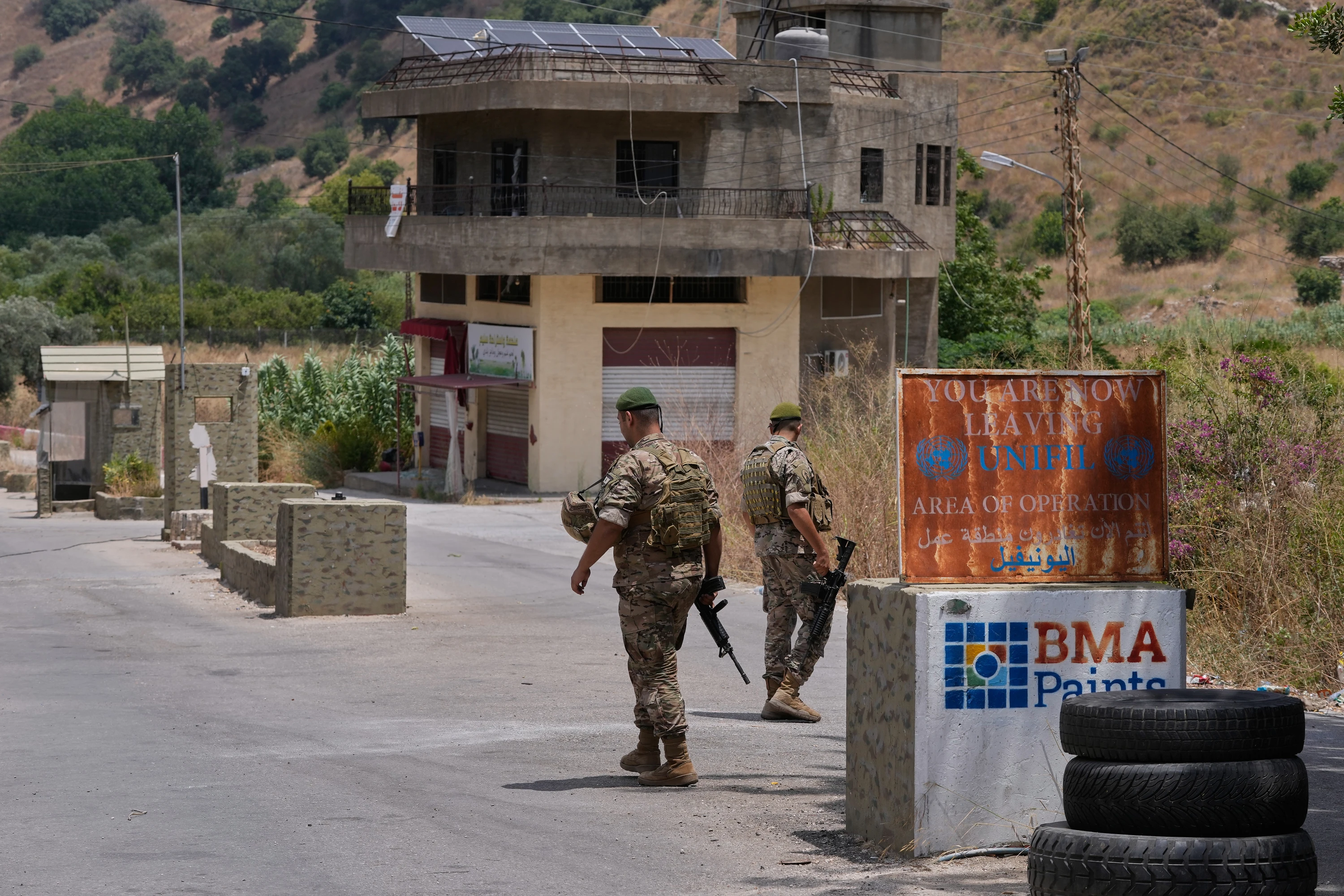
ERBIL, Kurdistan Region of Iraq - As the UN peacekeeping mission's (UNIFIL) mandate in Lebanon nears its conclusion, Germany on Friday backed calls for a potential EU deployment to train and support Lebanese security forces in their bid to reclaim control over the country.
Speaking to the Germant outlet RedaktionsNetzwerk, German Foreign Minister Johann Wadephul said that "we should examine in the EU whether we can ensure that no security vacuum arises with a European mandate following the UNIFIL mission."
Notwithstanding a nominal truce between the Iran-backed group and Israel and ongoing talks between the Lebanese government and Tel Aviv, the country remains mired in instability, driven by ceasefire violations, widespread infrastructure damage, and the continued Israeli occupation of southern Lebanese territory – all of which compound the hardships faced by citizens in the south.
Wadephul continued to say that a stable and sovereign Lebanese government would constitute "one of the most helpful developments in the region at the moment," coming amid the resumption of US-Iran hostilities after a brief period of peace in which Tehran made it clear to Washington that any bilateral deal was conditional on the cessation of Israeli military operations in Lebanon.
Originally established in 1978 and reinforced after the 2006 war, UNIFIL was designed to act as a buffer between Israel and Hezbollah, with its 7,500 personnel tasked with patrolling and monitoring the Blue Line, maintaining operational liaison between the parties and reporting violations of UN Security Council Resolution 1701.
Beyond overseeing the cessation of hostilities and facilitating the deployment of the Lebanese Armed Forces (LAF) across the south, the mission serves to secure humanitarian access and coordinate the safe, voluntary return of displaced populations. Yet, for all its operational breadth, the force has ultimately proved unable to contain the periodic surging of hostilities in the country over the past two decades.
Amid sustained pressure from the United States and Israel in August 2025, the UN decided that UNIFIL’s mandate would expire at the end of this year, followed by a gradual and carefully managed withdrawal over more than a year. Against this backdrop, several actors have put forward alternative arrangements.
The first initiative emerged shortly after the announcement, with Ireland backing the prospect of an EU mission to train and strengthen the LAF. Austria and Spain reportedly joined the effort soon afterwards, with the three countries proposing that the EU consider a non-executive military mission under its Common Security and Defence Policy. Rather than a combat or interposition force, it would provide advice, training and assistance, with the aim of facilitating the LAF’s deployment south of the Litani River and strengthening the implementation of UN Security Council Resolution 1701. The proposal initially envisaged a two-year mandate, running from 2026 to 2028.
A more comprehensive proposal was drafted by the European External Action Service in June. As reported by Reuters, the EEAS is pushing for a three-year civil-military mission designed to bolster Lebanese sovereignty through capacity-building, rather than serving as a European replacement for UNIFIL. This broader remit encompasses support for both the LAF and the Internal Security Forces (ISF), with the document stating that the mission would “focus on strengthening land border regiments, mobile forces, and regional gendarmerie units” while enhancing maritime security and intelligence, surveillance, and reconnaissance capabilities.
The last project consists of the Franco-Italian initiative. At a summit in late June, French President Emmanuel Macron and Italian Prime Minister Giorgia Meloni signalled their intention to establish a transnational coalition for the post-UNIFIL period. Macron stated that the project is intended to “strengthen” Lebanon’s sovereignty and its armed forces in coordination with the EU and the UN, though he offered no further operational details. Lebanese President Joseph Aoun welcomed the initiative, labelling it as “a sincere expression of the international commitment to supporting Lebanon’s sovereignty and stability.”
UN Secretary-General Antonio Guterres has argued that Lebanon will still require an international peacekeeping presence once UNIFIL’s mandate expires, a proposal likely to encounter resistance from the US and Israel. In June, he outlined three possible follow-on arrangements, ranging from just under 2,000 to more than 5,500 UN personnel, tasked with monitoring the Israel–Hezbollah ceasefire and supporting the LAF.
In any scenario, a primary obstacle to stability remains the Israeli occupation of the south, as officials in Tel Aviv have repeatedly vowed to maintain a "security zone" until Hezbollah is disarmed. The question, therefore, remains whether a successor mission can stop Lebanon from being dragged back into a cycle of large-scale violence and ensure a complete Israeli withdrawal.
 Facebook
 LinkedIn
 Telegram
 X
X