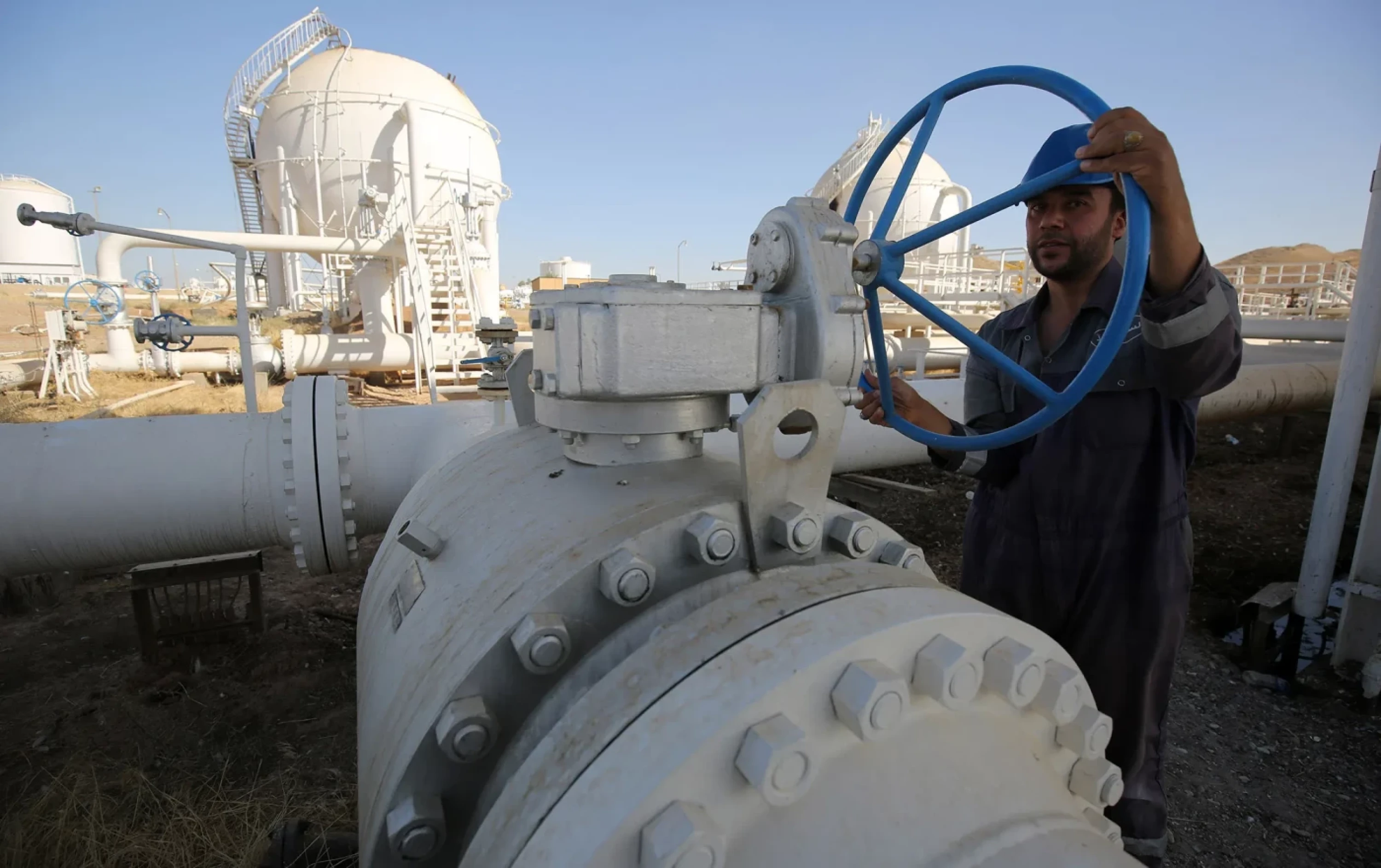
ERBIL, Kurdistan Region of Iraq - Iraq and Syria on Friday signed an agreement pledging to rehabilitate the Kirkuk-Baniyas oil pipeline, offering Baghdad an opportunity to diversify its export pathways and reduce reliance on the volatile Strait of Hormuz.
The general manager of the Iraqi state-owned Basra Oil Company, Bassem Abdul Karim, and CEO of Syria's Syrian Petroleum Company Youssef Qablawi inked the agreement at a US-Iraq business summit in Washington that saw the attendance of Iraqi Prime Minister Ali al-Zaidi and high-profile US energy companies.
The agreement, the signing of which was provided over by US Energy Secretary Chris Wright, provides for the commencement of feasibility studies and serves as a document of intent by both sides, with a US-led international consortium that includes Chevron and TI Capital participating in the initiative.
"The United States welcomes the Government of the Republic of Iraq and the Government of the Syrian Arab Republic’s intent to advance the rehabilitation and reconstruction of the Iraq-Syria crude oil pipeline as a priority infrastructure project of bilateral and regional strategic significance," the US State Department said in response.
"Upon rehabilitation, this groundbreaking project will have an initial transport capacity of 2 million barrels per day of crude oil," the statement continued, terming the agreement "an important milestone for the region and for Syria-Iraq relations."
Iraq's oil exports have suffered greatly as a result of the impact of the US-Israeli war on Iran on the Strait of Hormuz, the restriction of which has prompted Washington to similarly diversify its oil sourcing.
Iraq exported only 18.6 million barrels of crude oil in March, compared to 99.8 million barrels in February, resulting in nearly $4 billion in lost revenue.
Speaking at the same event, US Special Envoy for Iraq Tom Barrack said that, with the initiative of new regional leaders such as Zaidi and Syrian President Ahmed al-Sharaa, a new regional order is forming that will reduce dependence on the strategic waterway.
"What this young leader [Zaidi] has in mind, aligned with Syria, Jordan, Turkey, Lebanon, Egypt, is a program that will make the Strait of Hormuz an afterthought in two years."
The Kirkuk-Baniyas pipeline, completed in 1934, originally transported crude from Iraq’s northern oil fields in Kirkuk through Syria to Lebanon’s Tripoli port and Syria’s Baniyas port. Spanning 800 to 900 kilometers, it had a peak capacity of 1.4 million barrels per day, making it Iraq’s primary export route for decades.
However, the Iran-Iraq war prompted a shift to Gulf-based exports and the establishment of the Iraq-Turkey pipeline in the 1980s. In the 1990s, Iraq partially reopened the pipeline to Syria under a limited “oil-for-goods” agreement during the United Nations sanctions era.
The prospects of the pipeline's revival seemed slim in the immediate wake of the toppling of Bashar al-Assad's Syrian regime in late 2024, with relations between Baghdad and Damascus having gradually thawed in the years that followed.
In April 2025, an Iraqi MP who served on the parliamentary Oil and Gas Committee told The New Region that "this project cannot be accomplished in a short period. It needs years," adding that "the pipeline is destroyed and requires extensive rehabilitation and fundamental repairs."
 Facebook
 LinkedIn
 Telegram
 X
X