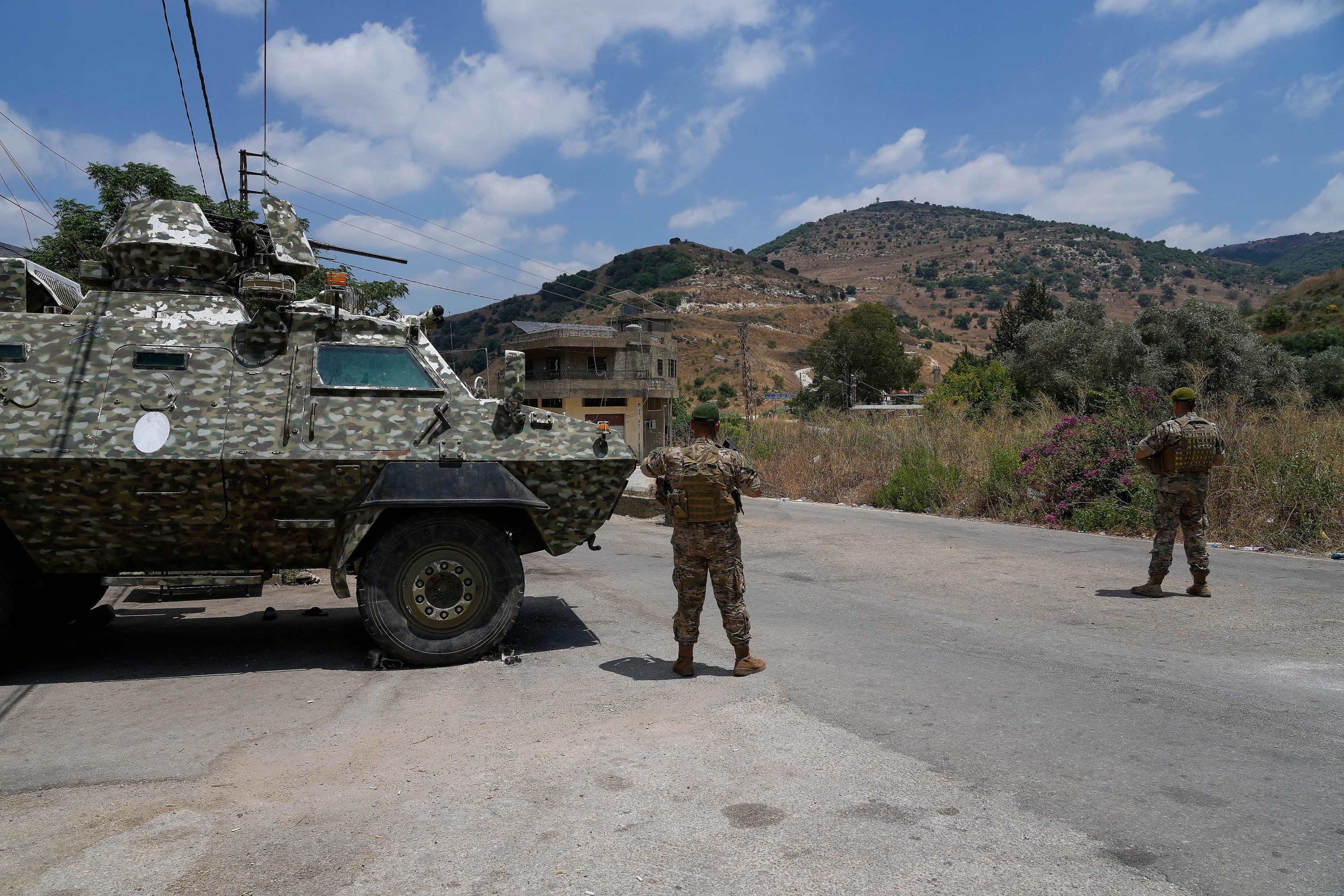
ERBIL, Kurdistan Region of Iraq - The Lebanese army on Monday began assuming control over three so-called pilot zones in southern Lebanon from which Israeli forces have begun to withdraw, coming on the back of a recent US-brokered framework that was agreed upon in Rome.
"Today, pilot zone operations began in the villages of Froun, Srifa, and Zawtar Al-Gharbiya in accordance with the Trilateral Framework and under the auspices of the Military Coordination Group for Lebanon," the US State Department said in a statement.
State Department spokesman Tommy Pigott labeled the move "a direct outcome" of last week’s talks in Rome between Israeli and Lebanese delegations, noting that the US remains committed to coordinating with both parties "to implement the framework to a successful conclusion."
The Israeli army said in a statement that personnel from the Israeli, US, and Lebanese militaries are “conducting coordination and planning” for the ongoing execution of the deal, and warned they will “respond forcefully to any violation of the agreement.”
"The [Israeli military] will adjust its force posture in one of the pilot areas in order to enable the Lebanese Armed Forces to carry out their mission," an Israeli official said separately without specifying the area in question.
Under the provisions of the framework, the Lebanese Armed Forces are expected to restrict Hezbollah activity in the zones in question, with Israel and the US have repeatedly stressed that monitoring mechanisms are in place to ensure this takes place.
Hezbollah leader Naim Qassem has repeatedly criticized the framework with Israel, calling it a "humiliation, shame, and a surrender of sovereignty" in late June.
Notwithstanding the announcement, AFP reported Monday that Israeli forces continue to restrict access to parts of southern Lebanon, stopping a convoy of journalists near the coastal town of Naqura. At the edge of the Israeli-declared “security zone,” a soldier ordered the group – which was visiting inhabited villages in the occupied territory alongside a Christian NGO – to "turn around" as they did not have "permission to pass," according to the report.
Lebanese President Joseph Aoun is scheduled to meet with US President Donald Trump in Washington tomorrow, following a Saturday announcement from his presidency that the trip is intended to facilitate discussions "with several American officials on the situation in Lebanon and ways to strengthen the ceasefire." The visit will also focus on securing "the withdrawal of Israel from the Lebanese regions it occupies," the presidency added.
The last round of US-led talks concluded in Rome last Wednesday, following the June 26 agreement in Washington that envisaged the disarmament of Hezbollah, the deployment of Lebanese troops in the south, and a phased withdrawal of Israeli forces starting with two “pilot zones” in which Lebanese authorities would assume control in a bid to negate the presence of the Iran-backed group.
Despite the talks, Lebanon’s position remains uncertain after Hezbollah rejected the agreement and no formal withdrawal timetable was established, especially as Israeli officials have repeatedly vowed to maintain a 10-kilometer-deep “security zone” along the frontier as long as the group remains armed.
The peace process in Lebanon is inextricably linked to the state of US-Iran relations, with Tehran having included a cessation of Israeli hostilities in its northern neighbor as a core element of the now-shattered memorandum of undestanding it signed with Washington.
Even with a nominal truce between Hezbollah and Israel, Lebanon remains deeply unstable as continued Israeli strikes have driven the death toll from the onslaught to 16,545 since March 2, including more than 4,300 killed and over 12,200 wounded. The conflict has also displaced more than one million people amid widespread infrastructure damage and the continued Israeli occupation of parts of southern Lebanon.
 Facebook
 LinkedIn
 Telegram
 X
X